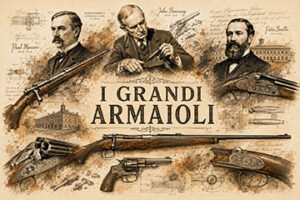
John Moses Browning He was much more than a great gunsmith. He was one of the designers who most influenced the evolution of the modern firearms, an inventor capable of intervening with equal effectiveness on hunting rifles, repeating rifles, semi-automatic pistols and automatic weapons, developing mechanical principles destined to survive for generations.
His name is inevitably linked to some weapons that have become authentic icons: from the great carbine Winchester from the first semi-automatic hunting rifles, from the Colt and FN pistols to the automatic weapons that would permeate much of twentieth-century military history.
But limit John Moses Browning To list the weapons he designed would be to miss his full scope.
His most important contribution was probably another: a new way of thinking about the mechanics of weapons.
Browning He had an extraordinary ability to observe a problem, identify its essential elements, and develop a simple, robust, and industrially feasible solution. The result was an impressive succession of inventions that accompanied the transition from the nineteenth-century weapon to the modern industrial weapon.
John Moses Browning (1855-1926), one of the most influential weapons designers in modern history.
John Moses Browning: biographical sheet
- Full Name: John Moses Browning
- Birth: On 23 January 1855
- Birth place: Ogden, Utah Territory, United States
- Death: November 26, 1926
- Place of death: Liège, Belgium
- Business: gunsmith, inventor and designer
- First patent: 1879
- Patents awarded: 128
- Main collaborations: Winchester, Colt, Fabrique Nationale, Remington and other producers
- Main design sectors: single-shot rifles, lever-action rifles, shotguns, semi-automatic rifles, pistols, and automatic weapons
Ogden: Where the Genius of John Moses Was Born Browning
John Moses Browning was born on January 23, 1855 in Ogden, in Utah, within a family where guns and mechanics were part of daily life.
The father, Jonathan Browning, was a gunsmith and inventor who had already developed his own technical solutions. His workshop was the first real school for the young John Moses.
It was a profoundly different training from that of a modern engineer. There were no computers, CAD programs, motion simulations, or CNC machines. The designer had to be familiar with steel, files, drills, lathes, springs, levers, and contact surfaces.
An idea became a component. The component was tested. If it didn't work properly, it was modified, lightened, strengthened, or simply remade.
Browning he then learned to think about weapons at the same time as gunsmith, mechanic, designer, prototype maker and user.
La Browning Brothers Gun Shop in Ogden in 1882. The family shop was the laboratory where John Moses Browning and his brothers.
The workshop as a design school
Browning he then began from practice.
He knew the difficulties a gunsmith encountered when he had to repair an overly complex mechanism. He was familiar with the problems caused by fragile parts, delicate connections, or difficult-to-produce components.
This experience would influence his entire career.
For Browning a mechanical solution was truly valid when it managed to combine reliability, simplicity, robustness and industrial production capability.
It is one of the fundamental aspects for understanding his thinking.
The simplicity of his weapons didn't stem from a lack of sophistication. On the contrary, it was often the result of a sophisticated effort at simplification.
Eliminating an unnecessary component meant simultaneously eliminating a potential breakage point, a production cost, a process, and a potential cause of malfunction.
1879: John Moses' first patent Browning
In the late 1870s Browning developed his own single-shot rifle.
The project was born from a philosophy that would become typically browninghiana: make the mechanism simpler and more robust.
The patent application was filed on May 12, 1879 , and the patent was granted on October 7, 1879.
That document represented much more than the official debut of Browning as an inventor.
It marked the beginning of a career in which intellectual property would assume fundamental importance.
One of the patent documents related to the inventions of John Moses BrowningThe patent became a fundamental tool for transforming mechanical invention into industrial value.
Brothers Browning and the birth of the family business
After the death of his father Jonathan, John Moses continued the business together with his brothers, in particular with Matthew Sandefur Browning, who would become one of his most important collaborators.
The division of roles was crucial.
John possessed an exceptional ability to conceive mechanisms. Matthew, on the other hand, contributed to the commercial and organizational aspects of the business.
Other family members also worked around them.
However, that small reality in Ogden did not have the production capacity necessary to transform the inventions Browning in weapons made in large quantities.
They lacked capital, machinery and, above all, a national distribution network.
We needed a great producer.
The meeting between John Moses Browning e Winchester
The turning point came in 1883.
A rifle Browning came to the attention of the Winchester Repeating Arms Company. Thomas G. Bennett, the company's manager, quickly understood the value of the project and personally traveled to Ogden to meet the brothers Browning.
The resulting deal radically transformed John Moses' career.
Winchester he possessed what he Browning it did not have: industrial plants, machine tools, capital, a commercial network and an already known brand.
Browning Instead, it had what every large industry needs to continue growing: innovation.
Thus began a collaboration that would last nearly twenty years and produce some of the most important American weapons of the late nineteenth century.
Behind many Winchester there was John Moses Browning
This is an essential aspect to understanding the history of the arms industry.
The name on the weapon does not necessarily coincide with that of its designer.
Numerous models universally identified as Winchester were actually developed by John Moses Browning.
Among these we find:
- Winchester Model 1885 rifles;
- Winchester Model 1886 rifles;
- Winchester Model 1892 rifles;
- Winchester Model 1894 rifles;
- Winchester Model 1895 rifles.
Each represents an autonomous chapter in the history of weapons and will be explored separately in the Hunting Encyclopedia.
Le lever action rifles designed by Browning for Winchester contributed decisively to his affirmation as an industrial designer.
Browning he didn't design models: he designed solutions
The extraordinary prolificacy of Browning It also depended on his ability not to fall in love with a particular technical solution.
He did not try to adapt each new weapon to an already known mechanism.
He started from the problem.
If a lever was needed, he used a lever. If linear motion was needed, he designed linear motion. If a component could perform two functions simultaneously, he attempted to do so.
This freedom of mind allowed him to move between completely different categories.
He was able to design single-shot weapons, lever-action rifles, shotguns, pistols, semi-automatics and automatic weapons.
Very few designers in the history of weapons have managed to leave such a profound mark on such diverse architectures.
The insight that would change modern weapons
Towards the end of the nineteenth century Browning began to focus an increasing amount of his attention on theautomation of the operating cycle.
The starting point was apparently simple.
When a shot is fired, a considerable amount of energy is released.
Why not use some of that energy to make the weapon work automatically?
Recoil and gases produced by combustion could become available mechanical energy.
This intuition would open one of the most important chapters of his activity.
Since that time Browning he would not have limited himself to designing weapons on which the user had to intervene manually to complete each cycle, but he would have studied different ways to use the energy of the shot to automate opening, extraction, ejection, feeding and closing.
Browning Auto-5: The Revolution in Semi-Automatic Hunting Rifles
One of the most famous results of this research was the Browning Auto-5.
We will not delve into its mechanics here, because this extraordinary semi-automatic deserves its own entry in the Encyclopedia.
Its importance in the biography of Browning but it's huge.
With the Auto-5, the concept of a semi-automatic hunting rifle definitively left the experimental realm to become an industrial product that could actually be used by hunters.
John Moses Browning Browning Auto-5. The project represented one of the fundamental stages in the evolution of the modern semi-automatic hunting rifle.
The separation between Browning e Winchester
But it was the Auto-5 that also contributed to ending the long collaboration with Winchester.
The issue was not primarily about the quality of the project but about the economic model.
For many previous inventions Browning He had sold the rights in exchange for an agreed-upon sum. This time, the designer instead asked for compensation tied to the weapon's sales.
It was a major change.
Browning he had now understood perfectly the economic value of one's intellectual property.
Winchester he did not reach an agreement with him.
The end of that relationship, however, would have favored another meeting destined to become fundamental.
FN Herstal: John Moses Browning arrives in Europe
La Fabrique Nationale di Herstal, in Belgium, would become one of the most important partners of John Moses' entire career Browning.
The relationship between Browning and FN had begun to develop already in the late 1890s through the designs of semi-automatic pistols. In 1897 the foundations were laid for a collaboration that was to last until the designer's death.
The meeting was particularly happy.
On one side there was the American culture of Browning: practical, direct, oriented towards simplification and industrialization.
On the other hand, there was the great metallurgical and weapon-making tradition of Liège, one of the most important European centers of arms production.
Browning he found in FN industrial capacity and technicians capable of transforming his ideas into products destined for international markets.
Twenty-six voyages across the Atlantic
The relationship with FN did not simply consist of the granting of patents.
Browning he personally followed his own projects.
During his collaboration he made 26 transatlantic round trips to Herstal to work with the factory's technicians.
Today, a few hours' flight separates the United States from Belgium. At the beginning of the twentieth century, however, it meant a long ship crossing each time.
It's a detail that tells very well the character of Browning.
He wasn't just interested in selling the idea. He wanted to see how that idea would become steel.
A bridge between the American and European gunsmithing schools
The collaboration with FN transformed Browning even in a deeply international figure.
Many European hunters would have known the name Browning through weapons built in Belgium, while in America many of his designs continued to be produced by Winchester, Colt and Remington.
Thus something special was created in the history of the arms industry.
A designer raised on the American frontier became one of the main protagonists of one of the oldest European gunmaking districts.
The name Browning he would remain deeply connected to both cultures.
John Moses Browning and the evolution of the semi-automatic pistol
Even though the Hunting Encyclopedia naturally devotes more attention to long guns, it would not be possible to tell John Moses Browning without remembering the role it played in the evolution of the semi-automatic pistol.
His contribution in this field was enormous.
Working with Colt in the United States and FN in Europe, he developed a succession of pistols and, more importantly, mechanical principles that would influence generations of designers.
Among the weapons associated with his work are the FN Browning Model 1900, various Colt models and of course the very famous Colt M1911.
The Colt M1911 is one of the most well-known pistols born from the design work of John Moses Browning and testifies to the extraordinary versatility of his talent.
The M1911 probably represents one of the most striking examples of the longevity of ideas. Browning.
Adopted by the US Army in 1911, its architecture has spanned over a century of history and has spawned a huge number of interpretations and derivations.
But even in this case what is interesting in the designer's biography is not only the model.
It's the principle.
Browning He demonstrated once again that he was able to control the forces developed during the shot in an extremely rational way and transform them into an ordered sequence of mechanical movements.
From hunting rifles to automatic weapons
The same mind that could design an elegant rifle for the hunter was capable of tackling completely different problems related to automatic weapons.
Browning He studied gas-powered and recoil-operated systems and developed numerous weapons for military use.
This sector probably demonstrates better than any other how transversal his talent was.
The needs were radically different from those of a hunting weapon.
An automatic weapon had to handle high rates of fire, heating, continuous feeding, and repeated stress.
Yet even here Browning he applied the same philosophy: reduce the problem to its essential elements and build the mechanism around the forces actually available.
Il Browning Automatic Rifle M1918
During the First World War one of the other iconic projects linked to his name was born: the Browning Automatic Rifle M1918, universally known by its acronym Bar.
It is important not to confuse it with the later semi-automatic hunting rifles Browning which will use the same acronym.
John Moses Browning Browning Automatic Rifle. The ability to design completely different systems was one of the outstanding features of his career.
The military BAR once again represents an autonomous chapter, but it is significant in the personal history of Browning because it demonstrates the designer's ability to simultaneously tackle the sporting and military worlds without renouncing the fundamental principles of his method.
The machine gun family Browning
Equally important was the activity dedicated to machine guns.
Browning He began experimenting with automatic systems as early as the late nineteenth century and continued to perfect them for decades.
His designs would go on to produce several generations of automatic weapons used by the U.S. military and numerous other countries.
The extraordinary longevity of some of these systems is perhaps the best demonstration of the solidity of the solutions adopted.
John Moses Browning while working on one of his machine guns. Automatic weapons were one of the fields in which the American designer most expressed his innovative capacity.
The .50 Browning and the project that will span the twentieth century
During the final phase of the First World War Browning he also faced the problem of developing a large-caliber automatic weapon.
From this work was born the design path that would lead to the famous family of .50 caliber heavy machine guns Browning.
The project would be further developed after his death until the configuration associated with the Browning M2.
La Browning M2 represents one of the longest-lasting technical legacies derived from the work of John Moses Browning.
The fact that principles developed over a century ago have continued to be used for such a long period gives a good idea of the quality of the original approach.
Il Browning Superposed: The Last Great Sports Project
In the last years of his life Browning he returned to devote great attention to sporting weapons.
One of his last major projects was a over-and-under shotgun destined to become the Browning Superposed, known in Europe above all through the story of the famous B25.
Browning He never saw the weapon's industrial development fully complete. After his death, the project was continued with the contribution of his son. Val A. Browning and FN technicians.
The Superposed will represent another autonomous entry in the Encyclopedia, because its significance in the evolution of the modern superposed deserves specific analysis.
Il Browning Superposed was one of the last major sports projects John Moses worked on. Browning and would have left a profound mark on the history of the modern over-and-under.
The patent as part of the design
Another surprisingly modern aspect of Browning It concerns the way he viewed intellectual property.
During his career he was credited with a surprisingly modern chest of Browning It concerns the way he viewed intellectual property.
During his career he was awarded 128 patents relating to firearms.
The data is impressive, but the number alone does not explain its importance.
Many of these patents did not simply protect an external form or a minor detail.
They protected relationships between components, motion sequences and operating principles.
Browning he understood that the true value of gunmaking innovation was not necessarily the single piece of steel.
It was the idea that explained how that piece should move in relation to the others.
The method Browning: apparent simplicity, resolved complexity
Looking at the production as a whole Browning some recurring principles emerge.
Simplification
Each component must have a specific function. If it can perform two, even better.
The rational use of forces
Springs, inertia, recoil, and gas pressure are not elements to be countered indiscriminately, but resources that can be controlled and utilized.
Reliability
A mechanism must continue to function even when real conditions are less favorable than those on the test bench.
Producibility
An ingenious idea that is impossible to economically implement on a large scale has limited industrial value.
Browning Instead, he could think simultaneously about the weapon and how that weapon would be built.
The prototype as a tool for thinking
For Browning practical implementation did not represent the next phase after planning.
It was part of the design itself.
The prototype allowed us to immediately verify whether what had been imagined actually worked.
A surface could be filed. An angle modified. A spring replaced. A mass lightened.
The process was extremely physical.
There was a continuous dialogue between idea, metal and function.
Browning he belonged to a generation of designers capable of literally thinking while building.
Forces, masses and times in mechanics Browning
This particular form of mechanical intelligence emerges above all by observing the automatic systems developed by Browning.
In a semi-automatic or automatic weapon, it is not enough for the parts to move.
They have to move at the right time.
The bolt must remain closed when the pressure is high. It must begin its cycle in a specific sequence. Energy must be absorbed and then released. A new round must be presented in the correct position.
Everything happens in fractions of a second.
The great talent of Browning consisted in being able to imagine these sequences three-dimensionally and transform them into surfaces, springs, leverage and masses.
An independent inventor before modern R&D divisions
Seen through today's eyes, the professional model of Browning it almost seems surprising.
Modern large industries have teams of engineers, designers, materials technicians, simulation specialists and testing laboratories.
John Moses Browning Instead, he managed to personally generate an extraordinary amount of innovations, working with different industries and adapting to extremely diverse needs.
In this sense he can be considered one of the first great independent designers of the modern arms industry.
John and Matthew Browning: two complementary roles
In the story of John Moses' life, his brother Matthew must not be forgotten.
John was the great inventor, but the family business also required organization, negotiations, business relationships, and management.
Matthew played an important role in these areas and accompanied his brother during a significant part of his career.
The Greatness of John Moses Browning He was therefore also born within a family structure capable of supporting his exceptional intellectual production.
Val Browning and the continuity of the family
The tradition continued into the next generation.
Son Val Allen Browning, born in 1895, became a designer himself and worked alongside his father.
After John Moses' death, he contributed to the completion and development of several projects and would later hold important responsibilities within the family business.
History Browning It thus also takes on some of the typical characteristics of the great European armoury dynasties: experience, mechanical culture and knowledge passed down from one generation to the next.
The man behind the designer
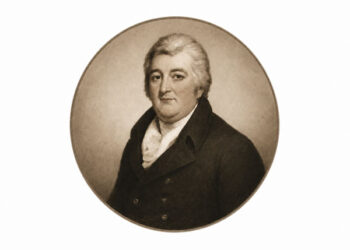
Photographs by John Moses Browning they generally give the image of a stern and reserved man.
He certainly did not belong to the modern culture of the celebrity designer.
His reputation was born in the workshops.
It was the workings of the mechanism that spoke for him.
This concrete dimension still contributes today to the particular respect that surrounds his figure among gunsmiths, designers, collectors and enthusiasts of gun mechanics.
John Moses Browning in his mature years. Behind his austere appearance lay an exceptional ability to visualize and simplify complex mechanical systems.
November 26, 1926: The Death of John Moses Browning in Belgium
The End of John Moses' Life Browning it almost seems to symbolically represent his entire existence.
In November 1926 he was once again in Belgium to work with Fabrique Nationale.
He died in Liège on 26 November 1926 , at the age of 71.
He was still fully engaged in developing new projects.
Until the end of one's life Browning He then continued to do what he had done since he was a boy in his father's shop in Ogden: imagine how to build a better weapon.
The iconic weapons designed by John Moses Browning
The project production of Browning It's so vast that any selection is necessarily incomplete. Some models, however, allow us to immediately grasp the breadth of its activities.
- Winchester Model 1885 rifles – Single-shot rifle. Derived from the first major project Browning.
- Winchester Model 1886 rifles – Lever-action rifle. Extremely robust and capable of using powerful ammunition.
- Winchester Model 1892 rifles – Lever-action rifle. Compact and particularly effective action.
- Winchester Model 1894 rifles – Lever-action rifle. One of the most famous American rifles in history.
- Winchester Model 1895 rifles – Lever-action rifle. A significant evolution of the lever-action architecture.
- Browning Auto-5 – Semi-automatic rifle. A key milestone in the development of the semi-automatic hunting rifle.
- Remington Model 8 – Semi-automatic rifle. One of the first great examples of a commercial semi-automatic rifle.
- Browning SA-22 – Semi-automatic rifle. Compact and extremely durable design.
- Colt M1911 – Semi-automatic pistol. One of the most influential pistols ever made.
- Browning Automatic Rifle M1918 – Automatic rifle. An important military project of the 20th century.
- Machine gun family Browning – Automatic weapons characterized by exceptional diffusion and longevity.
- Browning Superposed – Over-and-under shotgun. One of the last great sporting projects of Browning.
The main weapons and their respective mechanical systems will be explored in depth through specific entries in the Hunting Encyclopedia.
The Legacy of John Moses Browning in modern hunting
For the contemporary hunter the legacy of Browning is particularly important.
A significant part of the evolution of the semi-automatic rifle, the repeating rifle and the industrial over-and-under passes directly or indirectly through the work of the American designer.
But probably its most profound influence concerns the very philosophy of the modern weapon.
A weapon can be technologically sophisticated without being unnecessarily complicated.
It can be industrially produced without sacrificing reliability.
It can use complex mechanical principles and yet be simple for the hunter.
It's a philosophy that we still find today in many of the best modern hunting weapons.
A man who lived at a decisive moment in the history of arms
The biography of Browning It also goes through one of the most extraordinary periods in the history of weapons.
When it was born, in 1855 , a significant part of the world was still using systems that had their roots in the first half of the nineteenth century.
When he died, in 1926 , the landscape was completely different.
By now there were efficient repeating rifles, modern semi-automatic pistols, semi-automatic rifles and sophisticated automatic systems.
Browning he was certainly not the only protagonist of that revolution.
But it is difficult to identify another man who has contributed so significantly to so many transformations.
The technical legacy of Browning: a way of thinking
Many weapons designed by Browning they now belong to history.
Others are still in use or have spawned product families that have been built for decades.
But the most important part of his legacy is not necessarily visible.
It is contained in the principles.
- Use the energy of the shot rationally.
- Reduce the number of components.
- Make the same element perform multiple functions whenever possible.
- Check masses, geometries and times.
- Consider reliability and production already in the design phase.
These ideas are now part of the normal culture of gun design.
And it is precisely this normality that demonstrates how profound the influence of Browning.
Why John Moses Browning he is one of the greatest armourers in history
John Moses Browning He started out in a small shop in the American West and went on to collaborate with some of the most important gun manufacturing industries in the world.
He designed weapons for Winchester, Colt, FN, Remington and other producers. He obtained 128 patents and left its mark on virtually every major category of weapon of its era.
But these numbers, as extraordinary as they are, do not fully explain his greatness.
The true talent of Browning consisted in the ability to transform complex mechanical problems into simple, robust and extremely effective solutions.
He could observe the forces produced by a weapon and imagine how to use them. He could eliminate what was unnecessary. He could think simultaneously as an inventor, a gunsmith, and an industrialist.
For this reason the name Browning It doesn't just belong to the history of a manufacturing company.
It doesn't just belong to American history.
And it doesn't even belong to a single category of weapons.
John Moses Browning It belongs to the very history of modern gunsmithing.