NOT HUNTABLE
The Hazel Grouse , scientifically classified as Tetrastes bonasia , is the smallest of the grouse present in Italy and one of the most discreet and difficult to observe forest birds in the Alpine region. Unlike the Rock Ptarmigan and the Black Grouse, which are mainly associated with open environments or the upper transition zone of the forest, the Hazel Grouse is a species deeply associated with montane and subalpine forest.
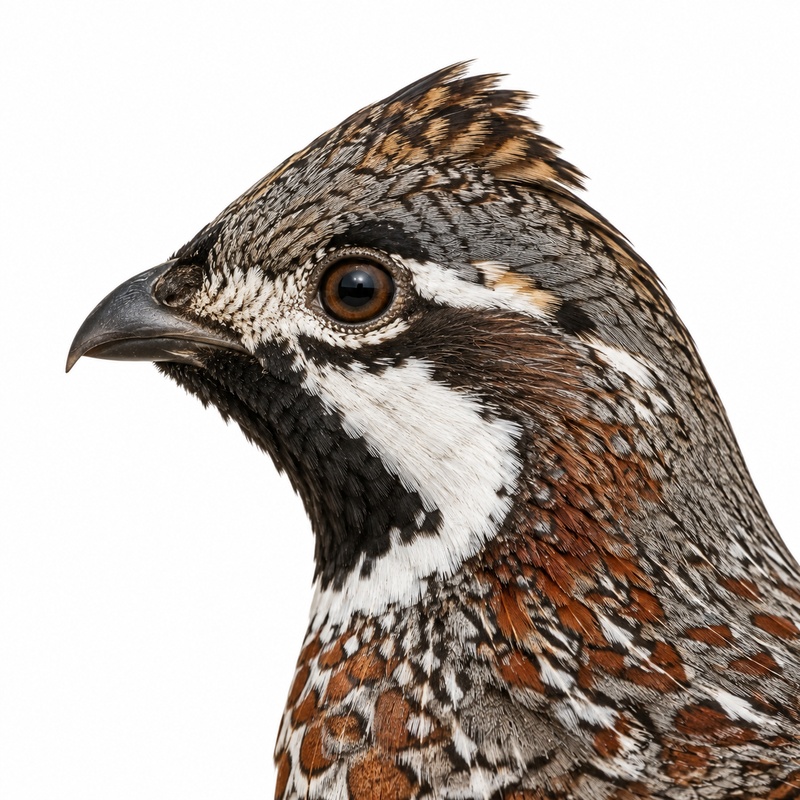
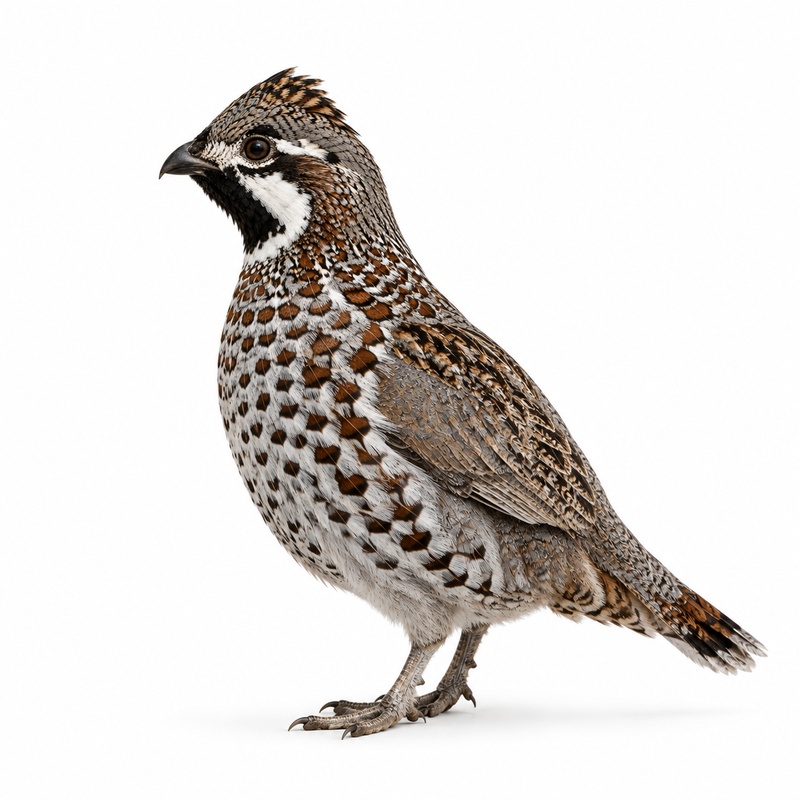
Its finely mottled plumage of brown, gray, white, and black provides remarkably effective camouflage. A francolin standing motionless on the ground or among the undergrowth can be virtually invisible even at close range.
In Italy, the species is found primarily in the Alpine region , where it primarily frequents structurally complex forests rich in undergrowth, clearings, young growth, shrubs, and wetlands. Its presence is closely linked to the quality and diversity of the forest habitat.
The hazel grouse also exhibits profoundly different behavior from that of the black grouse . It does not form spectacular collective singing arenas and tends to form pair bonds; it leads a secretive life, often in pairs or small family groups, moving silently through the vegetation.
From a canine perspective, it represents an extremely unique type of game. The pointing dog must work in an enclosed environment, rich in fragmented emanations, from which the game can quickly escape using vegetation, tree trunks, depressions, and small movements on the ground.
Francolino di monte: identity card
| Common name | Mountain Francolin |
| Scientific name | Tetrastes bonasia |
| Historical scientific synonym | Bonasa bonasia |
| Order | galliformes |
| Family | Phasianidae |
| Subfamily | Tetraoninae |
| Gender | Tetrastes |
| Length | Approximately 35-39 cm |
| Wingspan | Approximately 48-54 cm |
| Weight | Generally about 300-500 g |
| Italian distribution | Alpine Arc |
| Main habitat | Mountain and subalpine forests rich in undergrowth, clearings and forest regeneration |
| Supply | Mainly vegetal in adults; invertebrates important in juveniles |
| Behavior | Sedentary, territorial, reserved and predominantly terrestrial |
| Reproductive system | Mostly monogamous |
| Nest | To the ground |
| Chicks | Precocious and nidifugous |
| Distinctive feature | Small forest grouse with highly camouflaged plumage |
| Hunting status in Italy | Protected and non-huntable species |
How to recognize the hazel grouse
The hazel grouse is significantly smaller than the black grouse and especially the capercaillie . Its build resembles a small partridge, but its structure, plumage, and behavior immediately reveal it to be a grouse.
The body is compact, the wings are relatively short and rounded, and the tail is rather short. The plumage features a complex combination of gray, brown, chestnut, white, and black.
This broken coloration perfectly reproduces the alternation of light, shadows, leaves, bark and vegetation typical of the undergrowth.
The camouflage plumage
The Hazel Grouse represents an extraordinary example of forest camouflage.
Unlike the male Black Grouse, which becomes extremely showy during the breeding season, both sexes of the Hazel Grouse maintain an overall discreet coloration.
When the animal remains still among dry leaves, branches and low vegetation, the pattern of its plumage completely interrupts its silhouette.
Male and female: how to tell them apart?
Sexual dimorphism is present but much less evident than that of the Black Grouse.
The male generally has a characteristic black spot on the throat , bordered by a whitish edge, and a small erectile tuft on the head.
The female, on the other hand, has a less contrasting throat and an overall more uniform and camouflaged colouration.
Male and female compared
| Feature | Male | Female |
|---|---|---|
| Dimensions: | Slightly larger | Slightly lower |
| Gola | Black with clear margin | Clearer and less contrasted |
| Tuft on the head | More evident | Less developed |
| Plumage | Heavily mottled | Heavily mottled and camouflaged |
| Parental care | limited | Mainly entrusted to the female |
The characteristic tail of the hazel grouse
The tail is relatively short and has a characteristic dark terminal band , particularly evident when opened.
Its conformation is completely different from the large lyre-shaped tail of the black grouse and the broad, rounded tail of the capercaillie.
The paws
Like other grouse adapted to cold environments, the francolin has legs strongly adapted to mountain life.
The tarsi are feathered and during the winter the toes develop structures that increase the contact surface, making it easier to move on the snow.
The Hazel Grouse and the Snow
Although less specialized than the Rock Ptarmigan , the Hazel Grouse is perfectly capable of coping with Alpine winters.
During the cold season, it changes its behavior and diet, reduces unnecessary movements, and takes advantage of the protection offered by forest vegetation.
The flight of the hazel grouse
The flight is typical of a forest Galliforme: rapid, sudden and very manoeuvrable.
The animal is capable of leaping violently from the ground and immediately burrowing between tree trunks and branches.
The short, rounded wings prioritize acceleration and the ability to change direction rather than sustained flight.
The characteristic whistle
One of the most interesting characteristics of the Hazel Grouse is its vocalization.
The male emits a very high-pitched, thin whistle , surprising for a Galliformes bird and easily confused, by those unfamiliar with it, with the call of a small passerine.
Vocalization is used mainly in territorial communication and between members of the pair.
World distribution of the hazel grouse
Tetrastes bonasia has a predominantly Eurasian distribution.
The range extends from central and northern Europe through a huge forest belt to eastern Russia and north-eastern Asia.
The populations of southern Europe are more isolated and tied to the main mountain ranges.
The Hazel Grouse in Italy
In Italy the Hazel Grouse is distributed throughout the Alpine range.
However, its presence is not uniform: the species is more common in areas that preserve suitable forest habitats, while it can be very rare or absent in areas characterised by excessively uniform forests or by strong environmental transformation.
A sedentary species
The hazel grouse is essentially sedentary.
Adults tend to remain in the same area throughout the year, making relatively limited movements depending on food availability, snow and environmental conditions.
Habitat of the Hazel Grouse
Habitat is one of the fundamental aspects for understanding the species.
The hazel grouse doesn't just need a forest: it needs a complex and diverse forest.
Forests that are too uniform, lacking undergrowth and different tree age classes, are generally less favorable.
The ideal forest
The optimal environment presents a mosaic made up of:
mature trees;
young renewals;
shrubs;
clearings;
areas rich in undergrowth;
small wetlands;
herbaceous vegetation;
trees and shrubs that produce buds and fruit.
The hazel grouse's favourite habitats
| Structured mixed forests | ★ ★ ★ ★ ★ |
| Forests rich in undergrowth | ★ ★ ★ ★ ★ |
| Young forest regeneration | ★ ★ ★ ★ ★ |
| Margins and clearings | ★ ★ ★ ★ ★ |
| Alders | ★ ★ ★ ★ ★ |
| Spontaneous hazelnut groves | ★ ★ ★ ★ ★ |
| Woods with birch and willow trees | ★ ★ ★ ★ ★ |
| Diversified spruce trees | ★★★★ ☆ |
| Uniform woods without undergrowth | ★☆☆☆☆ |
| Completely open grasslands | ☆☆☆☆☆ |
Why is the undergrowth essential?
The undergrowth offers protection, food and movement at the same time.
The francolin spends most of its life relatively close to the ground and therefore requires a vegetation structure capable of protecting it from predators.
The importance of the kernel
Hazelnut is one of the species most closely associated with its habitat in many European regions.
Buds, catkins, and other plant parts can be important food sources during certain times of the year.
The importance of alder
Alders can also play an important role.
They provide food and contribute to the formation of the complex and diverse vegetation that characterizes the best habitats.
Birches and willows
Birches and willows are other frequently used species.
During the winter, buds and twigs become particularly important when the available resources on the ground are covered by snow.
Why are clearings important?
A completely closed forest offers a relatively limited supply of herbaceous vegetation and invertebrates.
The small clearings allow light to reach the ground and encourage the growth of herbs, shrubs, fruits and insects.
These environments become particularly important during the raising of young.
The mosaic structure of the forest
For the hazel grouse, the quality of the habitat depends more on the structure than on the simple presence of the forest.
A forest composed of different species, different tree ages, open areas and developed undergrowth offers many more possibilities than a uniform forest formation.
At what altitude does he live?
The altitudinal distribution varies greatly depending on the Alpine region, exposure and forest structure.
It can frequent mountain and subalpine woods, generally at lower altitudes than the more typical habitats of the black grouse and especially the rock ptarmigan.
Hazel Grouse and Black Grouse: What's the Difference?
| Feature | Mountain Francolin | Black grouse |
|---|---|---|
| Dimensions: | Small | Medium-large, especially in males |
| Habitat | Structured forest | Upper edge of the forest and subalpine shrublands |
| Sexual dimorphism | Moderate | Extremely marked |
| Reproductive system | Mostly monogamous | Polygynous |
| Singing Arenas | Absent | present |
| Male's tail | Short | Large and lyre-shaped |
| Behavior | Very elusive | More conspicuous during playback |
Hazel Grouse and Rock Ptarmigan
The two species represent almost the extremes of the habitats used by Alpine grouse.
The hazel grouse is deeply forest-dwelling.
The rock ptarmigan, on the other hand, lives mainly in open environments at high altitudes above the tree line.
Hazel Grouse and Capercaillie
Both species are associated with the forest, but have completely different sizes.
The Capercaillie is the largest European grouse, while the Hazel Grouse is one of the smallest.
The hazel grouse frequently uses forests rich in young growth and dense undergrowth; the black grouse generally requires very large and structured forest complexes.
The behavior of the hazel grouse
It is an extremely discreet animal.
It spends most of the day moving on the ground among the vegetation, where its plumage makes it very difficult to spot.
The presence of the species is often detected more easily through vocalizations, tracks or sudden flights than through direct observation.
A predominantly terrestrial life
The hazel grouse searches for most of its food on the ground.
It moves nimbly through the undergrowth and uses vegetation to remain hidden.
Trees are still used for rest, food and protection.
Territorial behavior
The hazel grouse has a marked territoriality.
The male uses specific vocalizations and behaviors to signal his presence and maintain his territory.
This feature becomes particularly evident during the reproductive period.
A monogamous species
Unlike the black grouse, in which males compete in the arenas to mate with multiple females, the hazel grouse has a predominantly monogamous reproductive system.
Pair formation is therefore a central element of its reproductive strategy.
The courtship
During the breeding season the male becomes more active and frequently uses its characteristic whistle.
It can assume particular postures, open its tail slightly and show more of the characteristics of its plumage.
When does it reproduce?
Reproductive activity increases during spring.
The exact times vary depending on altitude, exposure, snow cover and the climatic trend of the year.
The hazel grouse's nest
The nest is built directly on the ground.
The female generally chooses a spot well protected by vegetation, often at the base of a tree, near a trunk, under a shrub or among the undergrowth vegetation.
How many eggs does it lay?
The clutch generally consists of about 7-11 eggs , although the number can vary.
The eggs have a color that helps make them less visible in the nest.
The incubation
Incubation lasts approximately 24-26 days and is carried out by the female.
The highly camouflaged plumage allows the female to remain less visible during incubation.
The chicks
As in other Tetraonines, the chicks are precocial and nidifugous.
Shortly after hatching, they are able to follow their mother and begin searching for food on their own.
The importance of insects for young people
During the first few weeks, the chicks' diet contains a very important component of insects, larvae and other small invertebrates.
The high protein content allows for extremely rapid growth.
Why is the climate during hatching important?
Prolonged periods of cold and rain can increase mortality among young.
In fact, young ones still have limited thermoregulation capabilities and at the same time need to feed frequently.
Favorable springs and summers can therefore determine significantly higher reproductive success.
The Francolin family
During the summer the female leads the brood through the most favorable areas.
The family mainly uses areas rich in cover, herbaceous vegetation and invertebrates.
As young people grow, their autonomy gradually increases.
The annual cycle of the hazel grouse
| Period | Main phase |
|---|---|
| Winter | Reduction of travel and diet based mainly on tree resources |
| End of winter | Increased territorial activity |
| Spring | Courtship and reproduction |
| Late spring | Nesting and incubation |
| Early summer | Hatching |
| Summer | Raising young people |
| Late summer-autumn | Youth dispersion and territorial formation |
Feeding of the Hazel Grouse
The adult diet is predominantly plant-based , but changes profoundly throughout the year.
The great diversity of the forest habitat allows for the use of numerous food sources.
What does he eat in spring?
With the vegetative recovery the following become available:
sprouts;
young leaves;
inflorescences;
gems;
first herbaceous plants.
What do you eat in summer?
During the summer the diet becomes particularly rich.
It may include:
leaves;
seeds;
fruits;
berries;
sprouts;
invertebrates.
What does he eat in autumn?
Autumn offers numerous energy resources that allow animals to prepare for the cold season.
Fruits, seeds and berries can become especially important.
What does he eat in winter?
When snow covers much of the ground vegetation, the hazel grouse profoundly changes its diet.
Buds, catkins and small twigs of trees and shrubs are of particular importance.
Birch, hazel, alder and willow can represent important resources depending on the composition of the forest.
Predators of the Hazel Grouse
The species can be preyed upon at all stages of its life cycle.
Potential predators include:
goshawk;
sparrowhawk;
fox;
marten;
ermine;
other mustelids;
corvids , especially towards eggs and young.
The main defense: becoming invisible
The francolin often avoids danger by remaining still.
Its extremely camouflaged plumage allows it to blend in with the forest floor.
Only when the danger becomes too close can it produce a sudden and very rapid flight.
The Francolin in front of the pointing dog
The behavior of the Francolin in front of the dog can be extremely difficult to interpret.
In fact, the wild animal has numerous options: it can remain still, move away on the ground, sneak into the vegetation or suddenly take flight.
The conformation of the forest also makes the emanation much more complex than that present in open environments.
The emanation in the forest
Trunks, shrubs, leaves, humidity, and irregular air currents can retain or deflect the emanation.
The dog can therefore suddenly encounter a very intense emanation and then lose it a few meters later.
Only experience allows us to correctly interpret these situations.
The stalking
The Francolin can move quickly on the ground using cover.
The dog must therefore distinguish a stationary game from one that is gradually gaining distance.
Forcing too much can cause an out-of-control flight.
Stops her
When the game remains still, the pointing can be extremely intense.
The hunter can hardly see the animal before it takes flight due to vegetation and camouflage.
The flight into the woods
The flight is lightning-fast.
The Francolin accelerates rapidly and immediately uses trees and vegetation to escape sight.
The trajectory can change within a few meters.
The shed
Visually tracking a francolin in the woods is very difficult.
Often the animal disappears after a few moments behind tree trunks and vegetation.
The dog's ability to find the emanation therefore becomes fundamental.
The historic hunt for the hazel grouse
The hazel grouse belongs to the great Alpine and Central European hunting tradition.
In the past it was hunted using different techniques, including forms of hunting based on the imitation of its characteristic call.
Its extreme elusiveness and its connection to complex woodlands have always made it a particular and difficult wild animal.
Can the hazel grouse be hunted in Italy?
No. The hazel grouse is not included among the huntable species envisaged by Article 18 of Law No. 157 of 11 February 1992 and is therefore a protected species in Italy.
This element clearly distinguishes it, from a hunting perspective, from some other Alpine Galliformes covered by national legislation.
The relationship with hunting dogs must therefore be read above all from a historical, biological and knowledge perspective regarding the behaviour of wild animals , as well as within the scope of any canine activities regulated by applicable regulations.
Why is the hazel grouse a delicate species?
The species is highly dependent on forest habitat structure.
It is not enough that a large forest area exists: the forest must possess the characteristics necessary for its nutrition, reproduction and protection.
Forest simplification can therefore be negative even when the overall forest area does not decrease.
Forest management
Forest management can have significant effects on the species.
Excessively uniform forests, lacking undergrowth and young regeneration, can offer unfavorable conditions.
Management capable of maintaining structural and compositional diversity can instead contribute to habitat quality.
The importance of young renewals
Areas where the forest regenerates naturally can create a particularly favorable structure.
Young trees, shrubs and herbaceous vegetation simultaneously produce cover and food.
Habitat fragmentation
Isolated populations may become more vulnerable.
The continuity between suitable forest habitats allows the dispersal of young and exchanges between different nuclei.
Ecological corridors therefore take on particular importance.
Human disturbance
Recreational activities can also cause disturbance, especially when they repeatedly affect wintering or breeding areas.
The problem can be particularly significant during the winter, when every leak carries an energy cost.
Climate change
Climate changes can also indirectly modify the francolin's habitat.
Changes in forest composition, snow duration, and plant species distribution can produce complex, long-term effects.
How do you monitor the hazel grouse?
The extremely elusive nature makes the census difficult.
Monitoring can use different methodologies based on vocalizations, territorial presence, indirect signs and standardized protocols.
Repeating observations over the years allows us to evaluate population trends.
Why is singing useful in censuses?
The male's distinctive whistle allows it to detect animals that would be almost impossible to observe directly in the vegetation.
Acoustic protocols performed at appropriate times and periods can therefore provide valuable information on the presence of the species.
Conservation of the Hazel Grouse
Conservation occurs above all through the protection and correct management of the habitat.
Favorable interventions may include:
maintenance of structurally diverse forests;
conservation of the undergrowth;
maintenance of clearings and edges;
protection of young growth;
conservation of hazelnuts, alders, birches and willows;
fragmentation reduction;
protection of reproductive areas;
reduction of disturbance in sensitive areas;
population monitoring.
Which dogs can the Hazel Grouse encounter?
Although it is currently a non-huntable species in Italy , the biology of the Francolin is of great interest for understanding the work of the pointing dog on forest Galliformes.
| English Setter | ★ ★ ★ ★ ★ |
| Setter Gordon | ★ ★ ★ ★ ★ |
| English Pointer | ★★★★ ☆ |
| Shorthair | ★ ★ ★ ★ ★ |
| Drahthaar | ★ ★ ★ ★ ★ |
| Breton spaniel | ★ ★ ★ ★ ★ |
| Spinone Italian | ★★★★ ☆ |
| Italian Pointer | ★★★★ ☆ |
This evaluation has exclusively a descriptive and canine value and does not constitute an indication for hunting on this species.
The English Setter and the Francolin
The English Setter has characteristics particularly suited to the search for Galliformes.
In the woods, however, it must radically modify its search compared to open environments, maintaining greater connectivity and continually adapting to the vegetation.
The Gordon Setter in the woods
The Gordon Setter , due to its robustness and predisposition to work in vegetation, has interesting characteristics for the interpretation of forest game.
Methodical research and good networking are particularly important qualities.
The Kurzhaar
The Kurzhaar combines hunting ability, adaptability and versatility.
In the forest, it can effectively change the width and speed of work in relation to the density of the vegetation.
The Drahthaar
The Drahthaar has a protective coat and a structure particularly suited to harsh environments.
Brambles, shrubs, regeneration and thick undergrowth can be tackled with considerable effectiveness by well-trained individuals.
The Brittany Spaniel
The relatively small size and great agility can represent very interesting characteristics in forest environments.
An experienced Brittany Spaniel can move effectively through dense vegetation and tight spaces while maintaining good communication.
The dog in the woods must change his search
The large mountain dog does not always have to use the same pattern.
In alpine meadows, it may be necessary to monitor very large areas; in the hazelnut forest, however, it becomes essential to read the vegetation, use the wind, and maintain communication.
Hunting intelligence consists precisely in the ability to adapt the search to the environment.
The Hazel Grouse: Main Characteristics
| Mimicry | ★ ★ ★ ★ ★ |
| Adaptation to the forest | ★ ★ ★ ★ ★ |
| Adaptation to the cold | ★ ★ ★ ★ ★ |
| Elusiveness | ★ ★ ★ ★ ★ |
| Territoriality | ★ ★ ★ ★ ★ |
| Ability to move in the undergrowth | ★ ★ ★ ★ ★ |
| Flight in a forest environment | ★ ★ ★ ★ ★ |
| Dependence on habitat quality | ★ ★ ★ ★ ★ |
| Naturalistic interest | ★ ★ ★ ★ ★ |
| Canine interest | ★ ★ ★ ★ ★ |
Curiosities about the Hazel Grouse
It is the smallest grouse present in Italy: its dimensions are significantly smaller than the black grouse and the capercaillie.
It is much easier to hear it than to see it: its characteristic whistle often allows you to identify its presence without being able to observe the animal.
Its plumage reproduces the undergrowth: brown, grey, black and white interrupt the silhouette making the animal almost invisible.
It does not live in any forest: it especially requires structurally diverse forests with a rich undergrowth.
It is predominantly monogamous: a very important difference compared to the reproductive system of the black grouse.
It does not have singing arenas: the male defends the territory and communicates through its characteristic call.
It is sedentary: it spends the entire year within relatively limited territories.
It is protected in Italy: it is not included in the list of huntable species provided for by Law 157/1992.
Hazel Grouse, Black Grouse, Rock Ptarmigan and Capercaillie: a comparison of environments
| Species | Characteristic environment |
|---|---|
| Mountain Francolin | Structured mountain forest rich in undergrowth |
| grouse | Large, mature, and diverse forest complexes |
| Black grouse | Upper forest edge, shrublands and subalpine meadows |
| Ptarmigan | High-altitude open environments and alpine tundra |
Why the Hazel Grouse is a symbolic species of the Alpine forest
The Hazel Grouse – Tetrastes bonasia tells the story of a completely different part of the mountain than the Rock Ptarmigan and the Black Grouse.
If the Rock Ptarmigan represents the rocks, snow and open spaces of the highest altitudes and the Black Grouse the mosaic between forest and subalpine meadow, the Hazel Grouse is above all the wild bird of the complex forest.
Its presence demonstrates that not all forests are ecologically equivalent. A uniform forest, consisting of trees of the same age and almost devoid of undergrowth, may appear lush to humans but offer few opportunities for the species.
The hazel grouse, on the other hand, requires natural clutter: clearings, young trees, shrubs, undergrowth, various species, wetlands, and edges . It is precisely this complexity that provides year-round food and protection from predators.
Even its appearance perfectly reflects this environment. It lacks the brilliant black and spectacular tail of the black grouse, nor the winter white of the rock ptarmigan. Its plumage is a mosaic of seemingly modest colors that precisely reproduce those of the forest.
Their behavior is equally discreet. The francolin spends much of its life hidden in vegetation and often reveals its presence only through the male's subtle whistle or a sudden, thunderous flight.
Its reproductive biology further distinguishes it from other large Alpine grouse. The spectacular collective arenas of the black grouse do not exist: the hazel grouse is territorial and predominantly monogamous , with a much more secretive strategy perfectly consistent with life in the woods.
For wildlife management, it represents above all an indicator of the quality of mountain forest ecosystems. Protecting the hazel grouse means conserving not simply the trees, but the biological complexity of the forest.
Knowing the Hazel Grouse – Tetrastes bonasia therefore means understanding forest ecology, adaptation to the mountains, camouflage, silvicultural management, conservation of grouse and the behaviour of fauna in the alpine forest : a small Galliforme which, despite its size, has enormous naturalistic value.