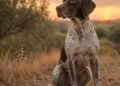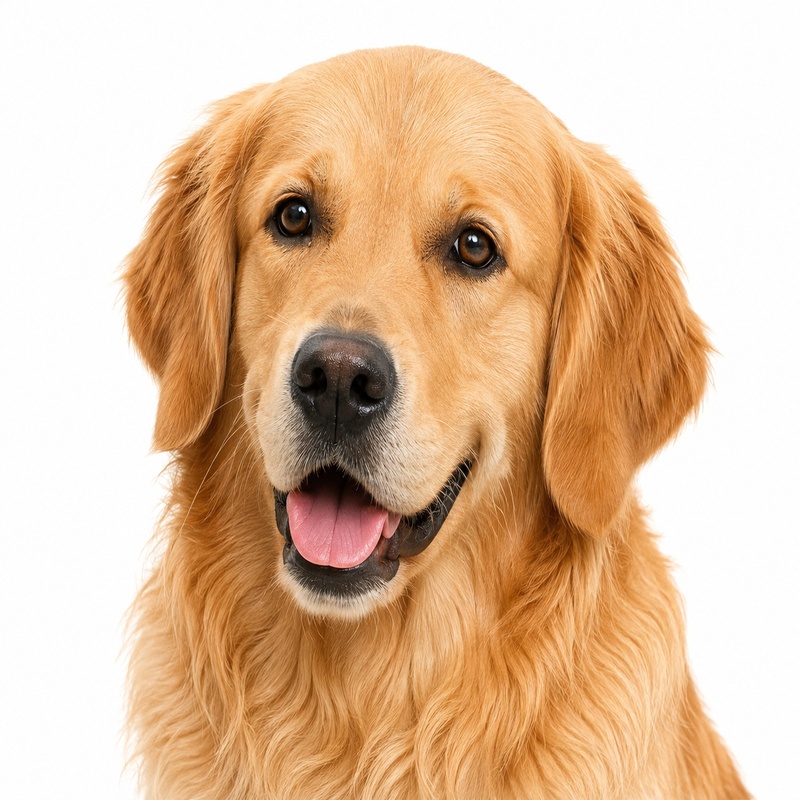
The Golden Retriever is one of the best-known dog breeds in the world, but its widespread popularity as a family dog has partly obscured the function for which it was actually selected: to be a hunting dog specialized in retrieving killed or wounded game , capable of working both on land and in water.
Behind the elegant appearance, generally affable nature, and long golden coat lies a truly hunting Retriever, developed in Great Britain to work alongside hunters during hunts on large Scottish and British estates. The dog had to observe the action, memorize the game's landing spot, reach it quickly, use its sense of smell when necessary, and retrieve the animal with a grip gentle enough to avoid damaging it.
Traditional breeding has favored intelligence, balance, a strong desire to retrieve, willingness to herd, and a unique ability to work while maintaining a close bond with the handler. The Golden Retriever is therefore less independent than some hunting breeds and finds collaboration among its strengths.
A specimen from functional lines can be extremely different, in structure and behavior, from the image of the heavy, heavily feathered Golden Retriever frequently observed in show-only contexts. The working dog generally tends to be more athletic, lean, quick, and highly motivated toward retrieving and searching.
Water, marshes, reed beds, meadows, farmland, and woods are environments where the Golden Retriever can fully express its qualities. Its function is not to seek out and stop game like a Pointer or Setter, but to complete the hunt by ensuring the effective and responsible recovery of downed or injured game.

Golden Retriever: breed data sheet
| Official name | Golden Retriever |
| country of origin | Britain |
| FCI Code | 111 |
| FCI Group | Group 8 – Retrievers, Flushing Dogs and Water Dogs |
| Section | 1 – Retrievers |
| Test of work | Yes |
| Use | Game Retriever |
| Size | Medium-large |
| Male height | Approximately 56-61 cm at the withers |
| Female height | Approximately 51-56 cm at the withers |
| Weight | Varies according to sex, structure and line; the FCI standard favors balance and proportions. |
| cloak | Smooth or wavy, with abundant fringes and thick waterproof undercoat |
| Allowed colors | Any shade of gold or cream |
| Main attitude | Retrieval from land and water |
| Work environment | Wetlands, rivers, lakes, meadows, crops, forests and mixed soils |
| Temperament | Docile, intelligent, confident, collaborative and naturally predisposed to work |
| Relationship with water | Very good |
Origin and history of the Golden Retriever
The history of the Golden Retriever is closely tied to the transformation of British hunting in the 19th century. Improved firearms and the growing popularity of organized hunting increased the need for dogs capable of accurately retrieving downed game in often difficult terrain and in the presence of streams, lakes, and marshes.
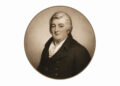
The selection of the breed is traditionally linked to the Scottish estate of Guisachan and the work of Dudley Marjoribanks, Lord Tweedmouth , who during the nineteenth century began a systematic selection starting from yellow-coloured retrievers and water dogs used in the region.
A key role is attributed to the cross between a yellow retriever named Nous and a female Tweed Water Spaniel named Belle . From this line and subsequent matings with other retrievers and hunting dogs, the characteristics that would give rise to the modern Golden Retriever were gradually established.
The Tweed Water Spaniel is now extinct, but its contribution is considered particularly important due to its predisposition for swimming, its protective coat and its ability to work in aquatic environments.
The breed was initially considered a variety of flat-coated retrievers and later recognized as an independent type. During the twentieth century, the Golden Retriever achieved extraordinary worldwide popularity.
This popularity gradually transformed it into a companion, assistance and social utility dog, but its origins clearly remain that of a British hunting retriever.
Functional selection: a dog created to retrieve, not simply to accompany
Its original function required very specific characteristics. The dog had to stay close to the hunter during the action, observe the game's flight, and memorize where it landed.
When the command to retrieve came, the dog had to set off with determination, quickly reach the indicated area, and retrieve the animal. If the game was not in the expected spot, the dog had to use its sense of smell and its own searching ability.
Recovering the injured was particularly important. A wounded but still mobile pheasant or duck can quickly move away from the point of impact. The Retriever therefore must possess perseverance and the ability to follow a scent trail.
Selection has also favored a soft mouth . The dog must carry the prey without squeezing it excessively, avoiding unnecessary damage to the game.
These qualities still make the difference today between a simply well-bred Golden and a true working Golden Retriever.
General appearance and construction
The Golden Retriever should appear symmetrical, balanced, powerful, active, and well-built . The structure should express strength without heaviness and allow the dog to work for prolonged periods.
The body is well-proportioned, with a deep chest, well-developed ribs, and a strong lumbar region. A dog destined for swimming, running, and carrying game requires an efficient cardiopulmonary system and a structure capable of sustaining continuous activity.
The hindquarters should provide powerful thrust, while the frontquarters should allow for good reach. The ideal movement is fluid and regular, without lateral dispersion or excessively laborious actions.
In working dogs, it's especially important to avoid excess weight. An overweight Golden Retriever quickly loses efficiency, especially when navigating water, mud, and thick vegetation.
Head and expression
The head is one of the most recognizable characteristics of the breed. It must be balanced and well-chiseled , with a broad but not coarse skull and a well-defined stop.
The muzzle is powerful, broad, and deep, with length roughly proportional to that of the skull. The jaws must be strong and capable of carrying game.
The eyes are dark brown and set well apart, with a characteristically kind and intelligent expression.
The ears are of moderate size and set approximately at eye level.
The nose should preferably be black. A well-opened nose is naturally functionally important in a dog that must use its sense of smell intensively.
Neck, chest and carrying capacity
The neck should be of good length, lean, and muscular. This isn't just an aesthetic trait: a Retriever must be able to run and swim while holding relatively heavy game in its mouth.
Carrying an adult pheasant or a good-sized duck requires proper distribution of force between the jaws, neck, shoulders and back.
A deep chest supports breathing during intense work. The ribs should be well developed without making the body feel excessively heavy.
The lumbar region is strong and muscular, an important element for propulsion during running and swimming.
Limbs, feet and movement
The forelegs are straight, with good bone and properly sloping shoulders. The hindquarters are powerful and well angulated.
The feet are round, compact and often described as “cat feet” , with tight toes and strong pads.
Proper movement allows the dog to cover ground economically. The gait should be powerful yet fluid, with good reach and strong drive.
A Retriever must not only have a beautiful stride for show: it must be able to maintain efficiency for hours on natural terrain.
The coat: protection against water, cold and vegetation
The Golden Retriever has a smooth or wavy coat, with abundant fringes and above all a thick, waterproof undercoat.
This structure derives directly from its original hunting use. The dog had to repeatedly enter cold waterways and lakes, maintaining adequate thermal protection.
The undercoat limits the penetration of water towards the skin, while the topcoat also protects from contact with vegetation, mud and atmospheric conditions.
The fringes are particularly developed in the neck region, on the back of the limbs, on the belly and on the tail.
In a dog actually used for hunting, the coat must be above all functional . An excessively abundant coat can more easily retain mud, seeds, and plant material.
From light golden to cream
The standard permits any shade of gold or cream , provided the coat does not tend towards red or mahogany.
The great chromatic variety observed in the breed depends on the different selection lines and preferences developed in the various countries.
British and American working subjects can frequently exhibit more intense tones than some very light European show lines.
Color does not naturally determine hunting ability. A Retriever's quality must be evaluated through structure, temperament, health, instinct, and working ability.
Working Goldens and Show Goldens
In the Golden Retriever the distinction between working lines and show lines can be particularly evident.
Field work dogs generally tend to be lighter, leaner, and more athletic. Their coats may be less abundant and often have a deeper golden hue.
Functional selection favors desire to retrieve, speed, marking, smell, steadiness and trainability.
Predominantly show lines may exhibit greater bone mass, a larger chest, more robust heads, and particularly rich coats.
These are not two different breeds, but rather selective orientations that can produce dogs that are significantly different in appearance and behavior.
For the hunter who really wants to use the Golden Retriever, the evaluation of the bloodlines and the working qualities of the parents is therefore particularly important.
Character: docility and collaboration as working tools
The Golden Retriever is traditionally described as docile, intelligent, naturally hardworking, gentle, friendly and confident.
These characteristics contributed enormously to the spread of the breed as a family dog, but their origin is profoundly functional.
A Retriever must be easy to control, even under intense excitement. It must observe a game animal falling and remain still. It must accept being directed in a direction it would not have chosen itself. It must spontaneously retrieve the prey toward its handler instead of holding it.
Docility, therefore, does not mean a weak character. A proper Golden Retriever must be confident and capable of taking the initiative when searching, while maintaining a strong willingness to cooperate.
The relationship with the hunter
The Golden Retriever works particularly well when there is a solid and consistent relationship with its handler. The breed normally has a strong predisposition to observe humans and respond to directions.
This quality is particularly important in long-distance retrievals. Through whistle and hand signals, the hunter can direct the dog to an area only he has seen.
However, when the Retriever enters the correct area, it must gradually become independent and use its sense of smell.
The complete Golden must therefore be manageable without becoming dependent and autonomous without becoming independent.
Retrieving: A central instinct of the breed
The desire to pick up an object and bring it back to the handler is one of the central elements of Golden Retriever selection.
This predisposition can manifest itself very early in puppies. Small objects, toys, or retrievers are spontaneously picked up and carried.
The handler's job is to transform this natural behavior into an orderly and reliable retrieve.
The dog must learn to leave only when requested, reach the object, collect it correctly, return without unnecessary detours and hand it over.
A high natural motivation makes the process much easier, but the quality of the retrieval still depends on selection and training.
The soft mouth
The so-called soft mouth represents one of the qualities traditionally associated with the Golden Retriever.
The dog must carry the game without holding it too tightly. A grip that's too tight can harm the animal; a grip that's too loose can cause it to fall during transport.
The correct behavior consists of a stable and gentle grip.
This quality is particularly important with feathered game, where excessive pressure can cause significant damage.
Genetic predisposition plays a major role, but incorrect training can create chewing or possession problems even in a naturally well-disposed individual.
Marking: See, Remember, and Achieve
Marking is a fundamental skill in hunting. The Golden Retriever must observe the game's flight and memorize the spot where it lands.
The dog doesn't perceive the territory from the same perspective as the hunter. Vegetation, slope, and distance can make it difficult to pinpoint the exact area.
An experienced Retriever uses trees, bushes, edges, changes in the shoreline, and other landmarks to build a spatial memory of the fall.
Once sent, it quickly reaches the area and begins a scent search only if the prey is not immediately visible.
Good marking dramatically reduces energy and recovery time.
Multiple reports
During a hunt, multiple game birds may fall in quick succession. The Golden Retriever must be able to memorize two or more falls and retain the information while completing the first retrieve.
The hunter can also decide to modify the order. A wounded animal should generally be recovered with priority over one that is definitely dead and easily located.
The dog must therefore accept the handler's choice even when it would spontaneously be oriented towards another fall.
Multiple retrieves combine memory, self-control, marking and willingness to handle and are one of the best tests of a well-trained Retriever.
Blind Retriever: Trusting Your Handler
The blind retrieve is the recovery of a game animal that the dog has not seen fall.
In this situation the Golden Retriever must start in the direction indicated by the hunter without having any visual information of his own.
The handler uses whistle and hand signals to stop and direct the dog to the right, left or forward.
When it reaches the target area, the dog receives the search command and uses its sense of smell to locate the prey.
The challenge lies in balancing obedience and autonomy : the dog must rely on its handler until it reaches the fall zone; once there, it must be able to solve the problem using its own sensory abilities.
Steadiness: seeing the game fall and remaining still
The ability to remain still is one of the most important aspects of the Hunting Retriever.
A dog that starts running on its own at the sound of a gunshot or when it sees its prey falling can create dangerous situations and jeopardize the entire action.
Steadiness, on the other hand, teaches the Golden that falling does not automatically signal the start.
The dog observes, memorizes and waits.
Only when he receives the order does he leave for the recovery.
This ability requires particular work in subjects with a very strong desire to retrieve, precisely because they must learn to control a highly motivating behavior.
Bringing back from the water
The Golden Retriever has a strong predisposition for water work . Its thick, waterproof undercoat, powerful build, and retrieving instinct make it particularly effective at hunting ducks.
The dog must enter the water without hesitation, choose an effective trajectory and maintain the pace even over long distances.
Simple recovery involves a dead, visible wild animal. The real difficulties begin when the animal is injured.
A duck can continue swimming, dive, be blown by the wind, or reach a reed bed. The Retriever must then combine sight, smell, experience, and perseverance.
The value of the dog becomes particularly evident precisely when the hunter would not be able to recover the game independently.
Golden Retrievers and Duck Hunting
Mallard, Teal, Wigeon, Pintail, Gadwall and other Anatidae represent a traditional use perfectly consistent with the breed.
While waiting, the Golden Retriever must remain calm within the hide or near the hunter. A dog that moves constantly can hinder the birds' approach.
At the moment of action he must carefully observe and mark the falls.
After the command, enter the water and proceed towards the indicated area.
The work can become particularly complex when multiple game are killed or when injured prey reaches dense marsh vegetation.
A well-trained Retriever therefore contributes not only to the comfort of the hunter, but above all to the reduction of lost game.
Reed beds, swamps and difficult recoveries
In the reeds, sight becomes almost useless and the Golden must rely mainly on smell.
An injured duck can move through small corridors in the vegetation and constantly change direction.
The dog must penetrate the cover while maintaining motivation and attention. In some cases, it may remain completely out of the handler's sight.
Here the value of experience emerges: the Golden Retriever must be able to interpret smells, sounds, and the movement of vegetation and continue searching even when he doesn't receive any directions.
Perseverance becomes an essential quality.
Retrieving from the ground: Pheasant, Partridge and other game
The Golden Retriever isn't just a water dog. It's a complete retriever and can be used effectively to retrieve pheasant, grey partridge, partridge, and other game birds shot on land.
A wounded Pheasant can be a particularly challenging test because it is capable of running quickly and moving far away from the point of fall.
The dog must reach the marked area and quickly determine whether the prey is still there. If not, it must begin a scent search.
The Golden Retriever must therefore be able to switch from a mainly visual retrieve to a real search on the trail left by the game.
The wounded wild dog: the most important function of the retriever
Retrieving wounded game is probably the most important and ethically significant function of the Golden Retriever during hunting.
A seemingly lost animal may still be alive and continue to wander off. Without a properly trained dog, it may never be found.
The Golden Retriever must possess perseverance, a nose for the task, and determination . He must not simply check the landing spot superficially.
When it detects a trail it must follow it and continue as long as it has useful evidence.
The function of the Retriever is therefore not only to make recovery easier, but to actually reduce the number of killed or injured animals that would remain in the area.
The sense of smell in the work of the Golden Retriever
The Golden Retriever generally has a good sense of smell and can use it both in close-range searching and in retrieving wounded game.
Once it reaches the area of the fall, it can begin a systematic search with its nose, locating feathers, body odor, or tracks left by the animal during its journey.
Wind direction strongly influences the work. An experienced dog gradually learns to position itself so as to more easily intercept the scent.
This ability should be developed during training through exercises in which the dog cannot rely solely on sight.
Puppy training
In the puppy, the priority is to maintain and strengthen the natural desire to retrieve.
The first sessions should be short and fun. A small soft dumbbell is thrown a few meters away and the puppy is encouraged to return to the handler.
Handing over the item should become a positive experience. Chasing the dog or constantly trying to snatch it can easily turn fetch into a game of possession.
At the same time, recall, sitting, waiting and attention are developed.
The technical level increases only when these foundations become solid.
Introduction to water
The Golden Retriever normally has a strong predisposition for water, but the first approach should still be gradual.
The puppy can start in a shallow stretch with safe bottom and favorable temperature.
A dumbbell thrown a short distance away can spontaneously increase the motivation to enter.
It's not advisable to force a dog into the water. A negative experience can create completely avoidable mistrust.
Over time, distance, depth and difficulty are increased until safe and natural swimming is developed.
Whistle and hand signals
Remote handling is a fundamental part of the Retriever's training.
Whistling allows you to communicate even when wind, water , or distance make your voice ineffective.
The dog can be trained to distinguish between recall and stop signals.
Once stopped, he must turn towards the handler and wait for the gesture that indicates the new direction.
These exercises are progressively built on land and subsequently transferred to more complex situations and in the water.
Golden Retrievers and team hunting
In British tradition the Retriever is often used in conjunction with dogs with completely different functions.
Pointers and setters locate and stop game. Spaniels can search for it and let it fly. Goldens, on the other hand, must wait until they are ready to retrieve it.
This organization requires a high level of discipline. The Retriever must be able to observe other dogs in action without interfering.
He must also temporarily ignore wild animals that have not been assigned to him and concentrate exclusively on the requested retrieval.
The ability to do nothing until the right time is as critical a component of the job as the ability to report.
Golden Retriever and Labrador Retriever
| Feature | Golden Retriever | Labrador Retriever |
|---|---|---|
| Structure | Balanced and athletic | More compact and powerful |
| cloak | Medium-long with fringes | Short and thick |
| Aquaticism | Very good | Excellent |
| Collaboration | Very high | Very high |
| Sensitivity | Generally high | Variable according to line |
| Coat maintenance | Greater | Lower |
| International hunting diffusion | Important | Very high |
The Labrador is probably the most popular working retriever in the world today and has a particularly efficient structure for water. The Golden Retriever can offer equally refined work when bred properly.
The choice must therefore depend on genetic line, type of hunting, sensitivity of the handler and personal preferences rather than on an abstract idea of superiority between breeds.
Golden Retrievers and Flat Coated Retrievers
Golden and Flat retrievers share an important part of their history with British retrievers, but today they have different morphological and behavioral characteristics.
The Flat generally tends to be more streamlined, lively and explosive , with a long head and a much less pronounced stop.
The Golden Retriever has a medium-to-larger build and a character that is often perceived as slightly more regular and sensitive.
Both can reach very high levels in retrieving work and share a strong collaboration with the handler.
Golden, Curly and Nova Scotia
| Feature | Golden | Curly Coated | Nova Scotia |
|---|---|---|---|
| Structure | Balanced and powerful | Higher and drier | More compact |
| cloak | Long, fringed and with undercoat | Thick, tight curls | Medium-long double coat |
| Collaboration | Very high | Greater autonomy | Very high |
| Aquaticism | Very good | Excellent | Excellent |
| Distinctive feature | Balance and versatility | Resistance and autonomy | Tollingive speed |
Each Retriever therefore represents a different interpretation of the same work. The quality of the individual and the selection process remains more important than breed generalizations.
Hunting Qualities of the Golden Retriever
- Strong natural predisposition for retrieving.
- High level of collaboration with the host.
- Good marking ability in the subjects selected for the work.
- Excellent predisposition for working in water.
- Soft mouth and ability to properly transport game.
- Good sense of smell in the search for injured animals.
- Generally balanced and trainable temperament.
- Flexibility in recovery from land and water.
- Perseverance in difficult recoveries.
- Good memory in multiple reports.
- Ability to work in a team without interfering with other auxiliaries.
Aspects to consider before choosing a Golden Retriever for hunting
The extraordinary spread of the breed has produced lines selected for very different purposes. For those who truly desire a hunting dog, this is the first point to consider.
Not all Goldens possess the same level of desire to retrieve, energy, and working instinct . Selecting the right breeders is therefore crucial.
A second aspect concerns the coat. Fringes require more maintenance than the Labrador's short coat, especially after working in mud, reeds, and vegetation.
The dog must also maintain good physical condition. Goldens can be significantly prone to weight gain if diet and exercise are not properly managed.
An overweight person loses much of the athletic qualities necessary for work.
Daily life and need for activity
The Golden Retriever is known for its ability to adapt to family life, but a working-bred specimen can possess a very high energy level.
He needs physical and mental activity . Retrieving, swimming, scent hunting, herding exercises, and long walks are particularly suitable activities.
A large garden is no substitute for working with the owner. The breed was bred to work collaboratively and requires interaction.
Prolonged inactivity can lead to weight gain, frustration, and unwanted behaviors.
Relationship with family
The Golden Retriever's great popularity as a family dog stems from characteristics that are truly present in the breed: kindness, sociability, and a strong desire for interaction with humans.
A properly socialized individual tends to develop a very close relationship with the family and generally fits in well in contexts with other people and animals.
Early socialization remains essential. The puppy must gradually become acquainted with noises, people, other dogs, water, transportation, and different environments.
A hunting retriever must be able to face a new context without losing balance and willingness to work.
Coat care after hunting
A Golden's fringes can retain seeds, thorns, mud, and plant matter . After a day's work, it's important to carefully check the entire coat.
Particular attention must be paid to the ears, axillary region, tail and interdigital spaces.
After working in the water, it can be helpful to rinse the dog when necessary and let it dry completely.
Regular brushing helps maintain a functional coat and quickly identify any irritation or foreign bodies.
The double coat should not be shaved, as it has a protective and thermoregulatory function.
The Golden Retriever in the Hunting Encyclopedia
The Golden Retriever represents one of those cases in which the extraordinary popularity of a breed has almost obscured its true origins. Today, millions of people know it as a family dog, a service dog, or a companion, but its name still reflects the function for which it was selected: retrieve.
The Golden Retriever was born within the great British hunting tradition. The problem it had to solve was very concrete: the hunter might kill an animal at a great distance, across a stream, in a marsh, or in a difficult-to-reach area of vegetation. A dog capable of observing, remembering, tracking, and retrieving was needed.
This function has shaped both the body and the character. The thick, waterproof undercoat protects the dog while working in the water. The neck and jaws allow it to carry game. Intelligence and docility allow it to lead a dog from a distance. Its sense of smell allows it to transform a simple retrieve into a search when the wounded game has moved away.
The most interesting quality is probably its cooperation . A Retriever doesn't work exactly like a pointing dog, which must independently interpret the terrain in search of the scent. The Golden Retriever spends a significant portion of the action observing the hunter and awaiting information.
In marking, he uses what he sees. In blind retrieve, he uses what the handler tells him. In the final search, he uses what only his nose can perceive. The complete work therefore arises from the continuous transition between memory, obedience, and autonomy.
Particularly important is the recovery of injured game. This is where the Retriever demonstrates its hunting and ethical value. An animal that might otherwise have been lost can be located and recovered thanks to the dog's sense of smell and perseverance.
Comparison with other Retrievers shows how selection has produced different interpretations of the same problem. The Labrador favors compactness, power, and extraordinary aquatic ability. The Flat expresses great dynamism and enthusiasm. The Curly adds endurance and greater independence. The Nova Scotia combines tollinge report. The Golden occupies an extremely balanced position, characterized by versatility, sensitivity and strong cooperation with the conductor.
However, it is essential for the hunter to distinguish the Golden Retriever generically belonging to the breed from the individual actually selected for work. Decades of widespread distribution have produced profoundly different lines, and a dog intended for hunting should come from breeders whose aptitude, health, and functional qualities have been truly considered.
A good working Golden Retriever must be athletic, motivated, stable, able to remain still during action, and ready to move when commanded. He must be able to memorize a fall, be guided to unseen prey, and independently continue a search when his sense of smell indicates that the game has moved on.
The Golden Retriever is therefore much more than the famous golden dog known throughout the world: it is one of the great products of British hunting dog breeding, a companion selected to transform intelligence, aquatic ability, soft mouth and cooperation into an essential function of modern hunting, the correct retrieval of game.