NOT HUNTABLE – PROTECTED SPECIES
The brown bear (Ursus arctos) is the largest terrestrial carnivore in Italy and one of the most fascinating mammals in the entire Northern Hemisphere. Powerful in structure yet extraordinarily flexible in diet and behavior, it is capable of living in a wide variety of mountain, forest, and rural environments, modifying its annual cycle based on food availability, climate conditions, and human disturbance.
However, simply calling it a "large predator" would be misleading. The brown bear belongs to the order Carnivora, but from a dietary perspective, it is an opportunistic omnivore , and a large portion of its diet may consist of plant resources: fruits, berries, grasses, roots, acorns, and beechnuts. Added to these are insects, carcasses, small animals, and, more occasionally, larger live prey.
In Italy, the brown bear presents a unique situation. In the Alpine region, a population lives, concentrated primarily in the central-eastern Alps and historically linked to the reintroduction project carried out in Trentino. In the central Apennines, however, the Marsican brown bear (Ursus arctos marsicanus) survives , a genetically and ecologically distinct population that remained isolated for a long time and is considered one of the most threatened bear populations in the world.
The two Italian populations should therefore not be confused. They share the same species, but their recent history, size, demographic dynamics, and management challenges are profoundly different. Understanding the brown bear in Italy necessarily requires understanding both.
For hunters and those who frequently frequent the woods and mountains, knowledge of the bear also has practical value: it means being able to recognize tracks and signs of its presence, correctly interpret the animal's behavior, and above all, knowing the rules to follow in a potential encounter. The brown bear is, in fact, a particularly protected species and cannot be hunted.
Brown bear: classification, size and characteristics
| Common name | Brown bear |
| Scientific name | Ursus arctos |
| Apennine subspecies | Ursus arctos marsicanus |
| English name | Brown Bear |
| Order | carnivora |
| Family | Ursidae |
| Gender | Ursus |
| Weight | Highly variable according to sex, age, population and season; males are significantly larger than females |
| Supply | Omnivorous: plants, fruits, berries, seeds, insects, carcasses and vertebrates |
| Habitat | Forests, mountain environments, mosaics of woods and clearings, pastures, valleys and territories with good availability of shelter and food |
| Presence in Italy | Two main nuclei: Alpine population and Marsican Apennine population |
| Behavior | Mainly solitary, very mobile and with a high learning capacity |
| Status in Italy | Specially protected species; not huntable |
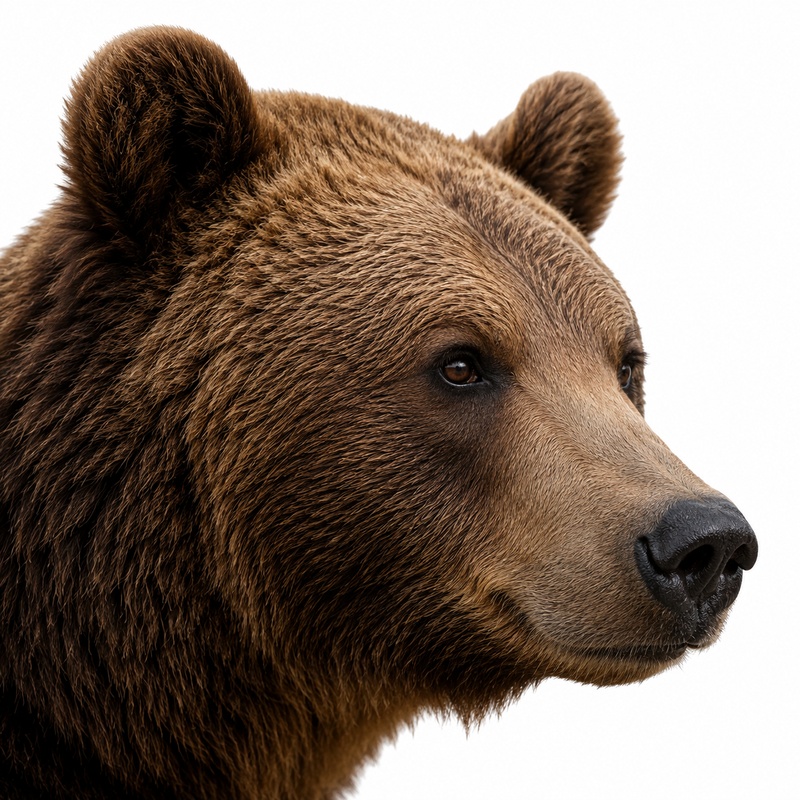
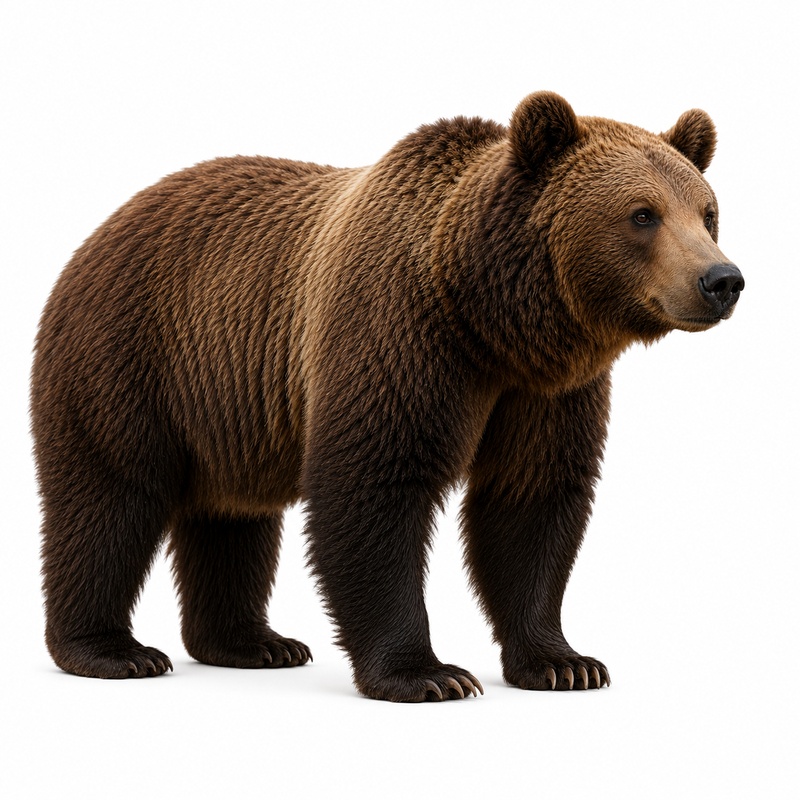
The brown bear has an imposing body, with a broad chest, robust limbs, a relatively short neck, and a massive head. One of the most striking features of its silhouette is the muscular prominence above the shoulders , particularly visible in adults and linked to the powerful musculature of the forelimbs.
The feet end in five toes with strong, non-retractable claws. The forelimbs are used very effectively for digging, moving logs, breaking up rotting wood, reaching insects, and manipulating numerous other resources.
Coat color is extremely variable. The term "brown" encompasses individuals that can appear dark brown, almost black, chestnut, fawn, or relatively light. Even within the same animal, the shade and appearance of the coat change with the season, shedding, and lighting conditions.
Males are generally much larger than females. Weight can also vary considerably within the same individual throughout the year: a bear approaching winter can accumulate much more fat than in spring, when it emerges from its winter rest period.
Two Italian populations: Alpine bear and Marsican brown bear
The Italian situation of the brown bear is particularly interesting because it includes two geographically separate nuclei characterized by different evolutionary and management histories.
The Alpine population is concentrated primarily in the central-eastern part of the Alps. After the native Trentino population came close to extinction, the Life Ursus reintroduction project was launched in the late 1990s, using individuals from Slovenia. The population subsequently grew and began expanding its range.
Intensive genetic monitoring for 2025 estimated 118 individuals in Trentino and the surrounding areas covered by the survey, excluding that year's cubs , with a confidence interval between 99 and 141. The updated estimate also reflects the expansion of the range that has occurred in recent years.
The situation in the Apennines is completely different. The Marsican brown bear (Ursus arctos marsicanus) represents a historically isolated population in the central Apennines, concentrated primarily in the Abruzzo, Lazio, and Molise National Park and surrounding areas.
In 2025, the largest genetic monitoring ever conducted across the entire range of the Marsican population was carried out. ISPRA estimated a total population of 81 individuals in 2026, 43 females and 38 males , with an uncertainty range between 73 and 88 individuals. The studied area covers approximately 6.500 km², much larger than previous surveys, which concentrated primarily in the central core.
An estimated 65 individuals are present in the core of the Marsican range, while the presence of individuals in peripheral areas confirms a slow geographic expansion. The increase in occupied area is particularly important because the population's long-term survival also depends on its ability to colonize new territories and create connections between suitable areas.
The Marsican brown bear: a unique population
The Marsican brown bear deserves specific attention because it is more than just the "Abruzzo Bear." It is a population characterized by long-term geographic isolation and genetic and morphological peculiarities that make it a unique component of Italy's biodiversity.
The population is numerically small, and this characteristic results in high vulnerability. In a population of just a few dozen individuals, the loss of even a single breeding adult—especially a female—can have a much greater demographic impact than in a population of thousands of animals.
This is why road accidents, illegal deaths, poisonings, and other anthropogenic causes take on particular importance. It's not enough for new cubs to be born every year: a sufficient number of females must survive long enough to reproduce repeatedly.
The new 2025 monitoring, however, offers some encouraging elements. The population appears substantially stable in the historic core, and animals are present in a broader geographic area than previously estimated. However, the expansion must translate over time into new, permanently occupied and reproductive areas , not just occasional movements of individual individuals.
Habitat: the bear does not only need the woods
The image of the bear exclusively associated with the deep forest is incomplete. The forest certainly represents a fundamental habitat for shelter, rest, and the availability of numerous resources, but the bear utilizes a much more complex environmental mosaic .
Clearings, pastures, meadows, shrublands, beech forests, mixed woodlands, valleys, and fruit-rich areas can be used at different times of the year. The quality of a landscape depends primarily on the availability of abundant food, tranquility, and safe places to rest.
Seasonality is crucial. In spring, bears can utilize meadows and pastures where new vegetation represents one of the first resources available after winter. In summer, their consumption of fruits and insects increases. In autumn, acorns, beechnuts, chestnuts, and other high-energy foods become essential for storing fat.
Human presence profoundly alters habitat use. An area rich in food but constantly traversed by people may be frequented primarily at night, while quieter areas may be used during the day as well.
The Bear should therefore not be interpreted through a simple forest map: what counts is the combination of cover, food, tranquility and ecological connections.
Diet: A predominantly omnivorous carnivore
The brown bear belongs to the order Carnivora but its diet is extremely varied and in many European populations the plant component represents a significant part of the annual diet.
Herbs, shoots, roots, berries, apples, wild pears, cherries, plums, acorns, beechnuts, and other fruits can be used intensively when available. The animal is able to remember with great precision where and when certain resources ripen and can return to the same areas year after year.
Insects are another important component. Ant nests , larvae, bees, and other invertebrates can provide protein and calories, especially during the warmer months. The strength of their forelimbs allows bears to break stumps and dig in search of colonies.
The animal component includes carcasses and vertebrates. The bear is an efficient scavenger and can utilize animals that die naturally, have been run over, or have been preyed upon by other carnivores. However, it can also directly capture some prey, especially young ungulates or vulnerable animals.
Their diet is therefore not stable: it changes with the season, the territory, availability, and even the individual's experience. This makes the bear one of the most effective dietary generalists in European fauna.
Relationship with Deer, Roe Deer, Wild Boar and other Ungulates
Bears do not occupy the same predatory role as wolves. Healthy adult ungulates are not normally systematically pursued as prey, but the relationship between bears and large mammals remains very interesting.
In spring, it may prey on newborn red deer and roe deer , especially in the first weeks of life when they use immobility and camouflage as their main defense strategy. A bear with an excellent sense of smell can even locate them in vegetation.
Wild boar can be a part of the diet, but even in this case it is essential to distinguish predation from carcass consumption. Young animals may be captured, while adult animals found in the diet may be the result of natural mortality, accidents, or other causes.
Bears can also exploit the carcasses of ungulates killed by wolves, creating an ecological relationship in which the large predator indirectly produces a resource used by the large omnivore.
The simple presence of ungulate remains in the feces or digestive tract does not automatically prove that the animal was killed by a bear.
The great sense of smell: the bear's true superpower
Among the bear's senses, smell is of extraordinary importance. The animal's world is largely constructed through odors that allow it to locate food, recognize conspecifics, identify carcasses, and interpret what has happened in its territory.
A food source can be discovered even without being visible. A dead animal hidden by vegetation, an anthill, ripe fruit, or a structure containing food can be located using olfactory information.
Smell also plays a fundamental role in social communication. Markings, secretions, and scents left in the environment allow individuals to obtain information about their sex, reproductive status, and the presence of other bears.
This ability also explains why proper waste and food management is so important in the areas frequented by the species: what seems hidden or inconspicuous to a person can be perfectly identifiable to a bear.
Intelligence, memory and learning ability
The brown bear possesses remarkable cognitive abilities. It must remember a huge amount of information distributed across space and time: the location of resources, fruit ripening periods, safe passages, sources of disturbance, and the characteristics of its territory.
A single individual can utilize a very large area and return precisely to a specific orchard or forest when the food resource becomes available.
This memory is a huge advantage, but it can create problems when the animal discovers anthropogenic food sources . If a dumpster, chicken coop, feeder, or storage area repeatedly provides food, the bear can quickly learn to return to it.
Repeated rewards can gradually reduce distrust and generate problematic behaviors. Therefore, prevention must intervene before the animal develops a stable association between human presence and food availability.
Territory and social organization
Unlike the wolf, the brown bear does not normally live in packs. It is a predominantly solitary species , with the exception of females accompanied by their cubs and temporary associations linked to reproduction or large food gatherings.
Individual territories can be very large and overlap. Males generally tend to occupy larger areas than females and may cross the territories of multiple females.
Their distribution is not strictly territorial in the sense observed in some carnivores. Bears can tolerate some spatial overlap, especially when food resources are abundant.
However, direct encounters are often avoided through olfactory communication and mutual knowledge of territory use. This strategy allows large, solitary animals to share the same region without constantly encountering each other.
Reproduction and birth of puppies
The brown bear's reproductive cycle features a particularly interesting biological feature: delayed embryo implantation . Mating generally occurs between late spring and summer, but actual embryonic development is delayed.
The fertilized egg remains in a state of suspended development for months and implantation in the uterus occurs only later, when the female is physically fit enough to carry a pregnancy.
This mechanism directly links reproduction and food availability. A female that fails to accumulate adequate reserves may not successfully carry a fetus.
The pups are born during the winter in the den and are surprisingly small compared to their mother. At birth, they are blind, almost hairless, and completely dependent.
The female nurses them during the winter and, when she leaves the shelter in spring, the young are now large enough to follow her.
The mother typically stays with her cubs for a long time, teaching them where to find food, which areas to use, and how to navigate their territory. This long parental investment explains why females don't reproduce every year.
The winter period: hibernation or winter rest?
In common parlance we speak of bear hibernation , but from a physiological point of view the condition is different from the deep hibernation of small mammals such as dormice and marmots.
During the winter, bears drastically reduce their activity, metabolism, heart rate, and energy expenditure, spending long periods in their den without feeding. However, their body temperature drops less than in true hibernators.
The animal therefore retains a relatively high capacity to react to stimuli and can wake up and even leave the shelter if disturbed.
The length of rest varies with climate, sex, reproductive status, and food availability. Pregnant females necessarily spend the winter in the den because it is precisely during this period that the cubs are born.
In mild years or in very productive territories, some individuals may show periods of activity even during the winter, remembering that behavior does not follow a rigidly identical calendar for each animal.
Before winter: hyperphagia
During late summer and especially autumn, the bear enters a phase of hyperphagia , during which it dedicates much of its time to the search for and consumption of highly energetic foods.
Acorns, beechnuts, chestnuts, fruits and other resources become extremely important because they allow us to accumulate the fat needed to get through the winter.
Forest productivity can therefore directly influence body condition and behavior. A poor fruit year can force animals to extend their ranges and increase the likelihood of approaching anthropogenic resources.
This relationship is particularly important for females, because the accumulation of reserves also influences the ability to carry a pregnancy to term and nurse the pups.
Traces and signs of presence
Bear tracks are among the most distinctive features of European fauna. Their paws have five toes , and the hind feet can leave a footprint surprisingly similar in general shape to a very broad human foot.
The front paws, however, are shorter and wider. The claws may be visible in front of the toes, especially on soft ground.
Other signs include droppings, hair, digging marks, and tree markings. Droppings can completely change appearance depending on the diet: rich in plant material, fruits, and seeds at one time, and containing hair or animal remains at another.
Trees can be used for rubbing and marking. Remaining hairs on the bark represent a particularly important resource for non-invasive genetic monitoring.
It is precisely through hair and excrement that it is now possible to genetically identify individual animals without having to capture them, allowing us to estimate the size and distribution of populations.
The Bear and the Man: Why the Encounters Happen
Most bears tend to avoid humans. The species has highly developed senses and often senses our presence before we notice theirs.
Close encounters can, however, occur when the wind prevents the animal from perceiving the person's scent, when a bear is surprised at a short distance, or when there is a particular situation of vulnerability.
Females with cubs require the utmost attention. The mother may interpret an approach as a threat to her offspring and react defensively.
Other sensitive situations involve carcasses or food sources that the animal may consider an important resource.
Most of the bear's aggressive behavior towards humans is therefore defensive in nature and does not stem from the intention to consider a person as prey.
How to behave in case of an encounter
Those who frequent bear-infested areas should adopt some basic principles. It's important to avoid surprising the animal at very close range, especially in dense woods and in conditions of poor visibility.
If a bear is observed from a distance, the best choice is not to approach , not to seek close-up photographs and to leave the animal an escape route.
In a close encounter, you shouldn't run. Your retreat should be slow and controlled, avoiding sudden movements that could be interpreted as a threat.
Particular attention is required when there are puppies present: you should never approach, even if they appear alone, because the mother may be nearby.
Dogs must be handled with great caution in bear-infested areas. An uninhibited dog may approach the bear, provoke a reaction, and then return to its owner, bringing the conflict with it.
Specific indications from local authorities must always take precedence, however, because management methods and recommendations can be adapted to the characteristics of different populations.
Bear and hunting activities
The brown bear is particularly protected and not huntable in Italy. Its relationship with the hunting community is therefore primarily concerned with sharing the same environments and the need to adopt appropriate behaviors in its territories.
Hunters, game controllers, retrievers with tracking dogs, and other people who frequent forest areas during twilight hours may have a higher chance of encountering a game than the occasional hiker.
The presence of carcasses of ungulates or wounded animals is an element to consider, because the bear can quickly locate the resource thanks to its sense of smell and reach it even after the site has been abandoned.
The use of dogs also requires caution. Hounds and other helpers can accidentally chase a bear, creating a stressful situation and increasing the risk of a close encounter with the handler.
Knowledge of the local distribution and recent reports should therefore become a normal component of the preparation of those who practice hunting activities in the areas frequented by the large Carnivore.
Damage, prevention and food attractants
Bears can cause damage to beehives, crops, orchards, livestock, and other activities. The level of conflict, however, depends greatly on the availability and accessibility of resources.
Beehives can be particularly attractive because they combine honey, larvae , and other high-energy resources. Properly installed and maintained electric fences are one of the most effective prevention tools.
Even chicken coops, small farms and food stores can be protected by physically preventing the animal from accessing them.
A particularly significant problem concerns waste. A bear that learns to regularly feed in dumpsters can gradually associate residential areas with the presence of food, modifying its behavior.
Preventing access to resources is therefore much more effective than intervening after an individual has developed a strong habit.
Conservation: Human Mortality and Habitat Connectivity
For both Italian populations, conservation depends not only on the number of individuals present, but on the ability to move safely between suitable territories.
Roads and infrastructure can be significant causes of mortality and disrupt the corridors used by dispersing animals. This problem is particularly serious for the Marsican region, where each single loss can have a significant demographic impact.
The availability of ecological corridors allows individuals to reach new areas, meet potential mates, and expand their population distribution.
In the case of the Marsican brown bear, expansion outside of its historical core constitutes one of the fundamental conditions for increasing its chances of long-term survival.
In the Alpine region, the problem also takes on an international dimension, because bears do not recognize administrative borders and can move between Italy, Switzerland, Austria, and other Alpine territories.
Curiosities about the brown bear
- It is the largest terrestrial carnivore of the Italian fauna, but the diet can be composed largely of plant foods.
- Smell is one of the most developed senses and allows you to identify food resources that are not directly visible.
- It is a predominantly solitary animal, unlike the wolf which lives in structured family groups.
- The so-called hibernation is not a deep hibernation: body temperature decreases relatively little and the animal can react to stimuli.
- Puppies are born during the winter In the den and at birth they are very small compared to their mother.
- Pregnancy presents delayed implantation, adaptation that links reproduction to the physical conditions of the female.
- Before winter it enters the hyperphagia phase and can significantly increase your daily food intake.
- The paws have five toes and the rear footprint may resemble a large human foot.
- Hair and excrement allow us to genetically identify individual individuals without catching them.
- In Italy there are two main populations that are completely separate: the Alpine one and the Marsican one of the central Apennines.
- The 2025 monitoring estimated 118 bears in Trentino and surrounding areas covered by the survey, excluding that year's cubs.
- The new estimate of the Marsican brown bear is 81 individuals in the entire Apennine range, with an uncertainty range between 73 and 88.
- The brown bear is a protected species in Italy and cannot be hunted.
The Brown Bear in the Hunting Encyclopedia
The brown bear is one of the species that best demonstrates the need to avoid overly simple categories when discussing large carnivores. Ursus arctos possesses sufficient teeth, claws, and strength to bring down prey, but much of its life may revolve around grasses, fruits, insects, acorns, and carcasses.
The Italian situation makes the species even more extraordinary. In the Alps, a population lives that, after having risked extinction, has been reconstituted through a reintroduction project and today numbers over a hundred individuals in the monitored area of Trentino and neighboring territories. In the Apennines, however, the Marsican brown bear survives , an ancient, isolated, and numerically much more fragile population, estimated at approximately 81 individuals in its entire range in 2025.
The comparison between the two groups illustrates two different conservation challenges. In the Alps, the issue increasingly concerns coexistence with a numerically growing population capable of expanding into densely populated areas. In the Apennines, the priority remains ensuring the survival of every reproductively important component and encouraging expansion into new habitats.
Finally, for the hunter, knowledge of the bear takes on particular value. Those who wander through the woods and mountains during the most favorable hours for wildlife are more likely to encounter tracks or, more rarely, the animal itself. Knowing how to read a track, recognize a mark, correctly interpret the presence of a carcass, and knowing how to behave during an encounter are now elements of the local culture.
The brown bear is not only Italy's largest carnivore: it is a species capable of linking forest ecology, wildlife management, animal behavior, and the relationship between humans and nature into a single, great story, which in the Alps and the Apennines is following two profoundly different paths.