NOT HUNTABLE – PROTECTED SPECIES
The golden jackal (Canis aureus) is one of the most interesting carnivores in contemporary European fauna and one of the species that best demonstrates how the distribution of wild animals can change even in relatively short time periods. Long confined mainly to southeastern Europe and southern and western Asia, in recent decades it has begun a spectacular expansion toward central, northern, and western Europe, establishing breeding populations even in areas where it was previously absent.
Italy lies directly on one front of this expansion. After initial reports in the Northeast, the golden jackal has progressively increased its presence and can no longer be considered a mere occasional presence in the Italian fauna. In some northern territories, stable family groups and confirmed breeding have now emerged , while dispersing individuals continue to explore new areas.
It's crucial to clarify one thing right from the start: the golden jackal is not an alien species artificially introduced to Italy . Its colonization of our country is the result of a natural expansion of its European range. Individuals have moved independently across the continent, following ecological corridors and gradually occupying new, favorable environments.
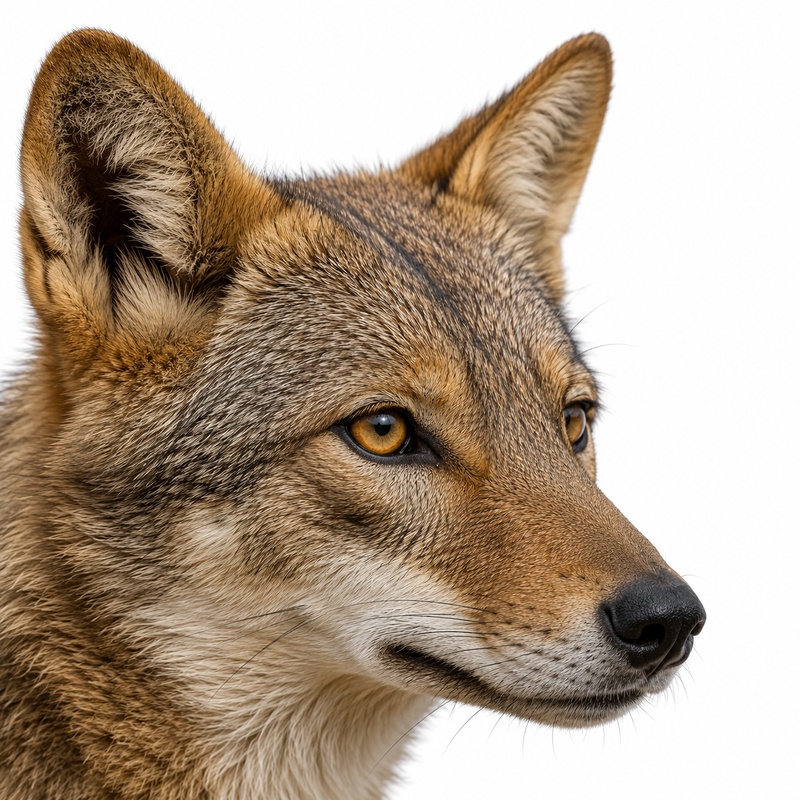
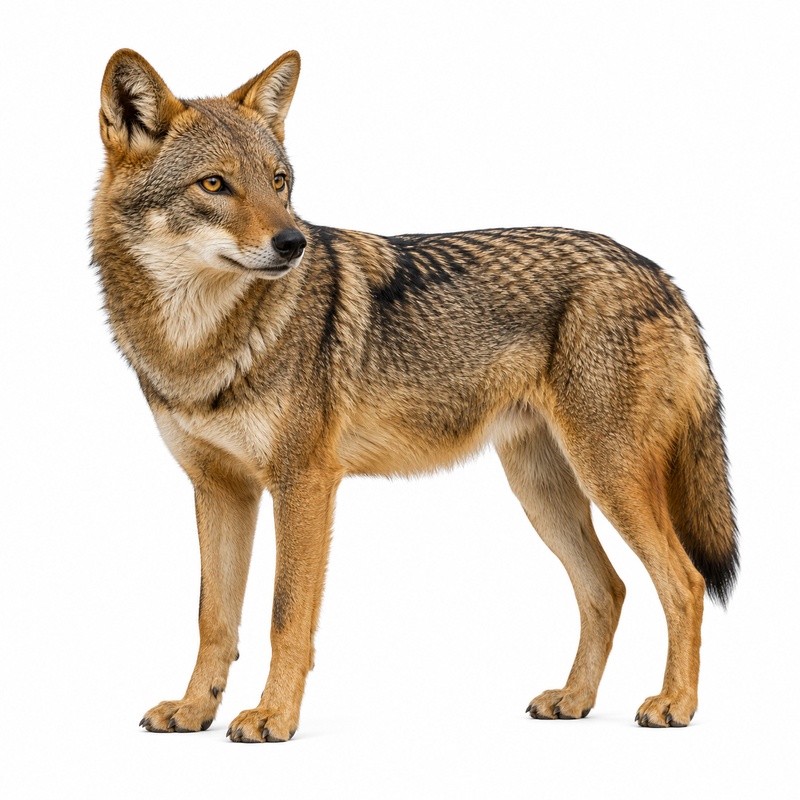
From a morphological point of view, its position can be confusing. It is larger and more robust than the fox, but significantly smaller than the wolf; it has a golden-gray coat, relatively short ears, a pointed muzzle, and a tail that is shorter and less voluminous than that of the fox. Correct identification is particularly important in Italy, also because the golden jackal is a particularly protected and non-huntable species.
Ecologically, it is an opportunistic mesocarnivore . Small mammals, carcasses, fruits, invertebrates, birds, and numerous other resources can enter its diet depending on the terrain and season. This extraordinary dietary flexibility, combined with the ability to live in agricultural and relatively anthropized landscapes, represents one of the main keys to its expansion.
Golden Jackal: Characteristics, Recognition, and Differences from Wolves and Foxes
| Common name | Golden jackal |
| Scientific name | aureus |
| English name | Golden Jackal |
| Order | carnivora |
| Family | canidae |
| Gender | Canis |
| Weight | Generally around 8-14 kg in European populations, with individual variations |
| Height at the withers | Approximately 45-50 cm |
| Supply | Omnivorous and opportunistic: mainly small mammals, carcasses, plants and other available animal resources |
| Habitat | Agricultural plains, wetlands, rural mosaics, scrublands, forest edges, floodplains and anthropized territories with sufficient cover |
| Presence in Italy | Species in natural expansion, now breeding stably in various areas of northern Italy |
| Social organization | Stable couples and small family groups |
| Status in Italy | Specially protected species; not huntable |
The golden jackal belongs to the same genus as the wolf but is much smaller. An adult European jackal typically weighs around 8-14 kilograms , placing it somewhere between a fox and a wolf. The difference in mass compared to an adult wolf is generally very noticeable, while a comparison with a large fox may require more caution, especially when observing the animal quickly or in unfavorable lighting conditions.
The body is relatively elongated, the legs appear proportionally shorter than those of the wolf, and the chest is not as imposing. The head is rather narrow, with a pointed muzzle and triangular ears, but smaller in proportion than those of the fox. The coat features extremely variable shades of gray, fawn, yellowish, brown, and black , with a generally darker back.
The term "golden" does not necessarily mean that the animal is uniformly yellow. The coat varies according to the season, age, and individual, and in winter it can take on a much darker, grayer appearance.
The tail is a good diagnostic feature. It is bushy but relatively short and is normally carried low. In the fox, it is proportionally much longer and bulkier; in the wolf, however, the overall body is significantly larger and more powerful.
| Feature | Golden jackal | Fox | Wolf |
|---|---|---|---|
| Scientific name | aureus | Vulpes vulpes | Canis lupus |
| Size | Intermedia | Smaller | Much bigger |
| Body | Compact and relatively elongated | Slim and light | Powerful and robust |
| Muso | Pointed but relatively sturdy | Very sharp | Wider and more massive |
| Ears | Triangular, medium sized | Proportionately large | Relatively small compared to the head |
| Tail | Medium and relatively short thickness | Very long and thick | Long but proportionate to the body |
| Approximate weight | Approximately 8-14 kg | Generally lower | Clearly superior |
| Social organization | Couple and small family group | Mainly couple or family unit | Structured family pack |
This distinction is particularly important during nighttime observations, camera trapping, or fox management operations. An animal seen head-on or for a few seconds can be misinterpreted, while size, proportions, tail, and movement patterns usually allow for a more reliable identification.
A new protagonist of the Italian fauna: the natural expansion of the golden jackal.
The recent history of the golden jackal represents one of the most interesting biogeographical phenomena in contemporary Europe. European populations were historically concentrated primarily in the Balkan region and southeastern Europe, but since the second half of the twentieth century, their range has begun to expand more dramatically.
The species has reached Central Europe, the Baltic, Germany, and numerous other western and northern territories. Individual dispersals have been documented even thousands of kilometers from their source populations, demonstrating an extraordinarily high mobility for a canid of this size.
Italian colonization occurred across the northeastern sector, in connection with populations from the Balkans and the Adriatic area. The first documented presences were primarily in Friuli-Venezia Giulia and Veneto, but over the years the situation has changed profoundly.
The golden jackal is no longer just a rare canid of the eastern border. The species has gradually moved west and south, demonstrating a remarkable ability to traverse agricultural lands, infrastructure, and heavily modified landscapes.
The colonization of the Po Valley is particularly significant. The combination of crops, waterways, floodplains, small woodlands, wetlands, and abundant supply of small mammals and carcasses creates a potentially very favorable environment.
In Emilia-Romagna, for example, after the first record in 2016, their presence rapidly increased, leading to the documentation of breeding flocks. This dynamic clearly illustrates the colonization process: initially, single individuals appear and disperse; subsequently, territorial pairs form, and, when conditions permit, breeding begins.
It is therefore necessary to distinguish between a simple occasional report and a truly established population. An individual can travel hundreds of kilometers and appear in an area without settling there; the repeatedly documented presence of pups or family groups, however, demonstrates a much more advanced stage of colonization.
This distinction will be particularly important in the coming years, because the Italian range is still evolving and new territories could be progressively occupied.
Why the Golden Jackal is expanding so rapidly
There is probably no single cause capable of explaining European expansion. The phenomenon arises from a combination of the species' biological characteristics and the continent's transformations.
First and foremost, the golden jackal possesses great ecological plasticity . It does not exclusively require large, wild environments and can live in agricultural mosaics, wetlands, forest edges, and relatively anthropized territories. This allows it to cross and colonize landscapes that would constitute much more significant barriers for highly specialized species.
An opportunistic diet represents a second decisive advantage. Where rodents are abundant, it may feed primarily on small mammals; where carcasses and animal remains exist, it may assume a predominantly scavenger role; in summer and autumn, it may increase its use of fruits and other plant resources.
The ability to disperse completes the picture. Young individuals leaving the family group can travel vast distances before settling, allowing the species to quickly reach habitats isolated from the main populations.
Environmental factors also include climate change, the availability of food resources created indirectly by humans, and landscape transformations. But one of the most interesting aspects concerns the relationship with the wolf.
Golden Jackal and Wolf: Competition Between Two Canids
The golden jackal and the wolf belong to the same genus, but occupy different levels within the Carnivora community. The wolf is a large apex predator; the jackal, on the other hand, is a mesocarnivore , much smaller and potentially vulnerable to the large canid.
The presence of the wolf can limit that of the jackal through a phenomenon known as intraguild competition : species belonging to the same ecological group compete for part of the resources and the dominant predator can even kill the smaller competitor.
This doesn't mean that wolves and jackals can't coexist in the same territory. Coexistence is possible, but jackals tend to utilize space, habitat, and resources in ways that reduce the risk of encountering a dominant competitor.
A particularly interesting aspect concerns human-inhabited territories. In some contexts, jackals seem to be able to exploit the proximity of humans more effectively than wolves. Agricultural landscapes, urban edges, and heavily frequented areas may therefore function indirectly as a sort of refuge from the pressure of the large predator.
The relationship is destined to become particularly important in Italy too, where both the wolf and the golden jackal are now using lowland territories and highly anthropized environments.
However, one should not imagine a simple replacement of one species with the other. The size, diet, and predatory strategies are profoundly different, and the two canids occupy only partially overlapping niches.
Golden Jackal and Fox: Overlap and Competition
The relationship with the fox (Vulpes vulpes) is different. The two species are closer in size, and dietary overlap can be significant. Both utilize rodents, carcasses, fruit, invertebrates, and numerous other opportunistic resources.
However, jackals have a larger mass and can act as dominant competitors. In areas where they reach high densities, they could therefore alter the spatial distribution or behavior of foxes, although the intensity of this interaction varies greatly depending on habitat and food availability.
The fox, however, retains important advantages: it can use extremely different environments, penetrate deep into urban centers and exploit microhabitats that the jackal could frequent less efficiently.
The future coexistence of these two species in Italy is one of the most interesting aspects to monitor. The arrival of the jackal doesn't simply add a new carnivore to the landscape: it could alter the existing network of interactions between predators, prey, and resources.
Diet: Much more scavenger and opportunist than large predator
One of the most misunderstood interpretations of the golden jackal is to imagine it as a sort of "little wolf." Its feeding strategy is profoundly different.
Analyses of European populations show a diet dominated primarily by small mammals . Rodents and other small prey may represent the main food source in agricultural landscapes, where they are particularly abundant.
However, the jackal is highly opportunistic and utilizes carcasses very efficiently . Naturally killed wild ungulates, run-overs, predatory remains, and available organic material can be consumed without the animal's involvement in the kill.
This element is crucial when interpreting stomach contents or excrement. Finding remains of wild boar, roe deer, red deer, or domestic animals in the diet does not automatically prove that jackals preyed on them. A significant portion of the large mammals found in dietary studies derive precisely from scavenging.
European literature indicates that small mammals dominate the ingested biomass, while ungulates and domestic animals are frequently consumed as carcasses and remains. This distinction is essential to avoid overestimating the species' predatory capacity.
The diet also includes birds, leporids, reptiles, amphibians, invertebrates, fruits, and other plant material. In summer and autumn, the plant component can become locally significant.
The result is a canid capable of completely changing its diet depending on what the territory offers. Rather than a specialized predator, the golden jackal should therefore be considered an extremely efficient dietary generalist.
The role of ecosystems as “scavengers”
Scavenger hunting isn't a marginal activity. By consuming carcasses and animal remains, jackals perform a significant role in removing organic matter from the landscape.
A carcass is, in fact, a highly concentrated resource and can attract numerous organisms. Jackals, foxes, crows, birds of prey, and many invertebrates gradually participate in its exploitation.
Jackals can rapidly consume significant amounts of material and reduce the time that remains remain available in the environment. This role is particularly important in agricultural and human-influenced landscapes.
At the same time, heavy predation on rodents can provide an additional ecosystem service in agricultural areas. It is therefore interesting to observe how a species often perceived exclusively as a novel predator can also perform useful ecological functions through necrophagy and the control of small mammals.
Predation, small game and fauna of hunting interest
The expansion of the golden jackal inevitably raises questions about its possible relationship with wildlife of interest to game . This issue must be addressed while avoiding both underestimations and unproven attributions.
Lagomorphs and birds may be included in the diet, but European studies show that the dominant component is generally small mammals and opportunistic resources. Hares may be consumed, especially if young, debilitated, or available as carcasses, but they are not necessarily the dominant prey.
Pheasants, partridges, and other land birds can also be opportunistically captured. The actual impact on a population, however, depends on jackal density, prey abundance, habitat structure, and the simultaneous presence of other predators.
The relationship with ungulates requires particular caution in interpretation. A roe deer or wild boar found in the diet may have been derived from a carcass, a road accident, remains of wolf predation, or material from other causes of mortality. Only specific evidence allows the jackal to be attributed to the kill.
As with wolves and foxes, technically sound wildlife management must distinguish between dietary presence and actual predation . Confusing the two concepts easily leads to incorrect assessments of the species' impact.
Relationship with farms and pets
The presence of a new canid inevitably generates concern in the livestock sector. The golden jackal may occasionally prey on small domestic animals, particularly in vulnerable conditions, and unprotected poultry farms may represent an easily accessible resource.
However, the risk should not be automatically equated with that of the wolf. Differences in body mass, social structure, and predatory ability mean that they are significantly less likely to attack large domestic animals.
Even in this sector, it is essential to distinguish between predation and carcass consumption . Remains of sheep, goats, or other domestic animals found in food may come from animals that died from various causes or from improperly managed waste.
Prevention remains important, especially for chicken coops, small farms, and young animals. Adequate fencing and proper carcass management simultaneously reduce the risk of predation and the attraction of carnivores to livestock facilities.
Social Organization: The Family at the Center of the Jackal's Life
The golden jackal does not normally live in large packs comparable to those formed by wolves. The basic social structure consists of a stable monogamous pair and the young of the year.
In some situations, one or more young people from the previous year may remain associated with their parents and contribute to the life of the group, creating small extended family units.
The pair occupies a territory and defends it through scent marking and vocalizations. The size of the area used depends primarily on food availability and habitat structure: highly productive territories can support groups in relatively small areas, while less favorable environments require greater movement.
This organization offers advantages both in defending resources and in caring for the young. Cooperation among family members can increase the litter's chances of survival and represents one of the most interesting features of the species' social behavior.
Howling and communication: a voice that can betray presence
The golden jackal has highly developed vocal communication. Its collective call can resemble a mix of howls, yelps, and high-pitched vocalizations , distinct from the long, deep howl of the wolf.
Couples and family groups use their voices to maintain contact and signal their presence to nearby individuals. This characteristic is also exploited in scientific research through acoustic stimulation techniques : recorded calls are played and the response of animals present in the area is observed.
The method is particularly useful because the jackal is mainly nocturnal and crepuscular and can be very difficult to observe directly.
For this species, vocalizations therefore take on a value comparable to tracks, excrement, and camera traps: they allow territorial groups to be documented even when the animals remain invisible.
Reproduction and development of puppies
Reproduction generally occurs once a year. After pair formation or consolidation and winter mating, the female undergoes a gestation period of about two months.
Dens can be created in natural cavities, dense vegetation, crevices, or former shelters of other animals, as long as they offer sufficient protection. Litters generally consist of several young, with size varying depending on the female's condition and the population.
At birth, the pups are completely dependent on their adults. In the following weeks, they gradually begin to emerge from the den and explore their surroundings.
Both parents participate in the care and feeding and, in larger family groups, even young from the previous year can indirectly contribute to the growth of the new litter.
As autumn approaches, the young become increasingly independent. Some may remain with the family group, while others begin to disperse , seeking new territory and potentially colonizing regions far from their birthplace.
Dispersion: the engine of the conquest of Europe
Dispersal ability is one of the key factors in understanding the golden jackal's expansion. Young individuals can leave their natal range and travel exceptionally long distances before settling.
Genetic investigations of pioneer individuals found at the edges of the European range have documented potential distances of the order of over a thousand or even several thousand kilometers from the source populations.
Animals don't necessarily require a completely continuous natural habitat. They can cross agricultural lands, use waterways as corridors, and even cross road infrastructure.
Most movements occur at night, when human disturbance is less frequent. This strategy allows a relatively cautious carnivore to traverse densely populated landscapes unnoticed.
The appearance of an individual far from known populations should therefore not be surprising. The real question is whether that territory will offer sufficient conditions for the pioneer to find a mate and start a new breeding group.
Habitat: It is not an exclusively forest animal
The golden jackal displays a predilection for open and semi-open landscapes characterized by high environmental diversity. Agricultural plains, wetlands, streams, reed beds, floodplains, scrublands, forest edges, and small woodlands can be used simultaneously.
Vegetation remains important, especially as a daytime refuge and breeding site, but a large, continuous forest is not necessary. This distinguishes it somewhat from the traditional image of a large carnivore associated with wilder mountain areas.
Agricultural plains can provide a wealth of rodents and other resources, while rivers and wetlands function simultaneously as habitats and dispersal corridors.
Even human presence doesn't automatically exclude the species. The jackal can utilize relatively anthropized landscapes as long as it has sufficiently quiet areas in which to shelter.
It is precisely this ability to live between the natural environment and the human landscape that makes future expansion into many other Italian regions plausible.
Nighttime activities, caution and relationships with humans
The golden jackal is mostly active during twilight and nighttime hours , especially in areas with high human presence. During the day, it tends to rest in sheltered and relatively quiet areas.
The species is generally cautious towards humans and tends to avoid direct contact. Its growing presence in agricultural landscapes should therefore not be automatically interpreted as a progressive loss of its natural distrust.
Sightings along roads, on the edges of villages, or through camera traps are likely to increase simply because the number of animals and the extension of their range are increasing.
As with foxes and wolves, repeated access to human-sourced food sources can change behavior. Avoiding the disposal of carcasses, organic waste, or readily available food is therefore a key measure to maintain proper distances between wild animals and settlements.
Traces and signs of presence
Identifying the presence of a jackal through its tracks alone can be difficult. The tracks are typically canine in structure and can overlap in size with those of medium-sized dogs.
The track generally tends to be relatively linear and regular, especially when the animal is trotting. As with the wolf, the wild dog's locomotor behavior can produce a more economical and direct sequence than the frequently erratic movements of the free-roaming dog.
Droppings, markings, vocalizations and camera trap images are therefore important elements for a more certain determination.
In scientific programs, species confirmation may require the integration of camera trapping, genetics, bioacoustics, and carcass analysis , especially in new colonization areas where each observation is of great interest.
Is the golden jackal an invasive species?
No. This is one of the most important concepts to clarify.
An alien species is generally associated with an organism introduced by humans, intentionally or accidentally, outside its natural range. The spread of the golden jackal in Central and Western Europe, however, follows a natural process of geographic expansion.
Genetic studies of European populations demonstrate the existence of multiple sources of colonization and natural dispersal routes. Animals reaching new countries were not released or introduced artificially.
The rapidity of the phenomenon may be similar to that of some invasive species, but the biological mechanism is different. The jackal should therefore be considered a native canid of Europe experiencing natural expansion , not an invasive alien species to be eradicated.
The distinction has important consequences from both a scientific and a legal and managerial point of view.
Legal status: particularly protected and non-huntable species
In Italy, the golden jackal is a particularly protected species under national wildlife legislation. Therefore, it is not a species commonly hunted.
At European level, Canis aureus is also included in Annex V of the Habitats Directive 92/43/EEC , which includes species of community interest whose possible collection must be subjected to specific management measures compatible with the maintenance of a favourable conservation status.
However, the European framework does not mean that the species is automatically huntable in individual countries: national legislation may provide, as is the case in Italy, for a more stringent protection regime.
Correct identification is therefore particularly important in activities targeting other carnivores. The risk of confusion with foxes, especially at night, requires extreme caution during any authorized wildlife control operations.
Wildlife health and epidemiological role
Like all wild carnivores, the golden jackal can host various parasites and pathogens. Its geographic expansion therefore makes it important to combine distribution monitoring with effective health surveillance.
Jackals share some of their habitats and food chains with foxes, wolves, and domestic dogs. Some parasites can therefore circulate among different canid species through complex ecological cycles.
In northern Italy, dead jackals have already been studied for the presence of cardiopulmonary parasites and other infections. This research doesn't automatically mean the species represents a new health emergency, but it does provide a better understanding of the organisms accompanying its expansion.
In this sense, monitoring carcasses recovered along the roads has a dual value: it allows us to document their distribution and simultaneously acquire genetic, biometric, and health information.
Curiosities about the Golden Jackal
- The correct scientific name is Canis aureus and literally means “golden dog”.
- It is more closely related to the Wolf and Coyote than the name “jackal” might suggest.
- It is bigger than the Fox but much smaller than the Wolf, occupying an intermediate position between the two Carnivores.
- The colonization of Italy happened naturally and the species should not be considered alien or introduced.
- It can travel enormous distances during dispersal, allowing the appearance of single individuals far away from breeding populations.
- It lives mainly in pairs and small family groups, not in the large packs typical of the popular image of the Wolf.
- Rodents are a key component of the European diet, while many carcasses of large mammals are utilized through necrophagy.
- The presence of ungulate remains in the diet does not necessarily demonstrate predation, because the Jackal makes extensive use of already dead animals.
- Vocalizations are used by zoologists to identify territorial groups. through specific acoustic stimulation techniques.
- The presence of the wolf can influence its distribution, creating a complex relationship between large predator and mesocarnivore.
- It can successfully utilize agricultural and relatively anthropized landscapes, one of the main reasons for its rapid European expansion.
- In Italy it is a particularly protected species and cannot be hunted.
The Golden Jackal in the Hunting Encyclopedia
The golden jackal is a particularly important species for the Hunting Encyclopedia because it allows us to observe a colonization process in action . Wolves and foxes have been part of the Italian fauna's imagination for centuries; Canis aureus, on the other hand, is now carving out its own space within our ecosystems.
This phenomenon forces us to overcome many overly simple classifications. It is not an alien species to be eradicated, it is not a small wolf, and it is not simply a larger fox. It is a mesocarnivore with its own ecological strategy , based on great adaptability, feeding opportunism, family life, and an extraordinary capacity for dispersal.
The relationship with wildlife of interest to game hunters must also be interpreted correctly. The jackal may prey on small animals and exploit leporids and birds, but a large part of its European diet consists of rodents and opportunistic resources; it is also a significant scavenger. Finding the remains of a wild boar or roe deer in its digestive tract does not automatically mean it killed it.
The relationship with the wolf opens a whole new chapter for Italian fauna. A large, expanding predator and an equally expanding mesocarnivore are beginning to share increasingly large portions of the same territory, including agricultural plains and human-shaped environments. Understanding how they will divide space and resources will be one of the most interesting topics for faunal research in the coming years.
Finally, for the hunter, knowing the golden jackal means above all knowing how to recognize it . The species is particularly protected, and the increasing overlap with territories frequented by the fox makes it necessary to have a perfect knowledge of the size, proportions, behavior, and silhouette of the two canids.
The golden jackal is therefore not simply a new animal that has appeared in our territories: it is the protagonist of one of the most rapid and fascinating transformations of contemporary European fauna and a species likely destined to assume an increasingly important role in Italian ecosystems.