The Italian Hound is one of the iconic breeds of Italian hunting dogs and one of the most important hounds in European tradition. Bred through centuries of hunting, it possesses a keen sense of smell, endurance, voice, initiative, and a unique ability to track game—qualities that reach their peak expression in traditional hare hunting.
When speaking of the Italian Hound, it is necessary to distinguish between two separately recognized breeds: the smooth-haired Italian Hound and the wire-haired Italian Hound . They share a common functional identity and numerous characteristics, but they present morphological and coat differences and, according to the experience of many hound breeders, even some nuances in their work style.
The Italian Hound shouldn't be considered simply as a dog that stalks game. Its work is much more complex: it must search for the trail, recognize it, reconstruct it, resolve the difficulties of the scent, reach the lair, and finally lead the chase . It is precisely this succession of phases that makes hunting with a hound one of the most technical and fascinating forms of hunting dog training.
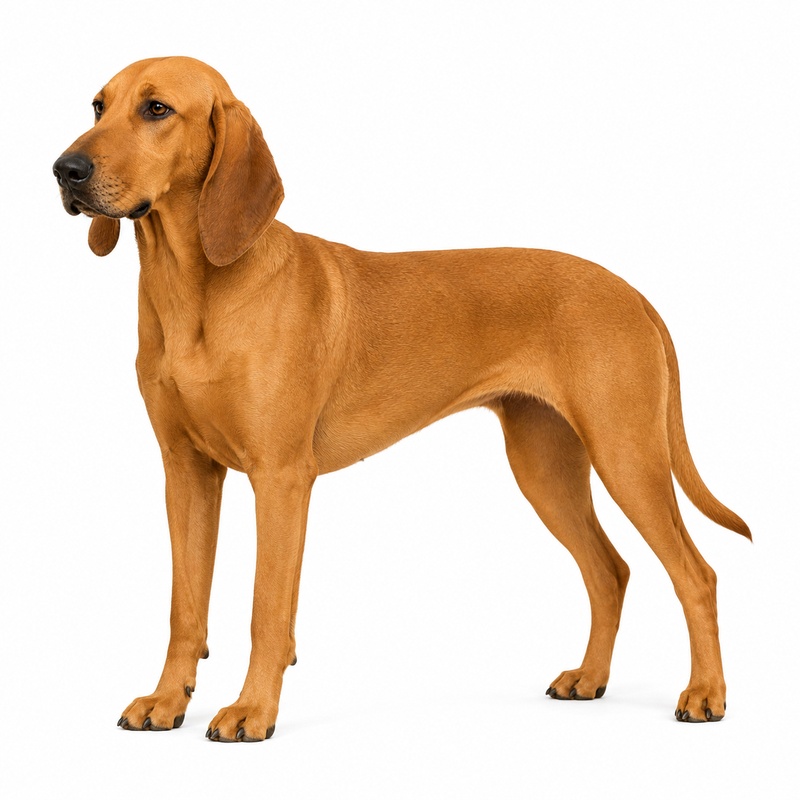
Italian Hound: Identity Card
| Name | Italian Hound |
| country of origin | Italy |
| Main varieties | Italian Hound Smooth-haired and Italian Hound Wire-haired |
| Hunting category | Scenthound |
| FCI Classification | Group 6 – Scenthounds and related breeds |
| Section | Medium-sized hounds |
| FCI Standard Smooth-haired | N. 337 |
| FCI Standard Wirehaired Pointer | N. 198 |
| Test of work | Expected |
| Game symbol | Lepre |
| Other uses | Wild boar and other forms of stalking permitted |
| Fundamental qualities | Smell, voice, resistance, method and perseverance |
| Temperament | Determined at work, balanced and strongly hunting |
Smooth-haired and wire-haired Italian Hound: what are the differences?
| Feature | Shaved hair | Strong hair |
|---|---|---|
| cloak | Short, thick and close-fitting | Rough, longer and more protective |
| Appearance | Dry, elegant and athletic | Rustic and particularly characteristic |
| Protection from vegetation | Good | Very good |
| Climate protection | Good | Very good |
| Smell | Excellent | Excellent |
| Resistance | Excellent | Excellent |
| Vocation to follow | Very high | Very high |
Coat differences are immediately evident, but they shouldn't automatically be transformed into a rigid functional division. In practical hunting, pedigree, selection, individual qualities, and experience are of enormous importance.
The main hunting skills of the Italian Hound
| Smell | ★ ★ ★ ★ ★ |
| Search for the past | ★ ★ ★ ★ ★ |
| Juxtaposition | ★ ★ ★ ★ ★ |
| Followed | ★ ★ ★ ★ ★ |
| Voice | ★ ★ ★ ★ ★ |
| Perseverance | ★ ★ ★ ★ ★ |
| Resistance | ★ ★ ★ ★ ★ |
| Hare hunting | ★ ★ ★ ★ ★ |
| Wild boar hunting | ★★★★ ☆ |
| Working in wetsuit | ★ ★ ★ ★ ★ |
| Adaptability to the terrain | ★ ★ ★ ★ ★ |
| Passion for hunting | ★ ★ ★ ★ ★ |
The evaluations are indicative. In the hound, individual qualities and bloodline specialization can determine significant differences between individuals belonging to the same breed.
The Italian Hound in a few words: an interpreter of the track
To truly understand the Italian Hound, one must start from its nose , but it would be reductive to stop at its olfactory capacity alone.
The great hound must not simply perceive a smell: it must be able to interpret it.
A track can be recent or old, continuous or fragmented, disturbed by the passage of other animals, modified by the wind or made difficult by temperature, humidity and terrain characteristics.
The dog must gather this information and translate it into a solution. It's this ability to reason along the trail that often separates a good dog from a great Italian Hound.
Origins and history of the Italian Hound
The Italian Hound is part of an extremely ancient tradition. Dogs used to track game by scent have been part of Mediterranean hunting for millennia.
Reconstructing the breed's remote origins must be approached with caution, as it's not possible to automatically equate ancient hunting dogs with the modern Italian Hound. It's clear, however, that the Italian peninsula has a very long history of hound breeding.
Over the centuries, the practical selection carried out by hunters has favoured subjects capable of effectively tracking game in Italian environments: plains, collinand, mountains, woods, scrubland and agricultural lands.
From this functional selection, the type that we recognize today in the Italian Hound was progressively consolidated.
The Italian Hound in the national hunting tradition
Few breeds are as closely linked to Italian hunting culture as the Segugio.
For generations, hare hunting with hounds represented a true canine school, in which the hunter had to learn to interpret the behavior of his dogs almost exclusively through their voices.
Before the arrival of modern location systems, it was mainly the sound of the dog that revealed what was happening out of sight.
The expert hound thus learned to distinguish the dog he was looking for, the one that had recognized the pass, the evolution of the approach, the flushing and the different phases of the chase.
Morphology of the Italian Hound
The Italian Hound has a lean, athletic and functional build , developed to allow for prolonged work.
The trunk must offer sufficient respiratory capacity, while the muscles and limbs must allow the dog to cover long distances while maintaining efficiency.
The head is typically hound-like, with a developed muzzle and prominent nose. The hanging ears contribute to the breed's characteristic expression.
The entire construction must suggest above all resistance and ability to move , indispensable qualities for a dog destined to follow game for prolonged periods.
Dimensions of the Italian Smooth-haired Hound
| Our boys | 52-58 cm at the withers |
| Our girls | 48-56 cm at the withers |
| Approximate weight | 18-28 kg |
| Construction | Dry, athletic and resistant |
Dimensions of the Italian Wirehaired Hound
| Our boys | 52-60 cm at the withers |
| Our girls | 50-58 cm at the withers |
| Construction | Sturdy, dry and functional |
| Distinctive feature | Rough and protective coat |
The Italian Smooth-Haired Hound
The Italian Short-haired Hound has a short, thick, close-fitting coat that particularly highlights the dog's lean, muscular build.
The overall impression is that of an athlete built to cover ground continuously and without wasting energy.
Its widespread popularity in the Italian hound tradition derives from the combination of nose, voice, background, passion and adaptability.
The Italian Wirehaired Hound
The Italian Wirehaired Hound has a more rustic appearance thanks to its characteristic rough coat.
The fur offers particularly interesting protection when working in the forest, in scrubland and in difficult vegetation.
Even the strong-haired one, however, remains an athlete: rusticity must not mean heaviness.
It must possess resistance, mobility and all the olfactory qualities necessary to undertake a long work of approach and follow-up.
The colors of the Italian Hound
In the Italian Hound, the tawny shades are particularly characteristic , which can appear in different intensities, from the lightest tawny to darker shades.
The short coat also includes black and tan coloring.
Small presences of white are permitted by the standard in certain areas and according to specific characteristics.
However, colour must be considered secondary to the fundamental characteristics of an authentic working dog: functional structure, balance and hunting qualities.
How the Italian Hound Works
The work of the Italian Hound is composed of a succession of phases that the expert hound learns to recognize through the behavior and voice of the dogs.
In a simplified way we can identify:
search, encounter of the past, approach, find and follow.
These phases are not independent. They form a single process through which the dog begins by searching for olfactory information and ends up reconstructing the path taken by the game.
The search: where the work begins
In the first phase, the Italian Hound explores the terrain in search of a useful emanation.
He doesn't necessarily know the game's position yet and must identify a pass that is significant enough to be worked on.
The experienced dog uses terrain, wind and knowledge of the environment, progressively focusing on the areas where it believes it is most likely to find olfactory information.
This phase requires initiative. A hound that constantly relies on its handler's directions will be unlikely to fully express its qualities.
The past
Passata is the scent left by wild animals during their travels.
Its readability varies greatly depending on the time elapsed, terrain, vegetation, humidity, wind and atmospheric conditions.
The dog must determine whether the trail is useful and, above all, be able to understand its direction.
A good Italian Hound therefore does not limit itself to declaring the presence of a scent: it must transform that information into a path.
The approach of the Italian Hound
The approach is probably one of the most technically fascinating phases of hare hunting.
After having identified the passage, the dog must reconstruct the game's night path until it gradually gets closer to the lair area.
The hare may have made deviations, returns, jumps and maneuvers capable of making reading the track extremely complex.
The hound must solve these problems without abandoning the work prematurely.
The foul in the track
When the emanation is suddenly lost, what is commonly interpreted in sleuthing practice as a foul is created.
It is precisely in solving these difficulties that the dog's hunting intelligence emerges.
The bloodhound must broaden the search, check different possibilities and once again locate the point where the trail becomes readable.
A hasty dog may stray needlessly from the solution. A methodical individual, on the other hand, uses experience and olfactory abilities to reconstruct the problem.
I find it
The hunt represents the moment in which the game abandons its refuge and the approach phase turns into the actual stalking.
In the case of the hare, it is one of the most exciting moments of hunting with hounds.
The voice changes, the intensity of the action increases and the hunter can understand, even without directly seeing the dogs, that the situation has entered a new phase.
The sequel
While tracking, the Italian Hound must maintain olfactory contact with the moving game.
The difficulty is different from the approach: the track is more recent, but speed, changes in direction and characteristics of the terrain require constant adaptations.
The dog must combine speed and precision. Running quickly in the wrong direction is pointless; the important thing is to stay on the game's line.
In the great hound, speed must therefore always remain at the service of the nose.
The Voice of the Italian Hound
The voice is one of the most fascinating characteristics of the Italian Hound.
It is not simply a sound produced during the chase. In the hunting culture, the voice is a true tool of hunting communication.
Through tone, frequency, intensity and mode of emission, the dog allows the hunter to interpret what is happening even from a great distance.
An experienced tracker can recognize his dogs individually and understand which subject is working the scent with greater certainty.
The kennel: when the pack becomes one voice
When several hounds work together on the same trail, the hound is born , one of the most characteristic elements of stalking hunting.
However, it should not be interpreted simply as a group of dogs barking at the same time.
A good pack must be balanced and complementary. The dogs must be able to work together without turning the action into confusion.
Each individual can contribute to the solution: some excel at matching, others possess great following skills, and still others are particularly effective at resolving fouls.
Single Italian Hound, pair, or pack?
The Italian Hound can work singly, in pairs or in packs.
Individual work allows us to accurately assess the individual dog's qualities: initiative, nose, method, voice, and ability to independently resolve difficulties.
The couple already introduces a collaborative dimension.
The pack represents one of the highest expressions of the hound tradition, but requires compatible subjects and a great ability of the handler to build the group.
The Italian Hound in hare hunting
Attitude: ★★★★★
The hare is the wild symbol of the Italian Hound and the one in which the complexity of its work can be most clearly appreciated.
The challenge isn't just tracking after the spot. A key part of the hunt occurs beforehand, when the dog must reconstruct the trail and gradually approach the hide.
It is precisely this phase that tests your sense of smell, method, patience, perseverance and intelligence.
Why is hare tracking so difficult?
The hare is a wild animal capable of making the dog's work particularly complex.
While moving, it can repeatedly change direction, use roads and paths, make returns and make jumps that apparently interrupt the continuity of the trail.
Added to all this are environmental conditions that can profoundly alter the persistence of the emanation.
Hare hunting therefore represents a true school of smell and reasoning for the hound.
The Italian Hound in wild boar hunting
Attitude: ★★★★☆
The Italian Wild Boar Hound is today an important reality in many Italian territories.
Smell, background, voice and perseverance can be effectively used in the search and tracking of the pig.
However, working with wild boars has different characteristics than working with hares and requires specific selection and experience.
For this reason it is particularly important to distinguish between a generically suitable breed and lines actually selected for wild boar.
How the Italian Hound works on wild boar
When working on wild boar, the dog must be able to identify useful tracks and follow them to the area where the wild boar is located.
Once you catch the wild boar, different qualities come into play compared to traditional hare hunting: courage, caution, voice, mobility and the ability to evaluate the game's reactions.
A good dog doesn't necessarily need to seek physical contact. On the contrary, the ability to work while maintaining a functional distance can reduce the risk of injury.
In the wild boar, intelligence and prudence are therefore as important qualities as determination and passion.
The importance of the voice on the wild boar
In the woods and scrub, vegetation can almost completely prevent visual contact with dogs.
The voice then allows us to interpret the evolution of the action and can help the handler understand when the dog is working a trail, when it has reached the game and when the tracking has begun.
Modern location technology has added valuable information, but it has not eliminated the value of voice reading.
The nose of the Italian Hound
Olfactory abilities are naturally one of the cornerstones of the breed.
The value of a hound, however, does not depend only on the absolute sensitivity of its sense of smell.
A great dog must also possess olfactory discrimination : it must be able to distinguish the useful trail from the numerous emanations present in the environment.
This ability becomes particularly important in areas rich in game, where the dog may encounter numerous different tracks at the same time.
The ability to work on an old track
One of the most appreciated qualities in the hound is the ability to work with non-recent emanations.
Temperature, humidity, wind, sun exposure and the nature of the terrain can greatly affect the readability of a track.
The experienced dog gradually learns to interpret these conditions and modify its behavior.
There is therefore no simple equivalence between a great nose and the ability to follow any trail: experience and hunting intelligence remain crucial.
Land and conditions of the emanation
The terrain can profoundly influence the work of the Italian Hound.
Humidity and vegetation can favor the persistence of odorous molecules in certain conditions, while extremely dry soil, wind, and strong solar radiation can make the work more complex.
The behavior of emanation remains a complex phenomenon, influenced simultaneously by numerous factors.
For this reason, a truly expert dog does not always apply the same technique: he adapts his work to the conditions of the day.
The ideal terrain for the Italian Hound
| Collina | ★ ★ ★ ★ ★ |
| The Forest | ★ ★ ★ ★ ★ |
| Macchia | ★ ★ ★ ★ ★ |
| Pianura | ★ ★ ★ ★ ★ |
| Agricultural land | ★ ★ ★ ★ ★ |
| Mountain | ★★★★ ☆ |
| Dense vegetation | ★ ★ ★ ★ ★ |
| Rough terrain | ★★★★ ☆ |
Its great adaptability is one of the reasons for the spread of the Italian Hound.
The breed was selected within a country characterised by extremely different environments and must therefore be capable of tackling plains, collinand, more difficult woods and territories.
Endurance and background of the Italian Hound
The work of the hound can continue for many hours and requires an extraordinary ability to maintain physical and mental performance.
Cross- country isn't just about being able to run for a long time.
The dog must continue to use its nose, make decisions, and solve problems even when fatigue increases.
For this reason, athletic preparation and correct physical condition are essential for a subject destined for intense hunting use.
How to recognize a large Italian Hound on the ground
A great Italian Hound is not judged solely by the speed of its tracking or the power of its voice.
It is necessary to observe the entire work:
initiative, search, nose quality, discrimination, approach, ability to resolve faults, I find, follow, voice, background, connection and perseverance.
Of particular importance is the ability to solve problems independently.
The great hound does not have to constantly wait for the handler to intervene: it must possess sufficient hunting intelligence to find a solution.
Character of the Italian Hound
The Italian Hound is a dog with a strong working orientation and a strong passion for hunting.
In everyday relationships he can be balanced and affectionate, but his nature must not be forgotten.
Smell and the desire to follow a trail are deeply ingrained characteristics and require consistent management.
The relationship with the handler must therefore be built from a young age without stifling the initiative that will later be indispensable when hunting.
The Italian Hound and the handler
The relationship between hound and hunter has different characteristics than that established with many pointing breeds.
The dog must be able to work even at a considerable distance and often out of visual contact.
This requires autonomy, but not absolute independence.
The Italian Hound must maintain a functional bond with the handler and, once the action is finished, must be able to be retrieved and handled correctly.
Can the Italian Hound live in a family?
A properly socialized Italian Hound can establish an excellent relationship with the family.
However, it must be remembered that this is a dog selected to cover ground, continuously use its sense of smell and follow tracks.
An extremely sedentary lifestyle is hardly the ideal condition for expressing its characteristics.
Movement, olfactory exploration and appropriate activities are therefore important even outside the hunting season.
Training of the Italian Hound
The training of the Italian Hound should be interpreted above all as the development and direction of natural qualities.
Socialization
The young dog must be accustomed to different environments, people, animals, means of transport and situations.
Recall
The recall represents a fundamental element for a dog naturally inclined to follow emanations even at a considerable distance.
First releases
The young hound must be able to explore the terrain and gradually learn to use its nose.
Meeting the track
The first experiences must allow the dog to understand that certain emanations lead to the desired game.
Specialization
When the goal is to obtain a dog specialized in hare or wild boar, consistency of experience takes on particular importance.
Working with other dogs
The young subject can learn a lot by working with experienced dogs, but must also have opportunities to develop autonomy and demonstrate his individual qualities.
The importance of not always relying on a wetsuit
Introducing a young dog into an experienced pack too early can sometimes hide its true capabilities.
The subject may simply follow the others without actually learning to solve the puzzle.
Alternating work with experienced dogs and individual experiences allows us to better evaluate initiative, nose and solution-solving skills.
Only later will it be possible to understand what role the dog can assume within a pack.
How to Build a Good Italian Hound Pack
An effective pack isn't just about putting a lot of good dogs together.
Subjects must be compatible in style, speed, voice and way of working.
An extremely fast but inaccurate dog can disrupt more methodical subjects. Likewise, a dog that doesn't accurately identify the scent can create confusion in the group.
The construction of the pack is therefore a real selection process in which the hound handler must have a deep knowledge of the individual characteristics of his auxiliaries.
Athletic training of the Italian Hound
The Italian Hound requires physical preparation adequate for the work it will have to perform.
Training must be progressive and develop cardiovascular endurance, muscles, locomotor efficiency and foot strength.
Being overweight should be avoided, especially in the months preceding the hunting season.
A physically trained dog maintains greater clarity and precision even after many hours of activity.
Caring for the Italian Hound after the hunt
After each day it is advisable to check the dog carefully.
Particular attention should be paid to the feet, pads, interdigital spaces, eyes, ears, chest, abdomen and coat.
Working in vegetation can cause abrasions or encourage the penetration of thorns and plant matter.
In subjects used on wild boar, the checks must be particularly careful to promptly identify any lesions.
Health and Management of the Italian Hound
When choosing a puppy intended for hunting, it is important to evaluate not only the morphological aspect, but above all the overall quality of the selection.
A serious breeder should pay attention to health, balance, functional structure and hunting qualities.
For those who want a working dog, information on the performance of parents, ancestors and other subjects belonging to the same pedigree is particularly valuable.
Daily management must include proper nutrition, maintaining a healthy weight, parasite prevention, physical activity, and regular veterinary checks.
Smooth-haired or wire-haired Italian Hound: which to choose?
The choice should not be based solely on aesthetics.
The strong coat offers particularly interesting protection in areas characterised by aggressive vegetation and difficult climatic conditions.
The short-haired one, on the other hand, has an extremely practical coat and an immediately visible athletic structure.
From a hunting perspective, however, it is often more important to choose the correct bloodline for the type of hunting you intend to do.
A hunter specializing in hares should seek out truly established pedigrees for that game; the same principle applies to those seeking an Italian Hound primarily intended for wild boar hunting.
Is the Italian Hound the right hunting dog for you?
| Smell | ★ ★ ★ ★ ★ |
| Followed | ★ ★ ★ ★ ★ |
| Voice | ★ ★ ★ ★ ★ |
| Resistance | ★ ★ ★ ★ ★ |
| Perseverance | ★ ★ ★ ★ ★ |
| Hare hunting | ★ ★ ★ ★ ★ |
| Wild boar hunting | ★★★★ ☆ |
| Working in wetsuit | ★ ★ ★ ★ ★ |
| Adaptability | ★ ★ ★ ★ ★ |
| Autonomy on the ground | ★ ★ ★ ★ ★ |
| Need for activity | ★ ★ ★ ★ ★ |
The Italian Hound is particularly suitable for the hunter who loves to interpret the dog's work and considers tracking an integral part of the hunting experience.
It is the ideal breed for those who appreciate nose, voice, method and problem-solving ability more than simple speed.
However, it requires time, territory, preparation and above all the willingness to deeply understand the behavior of your assistant.
Italian Hound: Strengths and Aspects to Consider
| Key features | Aspects to consider |
|---|---|
| Great sense of smell | It requires a lot of movement |
| Excellent follow-up ability | The recall must be carefully attended to |
| Characteristic voice | The strong passion for the track requires correct management |
| Great resistance | Requires athletic training |
| Excellent on hare | Specialization depends a lot on bloodline |
| Possible use on wild boar | Wild boar requires specific selection and experience |
| Work individually and in packs | Building a good wetsuit requires skill |
| Great Italian hunting tradition | It is not a dog suitable for an exclusively sedentary life |
Italian Hound and Maremma Hound: What are the differences?
The comparison between the Italian Hound and the Maremma Hound is particularly interesting, especially for the wild boar hunter.
The Italian Hound has a tradition strongly linked to the hare, although today it is also used successfully on wild boar.
The Maremma Hound developed in the Tuscan Maremma area through highly practical selection and has become one of the Italian dogs most associated with wild boar hunting.
Both have a good sense of smell, voice and great passion, but their selective history, morphology and working methods present important differences.
Italian Hound and Apennine Hound
The Apennine Hound represents another important expression of Italian hound culture.
Compared to the Italian Hound, it has its own morphological and functional identity and a history closely linked to the Apennine territories.
Comparing these breeds demonstrates how the Italian hound tradition is richer and more complex than it might appear to a non-specialist observer.
Italian Hound and Beagle
The comparison between the Italian Hound and the Beagle brings together two important European traditions of stalking hunting.
The Beagle is a British scent hound of much smaller size, historically developed primarily for hunting hare and rabbit.
The Italian Hound, on the other hand, is larger in size, has a different structure and a style linked to the Mediterranean and Italian hound tradition.
Both demonstrate how smell, voice and teamwork can be interpreted differently through centuries of selection.
Italian and Ariégeois Hound
The Ariégeois belongs to the great French school of hounds and is also particularly appreciated for hare work.
The comparison with the Italian Hound allows us to observe two different canine traditions developed to address similar hunting problems.
Both breeds must possess nose, voice, stamina and tracking ability, but they express these qualities through their own morphological characteristics and styles.
Italian Hound and Griffon Nivernais
The Griffon Nivernais represents a profoundly different type, characterised by hard hair and a strong French tradition in stalking hunting, including the use of wild boar.
The Italian Hound has its own construction and tradition, but the comparison is especially interesting for those who wish to delve deeper into the different European schools of dogs used in swine hunting.
Similar breeds to the Italian Hound to know
Those who are passionate about following should also learn more about other important Italian and European breeds.
Maremma Hound – an Italian breed strongly linked to practical hunting and particularly appreciated for wild boar.
Apennine Hound – another important Italian expression of the hound.
Beagle – famous small British hound.
Ariégeois – French hound particularly interesting for hunting hare.
Porcelaine – elegant French hound characterised by its typical white coat.
Griffon Nivernais – rustic French wire-haired hound used in various forms of stalking hunting.
Why choose an Italian Hound for hunting?
Choosing an Italian Hound means entering one of the deepest traditions of national hunting dog breeding.
Its appeal doesn't stem solely from its ability to track game. It stems above all from the way the dog progressively constructs its work: searching, passing, approaching, resolving fouls, flushing out, and tracking.
The voice allows the hunter to follow this evolution even when the dog is completely hidden from view, transforming the kennel into a true audio narrative of the action.
In hare hunting the Italian Hound finds one of its maximum expressions, but specifically selected lines have also demonstrated great effectiveness in wild boar hunting.
Whether you choose the smooth-haired Italian Hound or the wire-haired Italian Hound , the decisive element remains the quality of the selection: an authentic hound must combine nose, voice, instinct, intelligence, perseverance and passion.
It is precisely this combination that makes the Italian Hound not only an extraordinary auxiliary, but one of the great assets of Italian hunting and canine culture.