NOT HUNTABLE
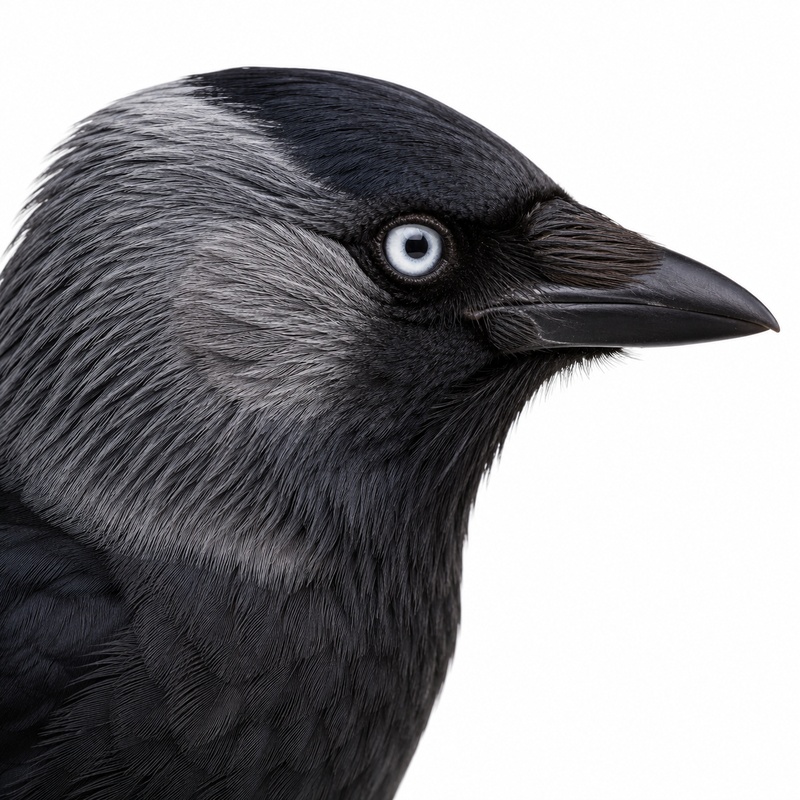
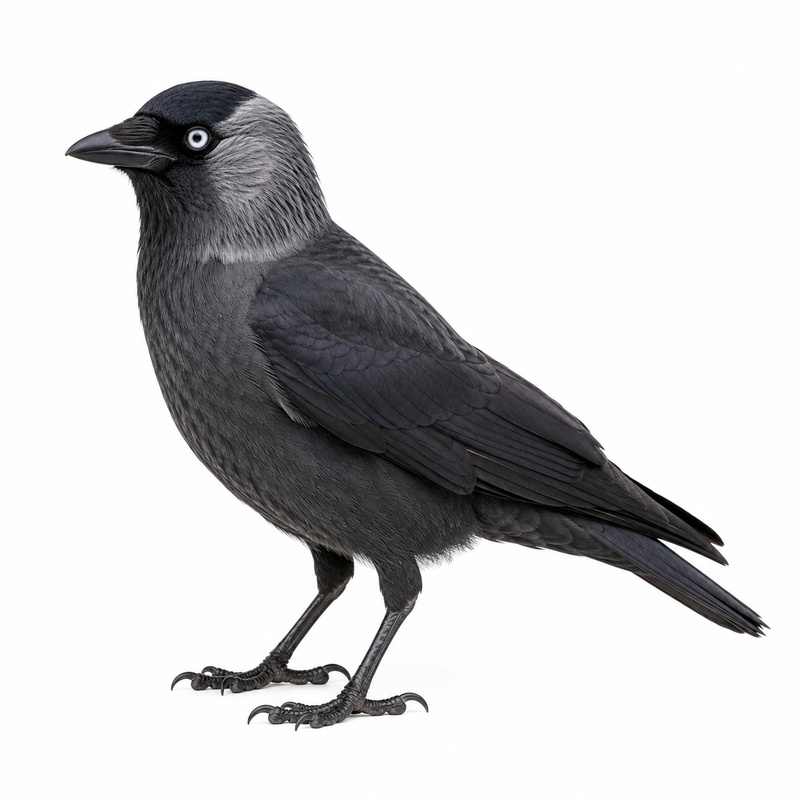
The jackdaw (Coloeus monedula) is one of the most social and intelligent of the European corvids, closely associated with human presence. Smaller than crows and ravens, it is recognizable by its compact build, predominantly grayish-black plumage, a lighter nape, and, above all, its characteristic, very pale eyes , which give the adult an instantly recognizable expression.
The jackdaw is a profoundly gregarious species. It lives, feeds, rests, and often nests in close association with other individuals, forming colonies that can occupy bell towers, towers, historic buildings, rock faces, natural cavities, and man-made structures. This tendency toward social life, combined with a remarkable capacity for learning, makes it one of the most interesting members of the Corvidae family.
In Italy , it breeds, is predominantly sedentary or erratic, and is a regular migrant and winter visitor . ISPRA describes a broad distribution, particularly continuous in the southern regions and the major islands and more fragmented north of the Apennines. The species also shows a marked tendency toward synanthropy, that is, the ability to exploit human-made environments and structures.
For the Hunting Encyclopedia, the Jackdaw is of particular interest because it provides insight into many aspects typical of Corvids: intelligence, social learning, colonies, vocal communication, feeding opportunism, and the relationship with agricultural and urban landscapes . It is also essential to correctly distinguish it from the Raven, Carrion Crow, and Hooded Crow, species with different morphology, distribution, and regulatory status.
Jackdaw: classification and characteristics
| Common name | Jackdaw |
| Scientific name | Coloeus monedula |
| Traditional synonym | Corvus monedula |
| English name | Western Jackdaw |
| Order | Passeriformes |
| Family | corvidae |
| Gender | Coloeus |
| Length | Approximately 33-39 cm |
| Wingspan | Approximately 64-73 cm |
| Supply | Omnivorous and opportunistic: invertebrates, seeds, cereals, fruits, small vertebrates, eggs, food scraps and other available resources |
| Habitat | Residential areas, agricultural areas, rock faces, historic buildings, ruins, quarries, viaducts and open areas with cavities suitable for nesting |
| Presence in Italy | Nesting, mainly sedentary or erratic, regular migrant and wintering |
| Behavior | Highly gregarious and colonial |
| Hunting status in Italy | It is not currently included among the species of normal hunting activity; excluded from the list of huntable species in 1997 |
The Jackdaw is noticeably smaller than the Crows and has compact proportions, with a relatively large head, short neck, robust but less massive beak than that of the other large Crows and relatively pointed wings.
The plumage is not uniformly black. The forehead, wings, and tail are very dark, while the sides of the neck and nape take on a silvery-gray hue , particularly evident in adults. This lighter area creates a distinctive contrast with the dark hood on the head.
The eyes are one of the most striking diagnostic features. The iris of the adult is very pale, whitish or bluish-gray, and contrasts sharply with the head plumage. In juveniles, the eye is initially darker and becomes progressively lighter as they grow.
How to distinguish the Jackdaw from other Corvids
The Jackdaw can be confused with other corvids from a distance, especially when observed in mixed flocks. The primary difference is size : it is significantly smaller than the Raven, Carrion Crow, and Hooded Crow, and has a shorter, more compact silhouette.
The contrast between the dark head and grayish nape is an excellent characteristic of the adult. Even more useful is the light-colored eye, virtually unique among the most common European corvids. When these details are not visible, social behavior, flight pattern, and vocalizations become particularly important.
| Feature | Jackdaw | Corvo | Black crow | Hooded crow |
|---|---|---|---|---|
| Scientific name | Coloeus monedula | Corvus frugilegus | Corvus corone | Corvus cornix |
| Size | Small | Grande | Grande | Grande |
| Plumage | Black-greyish with a lighter nape | Uniform black with metallic reflections | Uniform black | Gray with black head, wings and tail |
| Adult eye | Very clear | Dark | Dark | Dark |
| Base of the beak | Feathered | Clear and naked in the adult | Feathered | Feathered |
| Behavior | Highly gregarious and colonial | Very gregarious and colonial | More territorial in reproduction | Territorial during breeding, more gregarious out of season |
The comparison with the Raven is particularly interesting. Both species can form flocks and even migrate together, but the Jackdaw is much smaller and never has the characteristic pale, featherless patch at the base of its beak typical of the adult Raven.
A life built around the group
Sociality is probably the most important feature of the Jackdaw's biology. Individuals frequently live in organized groups and maintain social relationships that can last a long time. Pairs form a particularly stable unit , and the two partners can maintain a close association even outside the breeding season.
In colonies, pairs nest relatively close together, each occupying a cavity or protected space. Bell towers, towers, ancient walls, rock cavities, ruins, and large structures can host multiple nests simultaneously.
Proximity to other individuals leads to competition for prime sites, but it also offers advantages. Multiple eyes enhance the ability to detect predators and sources of disturbance, and an individual's activity can provide useful information to other colony members.
Outside of breeding season, Jackdaws can form large collective roosts . As evening approaches, small groups from feeding grounds gradually converge on trees or buildings used for sleeping.
It's not uncommon for these roosts to be shared with other corvids, especially ravens. This association can produce very visible and noisy flocks that disperse back into the countryside with the arrival of morning.
Intelligence, hierarchies and social recognition
The jackdaw also holds an important place in the history of animal behavior studies. Like other corvids, it possesses advanced cognitive abilities, but its strong social structure makes the mechanisms of individual recognition, learning, and hierarchy particularly interesting.
Individuals carefully observe the behavior of their peers and can utilize socially acquired information. The discovery of a new food source by some group members can quickly attract others, while a situation perceived as dangerous can provoke a collective response.
Memory plays a fundamental role. Jackdaws learn to recognize feeding sites, roosting sites, breeding cavities, and safe routes and can reuse them over time as long as they remain favorable.
The species also demonstrates a remarkable ability to adapt to human presence. Individuals living in urban areas quickly learn to distinguish harmless situations from potentially threatening behaviors and can adjust their escape distance based on experience.
This cognitive flexibility is one of the reasons why the Jackdaw can live effectively in profoundly transformed environments without losing its wild nature.
Habitat: Natural rocks and buildings become equivalent
One of the most interesting aspects of the Jackdaw is its ability to use very different structures as long as they offer one essential feature: a cavity suitable for nesting.
Originally, rock faces, cliffs, natural cavities, and old trees provided most of the available sites. With the development of human settlements, bell towers, towers, castles, ruins, bridges, viaducts, and abandoned buildings gradually increased the supply of equivalent artificial environments.
ISPRA emphasizes the species' marked tendency towards synanthropy and its frequent nesting in buildings and other artificial structures as well as on rock faces. :contentReference[oaicite:1]{index=1}
However, the nesting site is only one component of its habitat. The jackdaw requires large areas nearby in which to feed: meadows, pastures, cultivated fields, tilled land, and grassy areas are particularly important.
A historic center surrounded by diverse countryside can therefore represent an ideal environment: the buildings provide cavities for breeding, while agricultural areas provide food a short distance from the colony.
Nutrition: An Intelligent Opportunist
The jackdaw is omnivorous and utilizes a wide variety of resources. Insects, larvae, earthworms, spiders, and other invertebrates are an important component, especially in meadows and agricultural land.
Its diet also includes seeds, cereals, fruits, and other plant resources. In fields, it can take advantage of scattered seeds, harvest residues, and organisms brought to the surface by tillage.
When the opportunity arises, it can consume small vertebrates, eggs, carcasses, and food scraps. This ability to rapidly switch between resources allows the species to adapt to strong seasonal variations.
In inhabited areas, it may utilize anthropogenic food, but its dependence on these resources varies greatly among populations. Rural jackdaws may maintain a diet primarily based on grassland and crops, while urban jackdaws exploit human-made resources more.
During the rearing of young, invertebrates become particularly important due to their high protein content. Fields and meadows rich in insects thus become key feeding grounds for nesting pairs.
Jackdaw and agriculture
The Jackdaw has developed a very close relationship with traditional agricultural landscapes . Meadows, pastures, arable land, rows of trees, and small settlements create a particularly favorable mosaic because they simultaneously provide food, resting places, and nesting cavities.
Tillage can create immediate opportunities. Plowing and mowing make insects, larvae, and other small animals accessible that until a few minutes earlier were hidden in vegetation or soil.
Individuals quickly learn to follow these changes. It's not uncommon to observe groups of jackdaws feeding in recently worked areas or accompanying livestock in pastures, where the animals' movement facilitates the discovery of invertebrates.
The relationship with agriculture can also generate conflict when seeds or crops are exploited, but the impact should not be generalized. As with many corvids, the actual role varies according to local density, crop, time of year, and the availability of other resources.
Voice and communication: a very noisy corvid
The Jackdaw has a voice very different from the deeper caw of the Crow. Its typical call is short, sharp, and metallic , and is repeated frequently during flight and social interactions.
Vocal communication is particularly important because the species lives in groups. Different calls allow them to maintain contact, coordinate movements, signal alarms, and regulate interactions within the colony.
A flock in flight can be identified by their voices even before being observed. This is particularly useful when Jackdaws move with crows or other species: their vocalizations help distinguish the presence of different corvids within the same flock.
Near breeding colonies, sound activity can become very intense, with a continuous succession of calls between individuals arriving, leaving the nest, or interacting with their neighbors.
Reproduction: the cavity as a fundamental resource
The Jackdaw is a cave-dwelling species . Unlike crows, ravens, and magpies, which generally build large, open nests made of branches, it requires a cavity or protected space in which to build its nest.
Rock faces and natural cavities represent their original habitats, but a significant portion of European populations today exploit buildings, towers, bell towers, ruins, bridges, and other man-made structures. This ability explains the species' strong association with historic cities and small rural towns.
Inside the cavity, the pair builds a nest using twigs, grasses, plant fibers, wool, hair, and other soft materials. The structure can be reused and modified in subsequent years when the site remains available.
The female generally lays several eggs and does the bulk of the incubation, while the male contributes to feeding. After hatching, both parents participate in caring for the young.
The chicks remain in the nest for several weeks and are completely dependent on the adults. At this stage, distance between the colony and feeding areas becomes important: fewer movements mean lower energy costs for the adults and more frequent feeding for the young.
Couple fidelity and social structure
The pair relationships of the jackdaw are particularly interesting. Males and females can form long-lasting bonds and remain associated throughout much of the year, not just during the brief breeding season.
Within the colony, pairs occupy a position in the complex social network and can interact repeatedly with the same neighbors. This creates a community in which individuals are not simply anonymous members of a large flock.
Bond stability allows partners to more effectively coordinate site defense, nest building, and offspring rearing. The loss of a partner may lead to the formation of a new pair, but existing bonds can last for several years.
This type of organization is one of the reasons why corvids are frequently studied in research on social behavior: pair life and group life coexist within the same system.
Migration and presence in Italy
The jackdaw's migratory strategy varies depending on its geographic area. Populations in central and western Europe are often resident or make relatively limited movements, while some northern and eastern populations are more migratory.
ISPRA lists the species as a regular nesting and migratory species in Italy , with a widely distributed resident population and seasonal movements that primarily involve young individuals. Migrations are predominantly diurnal and may occur in small groups, often associated with ravens. :contentReference[oaicite:2]{index=2}
The Italian distribution presents marked geographical differences. It is more continuous in the southern regions and the major islands and more fragmented in the North, although expansion processes have been documented in several northern areas. :contentReference[oaicite:3]{index=3}
ISPRA reported a historically estimated breeding population for Italy of between 50.000 and 100.000 pairs . Since this estimate is based on previous data, for current quantitative assessments, it is advisable to refer to the most recent monitoring programs. :contentReference[oaicite:4]{index=4}
The presence up to relatively high altitudes also demonstrates good environmental plasticity, provided that nesting cavities and open territories in which to feed are available.
Flight and flock behavior
In flight, the Jackdaw displays relatively rapid heartbeats and a compact silhouette. Its tail appears shorter and its overall build is lighter than that of a Crow.
Groups can perform highly coordinated movements, especially when moving to feeding areas and roosting sites. However, their collective behavior is less rigidly geometric than that of many aquatic birds: flocks continually change shape and density.
The Jackdaw can also use air currents around buildings, rock faces, and ridges, displaying remarkable agility. In urban colonies, it's common to observe individuals making rapid turns around bell towers and towers before reaching the nest cavity.
When feeding on the ground, the flock may appear very scattered, but an alarm signal often provokes a near-simultaneous response, demonstrating how effective the collective vigilance network is.
The Jackdaw in local culture
Few species have been able to utilize human architecture as naturally as the jackdaw. Castles, bell towers, medieval towers, and ancient walls can become the artificial equivalent of the rock faces in which the species originally nested.
This connection has made the Taccola a characteristic feature of many European historic centers. Colonies can occupy the same buildings for generations, establishing an almost permanent relationship with the urban landscape.
However, building renovations can profoundly alter this availability. Completely closing off cavities, niches, and openings can eliminate sites used by many couples in a single season.
It is therefore possible to find a balance between building conservation and wildlife protection, providing, where appropriate, artificial cavities or architectural solutions capable of maintaining nesting sites without compromising the structures.
Hunting status in Italy: why it is not a huntable species today
The regulatory status of the Taccola deserves clarification because the original text of Law No. 157 of 11 February 1992 could generate confusion.
In the initial wording of Article 18, the species was listed among those that could be hunted under the scientific name then in use, Corvus monedula . Subsequently, the Prime Ministerial Decree of 21 March 1997 explicitly excluded it from the list, along with other species, including the raven. :contentReference[oaicite:5]{index=5}
The Jackdaw is therefore not currently included among the species normally hunted in Italy.
This point is particularly important because the Corvidae family includes species with different statuses. The Hooded Crow, the Carrion Crow, the Magpie, and the Eurasian Jay have different classifications, while the Jackdaw and the Raven have been excluded from the national list of huntable species.
Correct identification therefore also takes on a clear normative value. Size, light-colored eyes, grayish nape, gregarious behavior, and vocalization must be precisely known by those who frequent the area.
Conservation and relationship with buildings
The Jackdaw is a relatively adaptable species, and European populations are generally widespread, but some factors can cause local problems. One of the most important concerns the availability of nesting sites.
Renovating old buildings, closing cavities, demolishing ruins, and modifying towers and bell towers can eliminate established colonies. The jackdaw can find new sites, but suitable cavities aren't always readily available.
The transformation of agricultural landscapes also affects habitat quality. The disappearance of meadows, pastures, and diverse crops can reduce the availability of invertebrates, which are an important resource, especially during breeding.
Favorable management should therefore preserve a mosaic of open agricultural areas, meadows, trees, buildings, and cavities . Conservation does not necessarily require completely natural environments: the Jackdaw demonstrates that properly managed human structures can become key habitat components.
It is precisely this ability to integrate natural and artificial elements that makes the species particularly interesting as a symbol of the fauna that lives in European cultural landscapes.
Curiosities about the Jackdaw
- It is one of the smallest European corvids and is noticeably smaller than Crow and Crows.
- The adult's eye is very clear, one of the most immediate characters for recognition.
- The silvery-grey nape contrasts with the darker hood of the head.
- It is a cave-dwelling species and can nest in bell towers, towers, ruins, rock faces and viaducts.
- Couples can maintain very long-lasting bonds and remain associated even outside the breeding season.
- It is highly gregarious and can form communal dormitories even together with other Corvids.
- Possesses high cognitive abilities and learns quickly by observing the environment and other individuals.
- The Italian populations are largely resident, but the country also receives migratory individuals.
- Northern and eastern populations are generally more migratory than those of Western Europe.
- Although it was included in the original list of Law 157/1992, since 1997 it has no longer been a species that can be ordinarily hunted in Italy.
The Jackdaw in the Hunting Encyclopedia
The Jackdaw demonstrates that corvids cannot be simply described as "black birds." In Coloeus monedula, its social structure, intelligence, and relationship with cavities have determined a way of life profoundly different from that of crows, ravens, magpies, and jays.
It is above all a community species . Pairs maintain stable bonds, colonies bring together numerous reproductive nuclei, roosts concentrate individuals at night, and information is constantly circulated through the calls and behavior of other group members.
Its relationship with humans adds another element of interest. A rock face and a bell tower, from the Jackdaw's perspective, can fulfill the same biological need: to provide a safe cavity in which to reproduce. It is an extraordinary example of how a wild species can incorporate human architecture into its ecology.
For hunters and naturalists, the Jackdaw represents a species for which recognition and normative knowledge must proceed hand in hand . It may share fields and roosts with other corvids, but it possesses its own morphological characteristics, behavior, and legal status.
It is this combination of intelligence, strong sociality, pair loyalty, and the extraordinary ability to transform towers, rocks, and buildings into colonies that makes the Jackdaw one of the most fascinating and complex corvids in the Italian fauna.