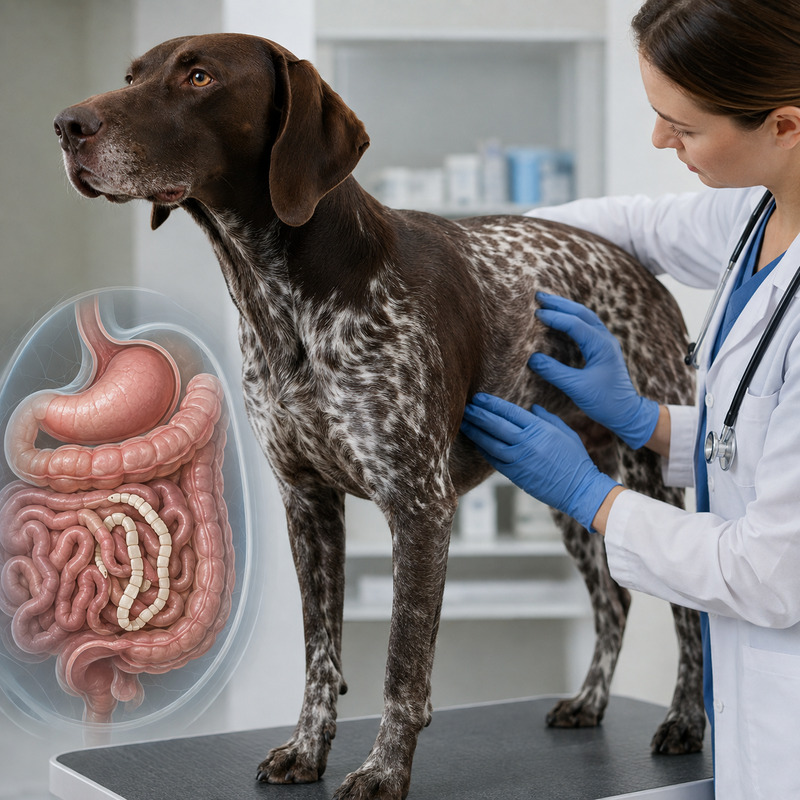
Tapeworms in dogs are flat, segmented intestinal worms belonging to the cestode class. The infection is called cestodiasis and can be caused by different species, each with its own life cycle and different modes of transmission.
Among the most important tapeworms in dogs are Dipylidium caninum , some species of the Taenia genus , and Echinococcus . The latter deserves particular attention because it can cause a serious zoonosis.
Hunting dogs may be at greater risk than pets that live exclusively indoors, as they may ingest fleas while grooming themselves or by feeding on carcasses, raw viscera, and small wild animals containing the larval forms of the parasite.
What are tapeworms?
Tapeworms are parasites with a flattened body, consisting of a head called a scolex and a succession of segments called proglottids . Adults attach themselves to the wall of the dog's small intestine and absorb nutrients through their body surface.
Mature proglottids contain eggs and can be passed in the feces. In some cases, they are visible to the naked eye around the anus, on the dog's coat, or in the dog's bed.
Almost all dog tapeworms have an indirect life cycle . To complete their development, they therefore require an intermediate host, which can be a flea, a louse, a rodent, a rabbit, a domestic herbivore, or a wild animal.
Main dog tapeworms
Canine dipylidium
Dipylidium caninum , also known as the flea tapeworm , is one of the most common tapeworms in dogs. Its proglottids resemble small grains of rice or cucumber seeds and can move when freshly shed.
Dogs become infected by ingesting a flea containing the larval form of the tapeworm , usually while licking or chewing their fur. More rarely, the dog-biting louse, Trichodectes canis , can also act as an intermediate host.
Eliminating tapeworms without simultaneously controlling fleas exposes your dog to rapid reinfestation.
Taenia spp.
Numerous species of the Taenia genus can reach adulthood in the dog's intestine. Intermediate hosts are generally domestic or wild mammals, in whose tissues the larval forms develop.
The dog becomes infested by eating:
- contaminated raw meat or offal;
- wild animal carcasses;
- rodents, rabbits or hares;
- organs of sheep, cattle, pigs or other animals not subjected to health checks.
This type of infestation particularly affects dogs that hunt, roam freely in the countryside or have access to slaughterhouse waste.
Echinococcus granulosus
Echinococcus granulosus is a very small tapeworm, but it is of great health importance. Dogs are the definitive host and can harbor the adult parasite in their intestines without showing any obvious symptoms.
Herbivorous animals, especially sheep, can act as intermediate hosts by developing cysts in their internal organs. Dogs become infected by ingesting raw viscera containing these cysts.
Eggs shed by dogs can contaminate soil, water, plants, hands, shoes, and equipment. If accidentally ingested by humans, they can cause cystic echinococcosis or hydatidosis , a potentially very serious zoonosis.
Echinococcus multilocularis
Echinococcus multilocularis occurs primarily among foxes and small rodents, but can also affect dogs. Infestation can occur when dogs catch or ingest infected rodents.
Geographic distribution is uneven, and risk must be assessed based on the dog's frequented area, travel, and hunting habits. This species can also cause a serious form of echinococcosis in humans.
How tapeworms are transmitted to dogs
Dogs do not normally become infected by directly ingesting Dipylidium proglottids or the eggs of many Taenia species . Instead, they must consume the specific intermediate host in which the larval form is present.
The main ways of contagion are:
- ingestion of infected fleas during coat licking;
- ingestion of the chewing louse Canis Trichodectes;
- consumption of rodents, rabbits, hares or other wild animals;
- consumption of raw meat, organs and offal;
- access to carcasses or slaughter residues;
- predation of infected intermediate hosts.
The Echinococcus cycle requires particular caution: dogs become infected by eating organs containing the larval forms, while humans and other intermediate hosts can become infected by ingesting the eggs shed by the dog.
Symptoms of tapeworms in dogs
Many infected dogs show no obvious symptoms. Tapeworm presence is often detected by observing proglottids in the feces, around the anus, or in places where the animal rests.
When present, possible signs include:
- white segments resembling grains of rice in the stool or on the coat;
- itching and irritation in the anal area;
- frequent licking of the perianal region;
- dragging the rear end on the ground;
- intermittent digestive disorders;
- loose stools or diarrhea;
- occasional vomiting;
- distended abdomen, especially in puppies;
- dull coat and general condition not optimal;
- weight loss or slowed growth in heavy infestations.
Dragging the rear end is not exclusive to tapeworms and can also be caused by problems with the anal glands, dermatitis, allergies, or other parasitic infestations.
Intestinal Echinococcus infections are generally asymptomatic in dogs. The absence of symptoms does not therefore preclude the animal from shedding eggs into the environment.
How to recognize proglottids
Fresh Dipylidium caninum proglottids are whitish, elongated, and sometimes mobile. When dried, they become smaller and resemble grains of rice or pale seeds clinging to the fur.
Species segments belonging to the Taenia and Echinococcus genera should not be identified solely by appearance. The distinction requires specific tests performed by qualified veterinary personnel.
If you observe suspicious segments, it's helpful to collect them with disposable gloves and store them in a closed container for delivery to your veterinarian. Wash your hands thoroughly after handling.
Diagnosing tapeworms in dogs
Diagnosis can be made by observing the proglottids and parasitological examination of the feces. However, a single negative sample does not always rule out infection.
Tapeworms can shed segments and eggs intermittently. Furthermore, Dipylidium caninum proglottids don't always break down in the stool, making it less likely that the characteristic egg capsules will be found during a routine examination.
Investigations may include:
- macroscopic examination of the stool and perianal region;
- identification of proglottids collected by the owner;
- coprological examination using concentration or flotation techniques;
- antigen or molecular tests, when available and indicated;
- epidemiological evaluation of dog habits;
- simultaneous search for fleas or lice.
Echinococcus eggs cannot be reliably distinguished from those of some tapeworms by microscopic examination alone. Suspected echinococcosis requires specific diagnostic procedures and safety measures.
How to treat tapeworms in dogs
Treatment involves the administration of a cestocidal drug selected by the veterinarian. Praziquantel is one of the active ingredients commonly used against numerous canine tapeworms, but the product, dosage, and any repetition must be determined based on the animal's weight, the suspected species, and the level of risk.
Drug therapy must be accompanied by the elimination of the source of the infestation:
- in presence of Canine dipylidium fleas must be controlled at the same time;
- other animals living together must also be treated when indicated;
- access to carcasses, rodents and raw viscera must be prevented;
- kennels, blankets and rooms must be cleaned thoroughly;
- Stools should be collected and disposed of promptly.
The disappearance of visible segments does not guarantee that the problem is definitively resolved. Your veterinarian may recommend a follow-up checkup or a personalized preventative program.
Why flea control is essential
In the case of Dipylidium caninum , treating the tapeworm alone does not interrupt the life cycle. Fleas on the dog or in the environment can contain tapeworm larvae and cause a new infestation when ingested.
The control must therefore concern:
- the infested dog;
- other dogs and cats living together;
- kennels, carpets, sofas and cracks in the floors;
- cars, carriers and shelters used by animals;
- kennels and facilities where multiple subjects stay.
The flea program must be maintained for the period indicated by the veterinarian, because most immature fleas are found in the environment and not directly on the animal.
Can dog tapeworms infect humans?
The risk to humans varies greatly depending on the species.
Dipylidium caninum can accidentally infest a person, especially a child, when an infected flea is ingested. Transmission does not normally occur by petting the dog or through simple contact with the proglottids.
In the case of Echinococcus , however, humans can accidentally ingest the microscopic eggs passed in dog feces. The eggs can reach the mouth via contaminated hands, objects, soil, food, or water.
To reduce the risk it is important:
- wash your hands after touching the dog and before eating;
- quickly collect feces using gloves or bags;
- prevent children from playing in areas contaminated by excrement;
- wash vegetables, fruit and herbs collected on the ground thoroughly;
- do not give your dog raw viscera;
- check for fleas and intestinal parasites regularly;
- Don't allow your dog to lick your face, especially after outdoor activities.
Tapeworm Prevention
Prevention must be tailored to the dog's lifestyle. There is no identical treatment frequency for all animals: an apartment-dwelling dog presents a different risk than one that hunts, catches rodents, or frequents breeding farms and livestock farms.
The main preventive measures include:
- continuous flea control with appropriate veterinary products;
- periodic stool tests;
- anti-parasitic treatments established on the basis of individual risk;
- daily collection of faeces;
- periodic washing of kennels and blankets;
- prohibition on administering raw offal or slaughter residues;
- exclusive use of properly controlled foods and meats;
- reduction of predation by rodents and small game;
- control of cohabiting animals.
Tapeworms and hunting dogs
Hunting dogs can frequently come into contact with tapeworm intermediate hosts. Exploration, predation, retrieving game, and accessing carcasses or offal increase the risk of infection.
Prevention in subjects employed in hunting activities should include:
- veterinary checks scheduled throughout the year;
- regular faecal examinations;
- a treatment plan based on actual exposure;
- constant protection against fleas;
- coat inspection after outings;
- absolute ban on consuming raw game offal;
- safe removal of evisceration residues;
- preventing access to carcasses and dead animals;
- cleaning of boxes, means of transport and equipment.
Game viscera should not be left on the ground for dogs to access. This practice can promote the transmission of Taenia , Echinococcus , and other parasites.
When to contact the vet
It is advisable to request a visit when you observe segments resembling grains of rice in the stool or on the coat, when the dog presents anal itching, digestive problems, weight loss or a persistent flea infestation.
The veterinarian must be informed if the dog:
- regularly participates in hunting activities;
- catches or ingests rodents and other animals;
- consumed raw meat or offal;
- frequents sheep farms or livestock facilities;
- traveled to areas affected by echinococcus;
- lives with small children or vulnerable people.
In short (Italian only)
Tapeworms in dogs are intestinal parasites that are often subtle, but some species are of significant veterinary and health importance. Dipylidium caninum is closely linked to the presence of fleas, while Taenia and Echinococcus species are transmitted primarily through predation and the ingestion of raw meat, carcasses, or offal.
Proper prevention requires flea control, regular fecal examinations, responsible use of antiparasitic medications, and the elimination of intermediate hosts. For hunting dogs, the program must be particularly thorough and developed in consultation with your veterinarian.