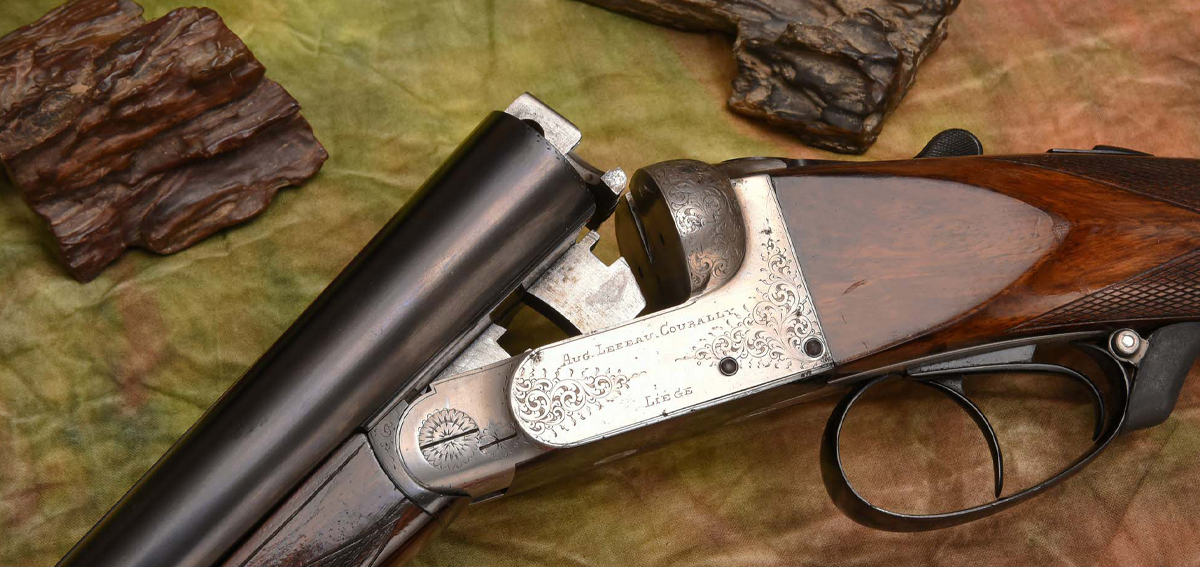

The double-barrelled shotgun, a weapon used by generations of hunters, considered to be of ancient origin, still widely used today, for its qualities and the charm it emanates.
The side-by-side is undoubtedly the type of gun that, when viewed purely aesthetically, surpasses all other types of hunting rifles. No one can deny that the side-by-side hunting gun has a slender, almost pure line, and its elegance is unrivaled. The overall design of the side-by-side hunting gun is decidedly harmonious, with the locks perfectly connected to the barrel tubes and the action plate seamlessly blending with the forend profile. Undoubtedly, an excellent aesthetic feat for what is ultimately a tool, equally appreciable whether it's a hammerless or with external hammers.
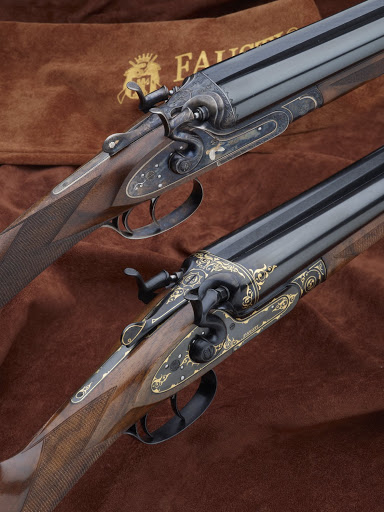 If we look at the hunting double-barrelled shotgun from the point of view of pure functionality, it must be considered that the most balanced weapon, Certainly more so than semi-automatic and over-and-under. For various reasons, these have a slightly more forward center of gravity than the side-by-side shotgun. This type of side-by-side gun allows for easy, instinctive aiming and guarantees great agility when moving sideways with the gun shouldered. We could say it's a weapon particularly suited to instinctive shooters, those who aim quickly and never try to adjust their aim, but simply shoulder and fire.
But if we look closely, it's not all roses and flowers and if we nitpick, as is obvious, the hunting double-barrelled shotgun has intrinsic functional "defects".
A first element to consider is that the barrels are not aligned with the structure of the gun , and this requires adjustment of the aimed shot. It's true that all double-barreled shotguns are built to have an overlapping pattern at a specific distance, but that's the target and no other. The locking mechanisms, in theory, represent another weak point, because they are naturally subject to considerable stress and are obviously not aligned.
If the side-by-side is equipped with a standard forend, the fingers of the hand holding the forend touch the barrels, and if they're too hot, they don't create a comfortable contact. This has been remedied by creating beavertail forends, but with this solution, we'll leave aside any aesthetic concerns. However, it's often the only solution for those who decide to switch to a hunting side-by-side, unaccustomed to managing the full control that prevents the forend from slipping even slightly, following lateral shifts and muzzle rises, with a standard forend.
Despite this, the hunting side-by-side shotgun retains all its charm and is produced by almost all the most important gun manufacturers and is absolutely never missing among artisanal hunting rifle manufacturers.