
Arguably the tastiest, and certainly among the most nutritionally rich, game meats need to be aged to be at their best. But what is this process that makes them so appetizing?
Dry-aging can be defined as a process of maturing meats that makes them more tender and juicy, and must take place at constant and controlled temperatures... and even for quite some time. Let's analyze the dry-aging process together and understand how to do it best.
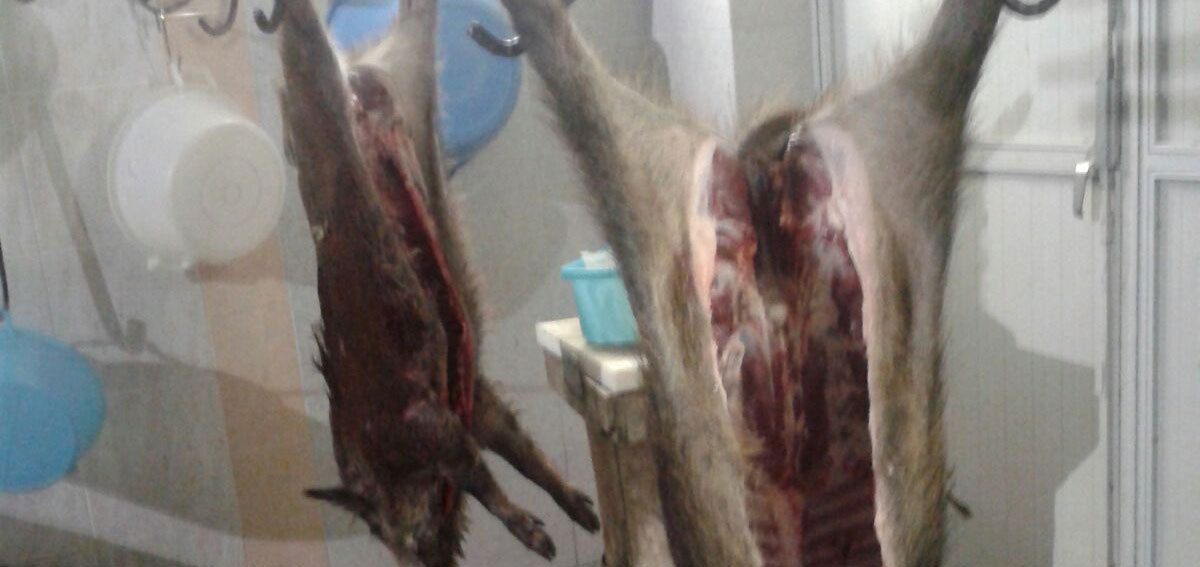
Immediately after the game is slaughtered, the muscular part—that is, the meat—undergoes a natural stiffening process triggered by a series of biochemical processes. Following these initial processes, the meat requires a further maturation process to tenderize it, making it easier to chew and appreciate its flavor. This "tenderizing " phase of the game muscle is what we commonly call aging . It involves a resting period, conducted in a controlled environment, where a series of biochemical and physical processes are exploited, enhancing the edibility of the meat.
Naturally, there are some precautions to take in all of this: first of all, it is necessary to prevent the meat from drying out, a factor that gives rise to the onset of unfavorable microorganisms that can trigger putrefaction.
The best way to avoid this risk is to let it happen maturation in a controlled environment where the temperature is constant and between 0 and 4 degrees and with a good level of humidity that stands at 85/90%.
Another important factor is the temperature drop of the carcass; this shouldn't be sudden, but must go through an intermediate phase in which it cools to room temperature. Once this has occurred, the game carcass reaches the cold room, where it must gradually cool to 3-4 degrees Celsius.
In this situation, the muscle and tendon fibers proceed towards relaxation, due to the action of enzymes on the protein component, while at the same time other enzymes attack the fats, giving the meat the characteristic flavor of each game.
AGING TIME
The aging period is not the same for all game species. Generally speaking, 3-4 days is sufficient for birds, while larger game birds may require up to 8 days of aging. During this phase, the meat also loses its strong gamey odor, while retaining the distinctive aroma that distinguishes game meat from other meats.