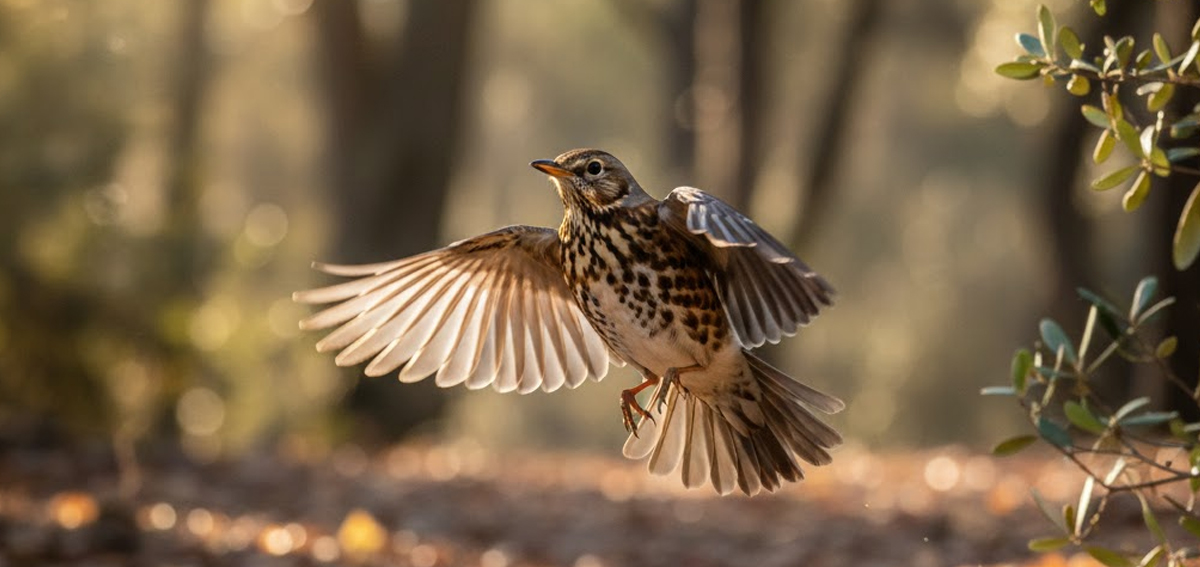

An innovative study conducted on specimens wintering in the Mediterranean highlights the presence of plastic fragments in the species' diet. The Song Thrush confirms itself not only as a key player in migration, but also as a crucial indicator of the quality of the terrestrial environment.
We're used to thinking of plastic pollution as a purely marine problem. However, recent research published in international journals and conducted on wintering populations of song thrushes ( Turdus philomelos ) has overturned this perception, focusing attention on the contamination of agricultural and forest soils. Thanks to their omnivorous diet and ground-based feeding habits, these thrushes are providing science with unprecedented data on the spread of microplastics in terrestrial habitats.
The Thrush as a natural “sampler”
The study, which analyzed the gastric contents of samples collected in areas heavily populated with olive trees and woodlands, revealed a disturbing reality: the constant presence of polymeric microfragments (fibers and granules of various colors). Since the Song Thrush feeds primarily on invertebrates (earthworms, snails) and berries collected on the ground, its ingestion of plastic is direct evidence of contamination of the litter and upper soil layers.
The researchers emphasize that the thrush acts as a true "bioindicator": the health of the monitored specimens directly reflects the health of the territories they cross during their spectacular migrations.
Migration and accumulation: the crux of survival
Beyond the issue of pollution, ornithological research from 2025 to 2026 has made significant strides in understanding the dynamics of pre-nuptial migration. Data collected through telemetry and ringing confirm that the Song Thrush uses the Mediterranean basin as a crucial "refueling station."
The success of the return journey to the nesting sites in Northern Europe depends strictly on the availability of quality food resources (such as olives and berries from the undergrowth) and the absence of contaminants that could alter fat metabolism, essential for covering the thousands of kilometers of the migratory route.
These scientific findings require a profound reflection on land management. Protecting the Song Thrush means not only regulating hunting but also preserving the integrity of agricultural ecosystems. Combating the abandonment of plastic waste in agriculture and maintaining ecological corridors therefore become priority actions for the conservation of the species.
In this context, the hunting world emerges as a key partner for research: collaboration between hunters and scientists in providing samples and observation data is proving key to real-time monitoring of the health of European biodiversity.