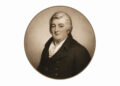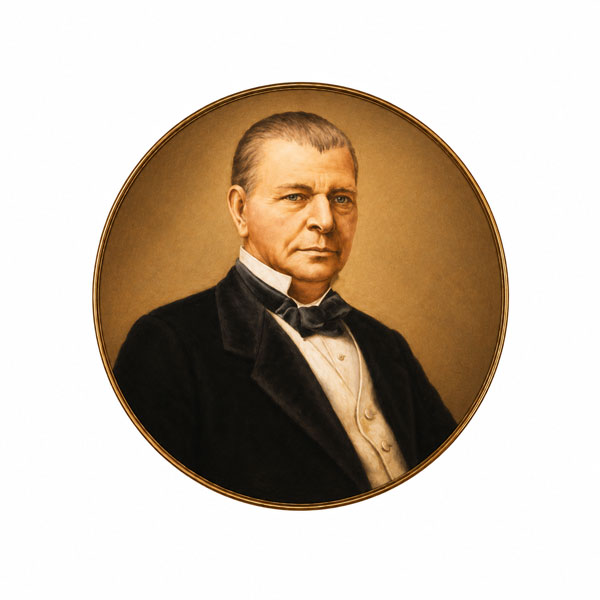
Oliver Fisher Winchester he was not a designer in the sense of John Moses Browning, Benjamin Tyler Henry, or Samuel Colt. He wasn't the man who spent his days at the gunsmith's bench designing every lever, spring, or locking surface. His greatness was different and, in some ways, just as decisive.Winchester He was the man who recognized the potential of a still imperfect technology, found the capital necessary to support it, brought together highly talented designers and technicians and transformed a series of experiments on the repeating rifle into one of the most famous industrial dynasties in the history of weapons. His story is therefore a story of entrepreneurial vision, industrial organization and ability to choose the right menFirst Horace Smith and Daniel B. Wesson, then Benjamin Tyler Henry, then Nelson King: around Oliver Winchester a technical genealogy was born that would lead from the Volcanic to the Henry, from the Model 1866 to the Model 1873 and, after his death, to the extraordinary collaboration with John Moses Browning.
Oliver Winchester: biographical sheet
| Full name | Oliver Fisher Winchester |
|---|---|
| Birth | November 30, 1810 |
| Place of birth | Boston, Massachusetts, United States |
| Death | December 11, 1880 |
| Place of death | New Haven, Connecticut, United States |
| Activities | Entrepreneur, industrialist and investor |
| Entry into the arms sector | 1855, investment in the Volcanic Repeating Arms Company |
| New Haven Arms Company | Under his control since 1857 |
| Foundation Winchester Repeating Arms Company | 22 May 1866 |
| Symbol model | Winchester Model 1866 “Yellow Boy” |
| Key collaborators | Horace Smith, Daniel B. Wesson, Benjamin Tyler Henry, Nelson King |
| Heredity | Transforming the lever-action into a globally successful industrial and commercial platform |
Before the Guns: Shirts, Trade, and Capital
Oliver Winchester He was born in Boston in 1810. His entry into the world of weapons occurred relatively late and represents one of the most interesting differences compared to almost all the other protagonists.
Before dealing with rifles, Winchester He worked in the men's clothing trade and manufacturing. He built his own shirt business and gained experience in business management, production organization, and especially in raising and investing capital.
When he began to take an interest in weapons, he wasn't a young inventor seeking funding. He was already a businessman capable of understanding the difference between a good prototype and an industrially viable product.
Smith & Wesson and the Volcanic World
In the 1850s, Horace Smith and Daniel B. Wesson were working on a repeating weapon system based on a lower lever. The platform was derived from previous experiments with repeating weapons and used a special ammunition known as the Rocket Ball , in which the propellant charge was contained directly in the cavity of the projectile.
The mechanical idea was fascinating, but the ammunition was underpowered. This problem is fundamental to understanding the future success. Winchester: a good deed is not enough if the cartridge is not up to par.
In 1855, the Volcanic Repeating Arms Company was founded. Oliver Winchester He bought shares in the company and quickly became one of its most important investors.
1857: Winchester takes control
Volcanic ran into financial difficulties. Smith and Wesson would later focus their attention on metallic cartridge-firing handguns, while Winchester gradually increased its participation.
In 1857 he acquired control of the company and reorganized it as New Haven Arms Company. Winchester He didn't abandon a technology that had already shown commercial limitations. Instead, he decided to invest further, convinced that the principle of lever repetition had a future.
Benjamin Tyler Henry: The Inventor We've Been Missing Winchester
Among the men who worked in the Volcanic environment there was Benjamin Tyler Henry, a highly talented mechanic and designer. Winchester he understood Henry's value and entrusted him with the task of improving the weapon and above all overcoming the limits of the Rocket Ball.
Henry worked on a true metallic rimfire cartridge in .44 caliber. The case could hold much more powder and offered significantly better sealing and reliability than the Volcanic round. The gun and cartridge changed together.
1860: The Henry Rifle is born
In 1860, Benjamin Tyler Henry patented the rifle that would bear his name. The new rifle used a tubular magazine under the barrel and a lower lever that operated the mechanism, ejecting the spent case and loading a new round into the chamber.
The Smithsonian describes the Henry as the immediate predecessor of the famous Winchester and remember that approximately 14.000 examples were built between 1860 and 1866 by the New Haven Arms Company.
The American Civil War and Henry's Reputation
The Civil War offered the Henry a remarkable showcase. The Federal Army did not adopt it as a standard issue weapon on a large scale, but the government nevertheless purchased approximately 1.700 rifles, and numerous others were purchased privately by soldiers.
The ability to fire numerous rounds without reloading from the muzzle offered a distinct advantage over traditional muzzle-loaders. Winchester meant something even more important: the the market was finally beginning to understand the value of repetition.
Oliver Winchester and Abraham Lincoln
During the Civil War Winchester He used a strategy closely reminiscent of Samuel Colt's: the presentation of richly decorated weapons to influential personalities.
An engraved and gold-mounted Henry rifle was presented to Abraham Lincoln with the aim of attracting the president's attention and encouraging government interest in the system. The weapon is now housed at the Smithsonian.
The Henry Problem: Muzzle Loading
Despite its advantages, the Henry had a significant practical limitation. To reload the tubular magazine, the shooter had to work from the front of the gun. Furthermore, the magazine tube was exposed, and there was no traditional wooden forend to protect the hand from the heat of the barrel.
It was therefore a revolutionary weapon, but not yet the definitive form of the American lever-action.
Benjamin Tyler Henry and Oliver Winchester: two men, two different roles
Benjamin Tyler Henry designed the rifle and the .44 rimfire cartridge.
Oliver Winchester financed, organized and industrialized the project.
Winchester He did not invent the Henry rifle. But without Winchester probably the Henry project would not have had the same capacity to transform into an industrial product capable of generating a dynasty.
1866: the birth of the Winchester Repeating Arms Company
May 22, 1866 Oliver Winchester reorganized the New Haven Arms Company and officially founded the Winchester Repeating Arms Company. In the same year the first rifle to directly bear the name appeared Winchester: the Model 1866.
Nelson King: The man who turned the Henry into the Winchester
Meanwhile, Benjamin Tyler Henry had left the company. The role of superintendent passed to Nelson King.
King introduced fundamental improvements. The most important was a side loading port in the receiver, equipped with a spring-loaded flap. Rounds could be loaded directly into the magazine tube without having to operate the muzzle.
A wooden forend was also introduced, which protected the shooter's hand and made the weapon more similar to the lever-action we know today.
Winchester Model 1866: the “Yellow Boy” is born
The Model 1866 was the first gun to bear the name WinchesterThe copper alloy receiver gave it the characteristic golden color that would lead to the nickname Yellow Boy.
From a technical point of view it retained much of the logic of the Henry, but the side-loading system and the wooden forend greatly improved its practicality.
Why the Model 1866 is so important
The 1866 marks the moment the Volcanic–Henry lineage reaches a form that can be widely adopted on the market. The lower lever allows for rapid cycling, the tubular magazine offers good capacity, the side port simplifies loading, and the forend improves ergonomics.
It is a finally versatile platform, suitable for hunters, ranchers, lawmen, settlers and the military.
Lever-action as a frontier weapon
In the years following the Civil War, the United States underwent a period of enormous westward expansion. Railroads, ranches, new cities, and settlements created an ideal market for a compact, fast-firing rifle capable of firing multiple rounds.
The lever-action fit perfectly into this reality and would become one of the great symbols of the American rifle.
Winchester does not invent: selects, finances and improves
Oliver's Story Winchester It teaches an important lesson: not all the great protagonists of the arms industry are inventors.
Winchester it was above all a idea selectorHe recognized the value of the Volcanic, the talent of Benjamin Tyler Henry, the validity of Nelson King's modifications, and built an organization capable of turning those ideas into products.
The Model 1873: the Winchester becomes legend
In 1873, the company introduced a new centerfire rifle that would become one of the most famous designs in American history. The Model 1873 initially used the new .44-40 cartridge. Winchester Center Fire.
The transition from rimfire to centerfire represented a significant improvement in terms of performance and development potential. The cinematic legend would later greatly amplify the model's fame.
The Model 1876: More Power for the Lever-Action
In 1876, the company introduced a larger rifle, intended for more powerful cartridges. The Model 1876 demonstrates the desire to progressively extend the lever-action principle to more demanding hunting applications.
The final answer to the big cartridges would come after Oliver's death Winchester, with John Moses Browning.
The relationship with hunting
The lever-action became one of the great North American hunting rifles.
The tubular magazine, the rapidity of repetition and the ease of handling were particularly suitable for hunting in the woods, on horseback and in situations where a quick second shot could be useful.
Winchester and the ammunition
Oliver Winchester He soon realized that the gun could not be separated from the cartridge. The commercial failure of the Volcanic was linked to the limitations of the Rocket Ball, the success of the Henry to the .44 rimfire, and the Model 1873 grew alongside the .44-40 centerfire.
Winchester he then began to build not only rifles, but an ecosystem composed of weapon and ammunition.
A brand before a model
Like Samuel Colt, Oliver Winchester understood the value of the name. The transition from New Haven Arms to Winchester Repeating Arms isn’t just a corporate reorganization: it’s a branding choice.
From that moment on "Winchester” doesn’t simply mean a factory. For generations of users, it will almost automatically mean “lever-action.”
Winchester and Spencer: the war between repeating rifles
Lever-action wasn't the only way to repeat. Christopher Spencer had developed a different system, with a tubular magazine in the stock and a lever-action.
In 1868 Winchester purchased the assets of the Spencer Repeating Rifle Company, further consolidating its industrial position.
Oliver's political side Winchester
Winchester He also entered Connecticut's political life and held public office. This involvement is consistent with the profile of the great American entrepreneurs of the nineteenth century, often simultaneously involved in industry, finance, and institutions.
A factory that continues beyond the founder
Oliver Winchester He died on December 11, 1880. His company was now firmly established.
But some of the biggest Winchester of the story had not yet been designed. A few years after his death, the house would meet John Moses BrowningFrom that collaboration would be born the Model 1885, 1886, 1892, 1894 and many other weapons.
Oliver Winchester He didn't see those models. But he had built the industrial machine capable of producing and selling them worldwide.
Attention to attributions: Oliver Winchester did not design the Model 1866
Oliver Winchester was not the technical designer of the Model 1866. The weapon was derived from the Henry rifle designed by Benjamin Tyler Henry and was improved mainly through the work of Nelson King.
The contribution of Winchester He was entrepreneurial, financial, and industrial. This is precisely what makes him important.
The iconic weapons of Oliver's era Winchester
| Model | Year | Historical significance |
|---|---|---|
| Volcanic | 1850s | The platform from which lever-action genealogy is born Winchester |
| Henry Rifle | 1860 | Henry solves the ammunition problem and makes the repeating rifle truly effective |
| Winchester Model 1866 rifles | 1866 | First weapon to bear the name Winchester; Side loading gate and forend |
| Winchester Model 1873 rifles | 1873 | Bring the lever-action Winchester in the centerfire era |
| Winchester Model 1876 rifles | 1876 | Extends the platform to more powerful cartridges |
Oliver Winchester and Samuel Colt: two entrepreneurs, two revolutions
The comparison with Samuel Colt is particularly interesting. Colt was both an inventor and an industrialist. Winchester it was mainly industrial.
But both understood something essential: technology alone is not enough . You need capital, organization, production, marketing, and distribution.
Oliver Winchester and John Moses Browning: the founder who paved the way
When John Moses Browning entered history WinchesterOliver was already dead. Yet the relationship between the two is almost genealogical.
Winchester He had built a company that believed its future depended on its ability to acquire and develop new ideas. Browning would become the greatest example of this philosophy.
The True Genius of Oliver Winchester
Oliver Winchester He was not the most brilliant mechanical designer of his time. But he was one of the most brilliant builders of industrial systems.
He saw value where others saw failure. He bought a struggling company. He retained capable people. He financed a better munition. He transformed an experimental project into a range, a range into a brand, and the brand into an American icon.
Why Oliver Winchester he is one of the great armourers in history
Oliver Winchester He deserves a place among the great gunsmiths even if he was not, strictly speaking, a bench gunsmith.
Smith and Wesson brought the Volcanic. Benjamin Tyler Henry brought the 1860 cartridge and rifle. Nelson King converted that rifle into the Model 1866. John Moses Browning, after Oliver's death, would lead the platform to a new generation of weapons.
Oliver Winchester he did something different.
He built the house where all these ideas could become products.
That's why "Winchester” has become much more than a brand: it is one of the universal synonyms of the lever-action rifle.