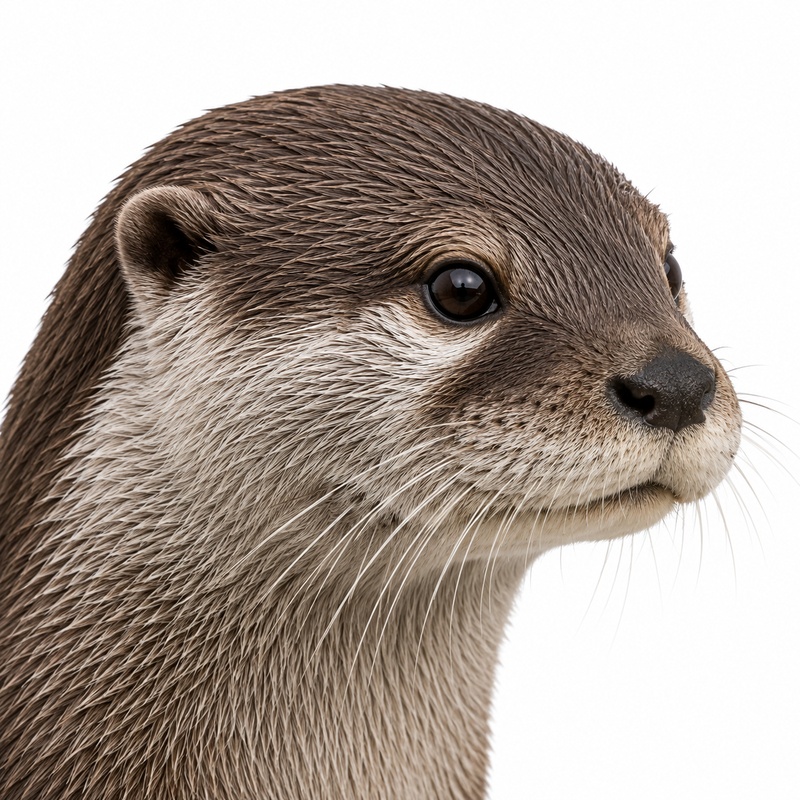
NOT HUNTABLE – PROTECTED SPECIES
The Eurasian otter (Lutra lutra) is one of the most specialized and fascinating mammals in the Italian fauna. Belonging to the Mustelidae family, it has transformed its body into a machine perfectly adapted to life between land and water: an elongated and streamlined shape, relatively short legs, webbed feet, a muscular tail, and a very dense coat that allows it to brave even very cold waters.
Its presence is inextricably linked to aquatic ecosystems . Rivers, streams, lakes, marshes, canals, estuaries, and even some coastal environments can be exploited as long as they provide food, shelter, and sufficiently continuous connections. For this reason, the otter is often considered one of the species that symbolizes the quality and ecological functionality of river systems.
In Italy, its recent history has been dramatic. During the twentieth century, direct persecution, pollution, transformation of waterways, destruction of riparian vegetation, and habitat fragmentation caused a dramatic decline, ultimately leading to the species' disappearance from much of central and northern Italy. Most of the surviving populations were in southern Italy, which for decades represented the heart of the national population.
Today, the picture is changing. The southern population is expanding, and new national monitoring has documented the otter's return to the Alpine region and several regions of central Italy . This is a natural recolonization process, aided both by the recovery of Italian populations and the arrival of individuals from neighboring countries.
The otter is a particularly protected and non-huntable species . For hunters, fishermen, and anyone who frequents rivers and wetlands, it represents, above all, a presence worth knowing: recognizing its tracks, droppings, and habits allows us to understand the hidden life of our waterways in a completely different way.
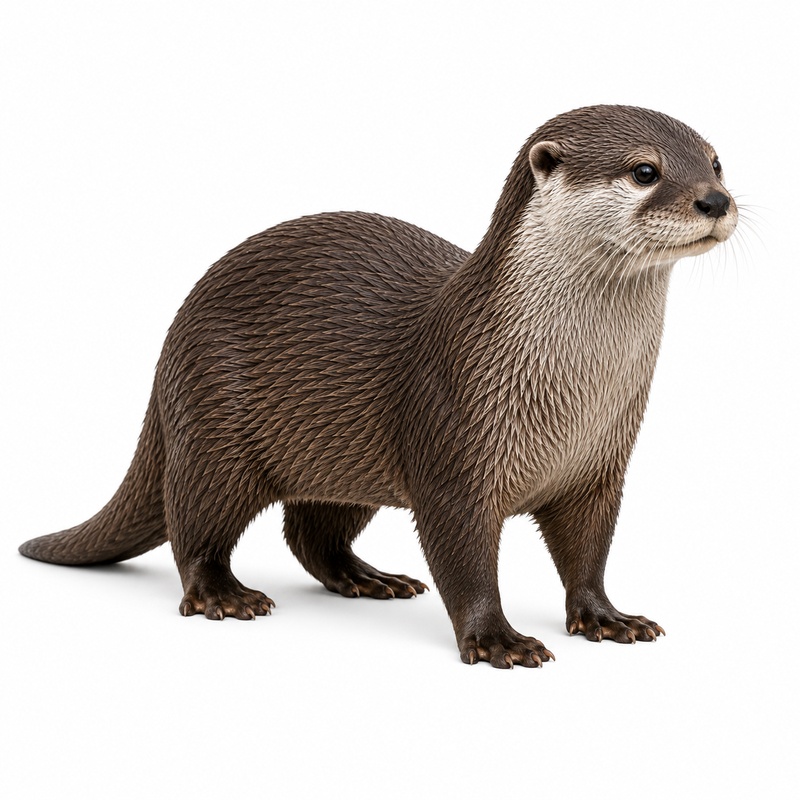
Otter: classification, size and adaptations to aquatic life
| Common name | Eurasian otter |
| Scientific name | Lutra lutra |
| English name | Eurasian Otter |
| Order | carnivora |
| Family | mustelidae |
| Gender | Lutra |
| Total length | Approximately 90-130 cm including the tail, with males on average larger |
| Weight | Generally around 5-12 kg in European populations, with considerable individual variations |
| Supply | Mainly fish, supplemented by crustaceans, amphibians, small mammals, birds and other aquatic prey |
| Habitat | Suitable rivers, streams, lakes, marshes, canals, estuaries and coastal environments |
| Presence in Italy | Main population in the Center-South, with expansion towards the Center-North and return to the Alpine arc |
| Behavior | Mainly solitary, territorial and often nocturnal or crepuscular |
| Status in Italy | Specially protected species; not huntable |
The otter's body is long, low, and flexible. The head appears relatively flat, the neck is thick and barely distinguishable from the trunk, and the ears are small. This conformation reduces resistance while swimming and allows the animal to move quickly even in flowing waters.
The long, broad-based, and heavily muscled tail plays an essential role in propulsion and, above all, in stabilization and directional changes underwater. It's not simply an appendage: it's a fundamental component of the entire locomotor system.
The paws have five toes and interdigital webs that increase the usable surface area during swimming. However, the limbs remain perfectly functional on land, as the otter must frequently move along the shore, cross land, and overcome obstacles between different bodies of water.
A key feature is its coat. The otter lacks the thick layer of blubber typical of many marine mammals and therefore relies on an exceptionally dense fur , consisting of insulating undercoat and topcoat. The air trapped between the hairs reduces heat loss and limits direct contact between the water and the skin.
A Mustelids Built to Live Between Two Worlds
The otter is not exclusively an aquatic animal. Most of its hunting occurs in water, but rest, movement, marking, and reproduction require the constant use of the shores and surrounding terrestrial environments.
This dual requirement explains why a river cannot be assessed by observing the water alone. An otter population also requires riparian vegetation, roots, ravines, natural banks, quiet areas, and terrestrial connections.
A concrete canal can hold many fish and still be unsuitable because it offers very little shelter. Conversely, a river system rich in bends, vegetation, and natural banks creates a wide variety of usable sites.
The otter therefore represents one of the best examples of how the quality of an aquatic ecosystem depends on the interaction between water and the surrounding territory.
The coat: the true protection against the cold
Spending many hours in water causes heat loss much more rapidly than in air. For a mammal the size of the otter, this problem is particularly serious.
The evolutionary response is one of the densest coats among European mammals. The undercoat traps a layer of air close to the skin and creates effective thermal insulation.
To keep this structure in perfect working order, the otter devotes considerable time to grooming and grooming its fur. After swimming, it may rub itself, roll over, and carefully comb its fur.
Pollution therefore poses a problem that goes beyond the simple availability of prey. Substances that alter the properties of fur or contaminate the entire food chain can directly compromise the animal's ability to survive.
Nutrition: Fish is essential, but the diet is much more varied
The otter is an opportunistic carnivore that is highly specialized in aquatic environments . Fish generally make up the main component of its diet, but the species is not dependent on a single fish species and adapts its choices based on local availability.
Fish of different sizes and species are caught, with particular importance given to individuals easily accessible in shallow stretches, in pools, along the banks or in periods of the year in which certain species are concentrated.
The otter primarily exploits what it can obtain with the best balance between energy input and cost of capture. This means that a highly abundant fish species can become the dominant diet even without necessarily being the absolute preferred prey.
The diet also includes shrimp and other crustaceans, amphibians, reptiles, aquatic insects, small mammals, and occasionally birds . Their importance varies greatly depending on the environment and season.
In Mediterranean waterways characterized by marked seasonal variations, this flexibility becomes particularly important. During lean periods, fish distribution changes, and the otter must adjust its routes and hunting strategies.
How to hunt underwater
The otter combines sight, touch, and great maneuverability. Its underwater movement is rapid and three-dimensional: it can accelerate, change direction, dive to the bottom, or surface almost instantly.
The highly developed whiskers around the snout are particularly important in murky waters or at night. They allow the fish to sense movements and pressure variations caused by prey even when visibility is poor.
Hunting isn't simply a matter of chasing a fast-moving fish for a long time in open water. The otter uses banks, submerged vegetation, boulders, pools, and narrow passages to limit its escape routes.
Once caught, smaller prey can be consumed directly in the water. Larger prey is often carried to the shore or a stable point.
This strategy demonstrates why the structural complexity of the river is so important: a natural watercourse offers a quantity of microhabitats that can be used by both prey and predator.
Otter and fish fauna: natural predator, not automatic cause of fish decline
The relationship between otters and fish populations sometimes generates conflicts with the fishing industry. The species consumes fish and therefore inevitably exerts predatory pressure, but automatically attributing a decline in fish populations to this species would be technically incorrect.
Fish populations depend on numerous factors: water quality, channel alterations, dams, flow, drought, harvesting, invasive species, and the availability of breeding habitat . Otter predation is a natural component of the system.
In functional ecosystems, predators and prey have coexisted for very long evolutionary periods. More obvious problems can arise in small artificial lakes or fish farms, where a high concentration of fish makes the resource particularly easy to exploit.
It is therefore essential to distinguish between the natural impact on a river system and the potential economic damage localized to artificial structures.
The relationship between crayfish and invasive species
Crustaceans can play an important role in the diet, especially in areas where they are abundant. The otter can prey on both native species and invasive alien crayfish.
In some situations, extremely abundant invasive species become an easily accessible energy resource. This doesn't mean the otter can control their population alone, but it does highlight its ability to quickly integrate new resources into its diet.
Analyzing the excrement allows scientists to identify exoskeletal remains, scales, bones, and other components, thus reconstructing the diet without directly observing predation.
Habitat: the river must be a corridor, not a succession of fragments
The otter uses extremely large linear territories. An individual can travel many kilometers along the same watercourse and simultaneously use tributaries, canals, lakes, and connected wetlands.
The river therefore constitutes a true natural ecological infrastructure . It allows people to move, find food, meet potential partners, and reach new territories.
When this continuity is interrupted by completely artificial stretches, large dams or dangerous infrastructure, the animal may be forced to leave the water and use land routes.
The most serious problem arises when these forced movements cross roads. Many otters die precisely while attempting to cross infrastructure built along waterways.
The conservation of the species therefore requires reasoning on the scale of the entire river basin , not of individual isolated stretches.
Territory, solitude and markings
The otter is predominantly solitary . Males and females spend most of their lives separately, maintaining living spaces that may partially overlap.
Males generally occupy larger territories, which may include or intersect with those of multiple females. Their size depends on food availability and the structure of the hydrographic network.
Communication occurs primarily through smell. Characteristic fecal deposits, commonly called spraints in international scientific literature, are placed on rocks, banks, confluences, bridges, and other easily recognizable locations.
These signals contain information about the identity and presence of the individual and allow multiple otters to use the same river system, avoiding continuous direct encounters.
The excrement itself is also one of the main tools used by researchers to verify the presence of the species.
Why Otters Mark Under Bridges
Bridges are particularly interesting monitoring sites because they often concentrate traffic along the shore. Rocks, pylons, and dry surfaces also provide ideal supports for marking.
The otter tends to use certain spots repeatedly and can deposit excrement in locations that are very obvious from its olfactory point of view.
This behavior allows researchers to monitor long stretches of rivers through standardized stations without having to directly observe a predominantly nocturnal animal.
It's important to remember, however, that the absence of droppings in a single inspection doesn't automatically mean the otter is gone. Floods, rain, and fluctuations in water levels can quickly erase traces.
Nocturnal activity and avoidance behavior
In much of Italy, the otter concentrates its activity during twilight and nighttime hours . This reduces human disturbance and coincides with favorable periods for catching numerous prey.
During the day, it may rest in hidden shelters along the banks, among roots, vegetation, natural cavities, or other protected structures. It doesn't necessarily always use the same den.
This behavior explains why a river can permanently host an otter without fishermen, hikers or residents almost ever observing it.
Camera traps and tracking have thus profoundly transformed our ability to study the species.
Reproduction: a less seasonal cycle than you might think
The Eurasian otter does not have a strictly year-round breeding season throughout its distribution. Food availability and environmental conditions can significantly influence breeding timing.
After mating, the female uses a protected shelter along the aquatic system. The den may be located among roots, natural cavities, banks, or other sufficiently quiet locations.
The litter is generally small. The pups are born blind and completely dependent on their mother.
An interesting feature is that the young must gradually learn to use the water and hunt . Being an otter does not automatically mean being born a perfect fisherman: coordination, diving, searching for prey, and knowledge of the territory are developed through experience and interaction with their mother.
The long period of maternal dependence constitutes a significant investment and contributes to a reproductive strategy very different from that of small mammals with numerous annual litters.
Young people and the dispersion along the rivers
When they achieve independence, young people must find new territories. This dispersal phase is the main driver of geographic expansion.
Waterways guide movements, but individuals can cross watersheds, use coastal zones, and travel overland to reach different watersheds.
It is precisely thanks to this ability that the otter is progressively reoccupying areas of central Italy and that individuals from Austria, Slovenia and France have been able to re-enter the Italian Alpine sector. :contentReference[oaicite:1]{index=1}
However, dispersion exposes young people in particular to a high risk of being hit by a road accident, because they have to cross unfamiliar territory and infrastructure they have not yet learned to avoid.
The collapse of the Italian Otter in the twentieth century
The current situation can only be understood by remembering what happened during the last century. The otter was historically much more widespread throughout the country, but suffered a dramatic decline.
Among the causes were direct persecution , river transformation, destruction of riparian vegetation, and above all, water pollution. Being a predator relatively high in the food chain, the otter can accumulate contaminants present in its prey.
Over time, entire populations in northern and central Italy disappeared and the population remained confined mainly to the South.
The old ISPRA National Action Plan described a situation in which two large southern sub-areas were the only survivors, and estimated just 220-260 individuals . That figure is now outdated, but it provides a very useful snapshot of how serious the situation was. :contentReference[oaicite:2]{index=2}
The return of the Otter to Italy
The situation in recent years shows a substantial change. National monitoring coordinated by WWF Italy, the University of Molise, and other partners has updated the species' distribution in central and northern regions after approximately forty years.
The main nucleus remains in Southern Italy , with a significant presence especially in Campania and Basilicata, and populations also in Puglia, Calabria, Abruzzo, and Molise. The previous fragmentation among some southern nuclei has progressively reduced thanks to territorial expansion. :contentReference[oaicite:3]{index=3}
The big news, however, concerns Central and Northern Italy. Monitoring concluded in 2024 confirmed the species' return to Friuli-Venezia Giulia, Veneto, Trentino-Alto Adige, Lombardy, and Liguria , regions from which it had disappeared for decades. Positive signs have also been documented in Lazio, Marche, and northern Tuscany. :contentReference[oaicite:4]{index=4}
In the Alpine sector, recolonization derives mainly from the expansion of populations present in Austria, Slovenia, and France . In central Italy, the new data instead seem to be more closely linked to the expansion of Apennine nuclei already present further south. :contentReference[oaicite:5]{index=5}
The comparison with the past is striking: the 2024 survey detected presence in 70 of the 597 cells examined in Central and Northern Italy, compared to just 12 positive sites out of 829 in the previous census from the 1980s. Reconstitution of the ancient range is still a long way off, but the trend is clearly different from the decline phase. :contentReference[oaicite:6]{index=6}
How many otters live in Italy today?
For such an elusive species, providing an exact number is extremely difficult. These are not animals that can simply be counted by observing them along the banks.
The most recent estimates released in 2025 place the overall Italian population in the range of 900-1.200 individuals . This estimate should be interpreted as an order of magnitude and not as a complete individual census. :contentReference[oaicite:7]{index=7}
The comparison with the 220-260 otters reported in the old National Plan highlights the extent of the recovery, even taking into account the different methodologies and the increase in knowledge. :contentReference[oaicite:8]{index=8}
However, the population remains small compared to the potentially suitable surface area of the country and the recolonization of many regions still consists of a few individuals or very small nuclei.
Talking about a return does not therefore mean considering the conservation problem concluded.
Can the Otter also use the sea?
Yes. Although it is primarily identified as a river mammal, Lutra lutra can also frequent coastal environments and use the sea for feeding or travel.
In several European countries, populations are strongly tied to the coast. Sightings have also been documented in Italy in marine areas, ports, and coastal areas. WWF emphasizes how the ability to use the sea can also contribute to the colonization of new territories . :contentReference[oaicite:9]{index=9}
Access to fresh water remains important for drinking and maintaining the coat, and the coast must offer sufficiently quiet shelter.
This behavior helps to understand why some new Italian reports should not necessarily be interpreted only through terrestrial river connections.
Otters, fishermen and fish farms
The presence of the otter can generate concern especially in areas characterised by fish farms, small lakes or artificial concentrations of fish.
From a predator's point of view, a farm represents an extraordinarily concentrated resource: many fish confined in a limited space and often easily caught.
This scenario is profoundly different from that of a natural river, where prey is dispersed, can use shelters and the otter has to bear a higher cost to catch them.
In contexts where there is economic damage, the solution must be based above all on prevention , through the adaptation of structures and systems that make access difficult, not on the persecution of a particularly protected species.
Road accidents: one of the most concrete threats
Road mortality is one of the main problems facing otters today. This phenomenon is closely linked to landscape structure.
When a road crosses a river, the animal should ideally be able to navigate under the bridge along a dry bank. If the crossing is completely covered with water or has an unfavorable structure, the otter may choose to climb onto the roadway to overcome the obstacle.
It is exactly at these points that the investment risk becomes maximum.
Seemingly simple interventions, such as lateral shelves, dry passages and properly designed crossing structures, can greatly reduce the problem.
In a still relatively small population, avoiding the mortality of breeding adults and dispersing juveniles represents a conservation objective of great importance.
Water pollution and quality
Pollution is one of the historical causes of the European otter's decline. The species occupies a high position in the food chain and can accumulate contaminants present in the organisms it consumes.
The recovery observed in many countries has also been favored by improved water quality and the progressive control of some particularly persistent substances.
This doesn't mean that every river with an otter is automatically "clean." The species has a certain adaptability and can even utilize modified environments.
However, their stable presence remains indicative of the existence of a sufficiently productive aquatic food web and of conditions that allow a large semi-aquatic predator to complete its biological cycle.
Drought and climate change
In Mediterranean systems, one of the problems destined to become increasingly important concerns the availability of water during the hottest periods.
Reducing flow rates can fragment a stream into a succession of isolated pools and completely alter the distribution and abundance of fish.
The otter can react by increasing its movements and concentrating its activity in the few remaining productive areas, but this behavior increases its energy costs and may force it to cross more exposed infrastructure or territory.
Future conservation must therefore consider not only the chemical quality of the river, but also the maintenance of the hydrological regime and the continuity of the basins.
Tracks and signs of presence: how to recognize the otter without seeing it
The probability of directly encountering an Otter is relatively low, but its signs can be much easier to spot.
Scats are the most commonly used signal. They are often deposited on rocks, under bridges, at river confluences, and on elevated points along the banks. They may contain scales, small bones, and crustacean remains, and have a distinctive odor.
The prints show five toes, although not all are clearly visible. In very soft mud, the webs between the toes may also be visible.
It is also possible to identify slides, paths through the vegetation, areas used to exit the water and food remains.
The combination of multiple signals allows for a much more reliable determination than a single fingerprint.
Camera traps, DNA and modern monitoring
Otter monitoring today uses much more advanced techniques than the simple presence surveys of the past.
Camera traps allow us to document activity and behavior at passage points, while genetic analysis carried out on scat potentially allows us to identify sex and individual individuals.
Non-invasive genetics is particularly useful because it allows us to gather information without capturing an extremely sensitive and difficult-to-observe animal.
The integration of genetics, camera trapping, spraint distribution, and territorial analysis is expected to provide increasingly precise estimates of the Italian population size in the coming years.
Legal status: particularly protected species
In Italy, the otter enjoys the highest level of protection provided for by national legislation on wildlife.
Article 2 of Law No. 157 of 11 February 1992 expressly lists the otter (Lutra lutra) among the particularly protected mammals. :contentReference[oaicite:10]{index=10}
The otter is therefore not a huntable species.
The protection concerns a species that, despite its current expansion, remains numerically limited and still absent from a significant part of its historical Italian range.
For those who practice hunting or frequent wetlands, correct knowledge takes on above all a value of wildlife culture and of reporting any new presences.
Otter and hunting activities
The otter is not a species of direct hunting interest, but it shares numerous territories with huntable species. Rivers, reed beds, wetlands, valleys, and riparian environments are also used by ducks, wild boars, and numerous other game.
Hunters can therefore become valuable observers, especially in newly recolonized areas. A camera trap installed to monitor wild boar or roe deer can document the passage of an otter into a basin where its presence was previously unknown.
Reports should be accompanied, where possible, by photographs, location and contextual information , avoiding altering markings or disturbing any shelters.
Particular attention must also be paid to banks and waterways when using dogs, because shelters and resting areas may be located in very dense and difficult to see vegetation.
Conservation: Protecting the Otter means protecting the river system
Otter conservation cannot be achieved by focusing solely on the animal. It is necessary to maintain the entire ecosystem on which it depends.
This means protecting water quality, fish availability, riparian vegetation, natural banks, lateral wetlands and the continuity of river corridors.
Infrastructure design is also crucial. Bridges, roads, dams, and water management structures should allow animals to move freely without forcing them to take dangerous routes.
The recolonization currently underway offers an extraordinary opportunity: many territories from which the species had disappeared are once again becoming accessible. The quality of these connections will largely determine whether these presences remain isolated or can transform into new breeding populations.
From this point of view, the otter represents a true umbrella species for river ecosystems : improving its habitat means simultaneously improving the conditions for fish, amphibians, aquatic birds, invertebrates and a large part of the biodiversity linked to inland waters.
Curiosities about the Otter
- The otter belongs to the Mustelidae family., the same as the Badger, Marten, Beech Marten and Polecat.
- The coat is essential for thermal insulation because, unlike marine mammals, it does not rely on a large layer of subcutaneous fat.
- The whiskers allow them to sense the movements of their prey even in murky water.
- The feet have five toes and interdigital membranes, a fundamental adaptation for swimming.
- Fish generally represents the main component of the diet, but crustaceans, amphibians and other prey can be of great importance.
- It is mostly solitary and uses scent markings to communicate with other individuals.
- The droppings used for marking are one of the main tools of scientific monitoring.
- It can also use marine environments and travel along coastal stretches, although it is normally associated with rivers. :contentReference[oaicite:11]{index=11}
- After having almost disappeared from Central and Northern Italy, it is once again colonizing various Italian regions. :contentReference[oaicite:12]{index=12}
- In 2024, monitoring confirmed the return to the Italian Alpine arc and new presences in several central regions. :contentReference[oaicite:13]{index=13}
- The most recent estimates place the Italian population in the order of 900-1.200 individuals. :contentReference[oaicite:14]{index=14}
- It is a particularly protected species and cannot be hunted in Italy. :contentReference[oaicite:15]{index=15}
The Otter in the Hunting Encyclopedia
The otter is one of the species that best illustrates how fauna cannot be separated from the quality of the landscape. Lutra lutra doesn't simply live "in a river": it depends on the entire network of water, fish, vegetation, banks, tributaries, wetlands, and corridors that allow it to move.
Its Italian history is particularly instructive. In the twentieth century, the species disappeared from much of the country and remained confined mainly to Southern Italy. The old National Plan still spoke of just 220-260 individuals and a highly fragmented range. Today, available estimates indicate a population of around 900-1.200 individuals and, above all, document a new geographic expansion. :contentReference[oaicite:16]{index=16}
The most interesting data, however, is not just numerical. The otter has returned to territories where it had been absent for decades: individuals from populations in Austria, Slovenia, and France are entering the Alpine region, while in central Italy the Apennine population continues to progressively expand its range. :contentReference[oaicite:17]{index=17}
For hunters and those with intimate knowledge of the area, finding a spraint under a bridge or a footprint in the mud means directly observing one of the most significant transformations in contemporary Italian fauna. That mark could indicate that a waterway abandoned by the species forty years ago has returned to its ecological network.
The otter also teaches another lesson. A large aquatic predator cannot survive without what lies beneath it in the food chain. Protecting the otter therefore means preserving fish, amphibians, riparian vegetation, water quality, and the continuity of rivers.
It is precisely this ability to represent the entire health of the river system, combined with the extraordinary story of its return after having come close to extinction, that makes the otter one of the most important and fascinating mammals of the Italian fauna.