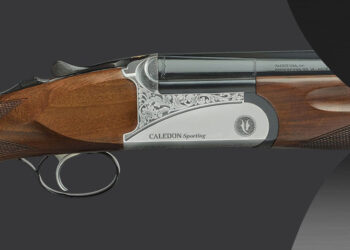
Il FAUSTI Class Upland SLX It belongs to that category of over-and-unders in which the quality of the project is not sought through high weight or an exaggeratedly sporty mechanics, but through correct proportions, lightness, balance and eleganceIt is a rifle designed for the hunter who spends many hours on the move, often in the woods or with a pointing dog, and wants a gun capable of becoming almost imperceptible when carried but immediate when the time comes to shoulder it.
The Upland name clearly defines the model's philosophy. In Anglo-Saxon hunting parlance, it refers to stalked hunting of ground game and birds with dogs, an environment in which the gun must be lightweight, fast, and capable of adapting to a wide variety of shots.
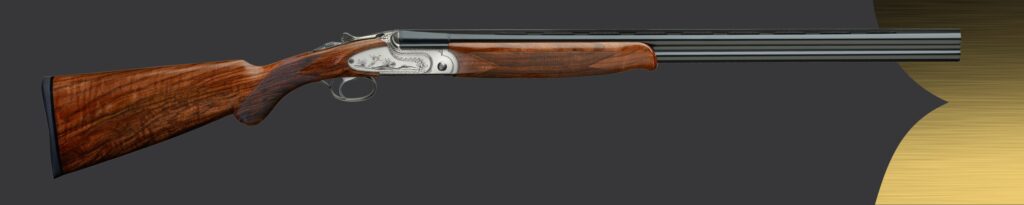
The Class Upland SLX interprets this idea according to tradition Fausti: modern mechanics, Italian production, action frames truly proportionate to the caliber, long side plates and a customization option that allows the model to be transformed into a very different weapon depending on the caliber and the chosen destination.
Class Upland SLX: more refined than the standard over-and-under hunting shotgun
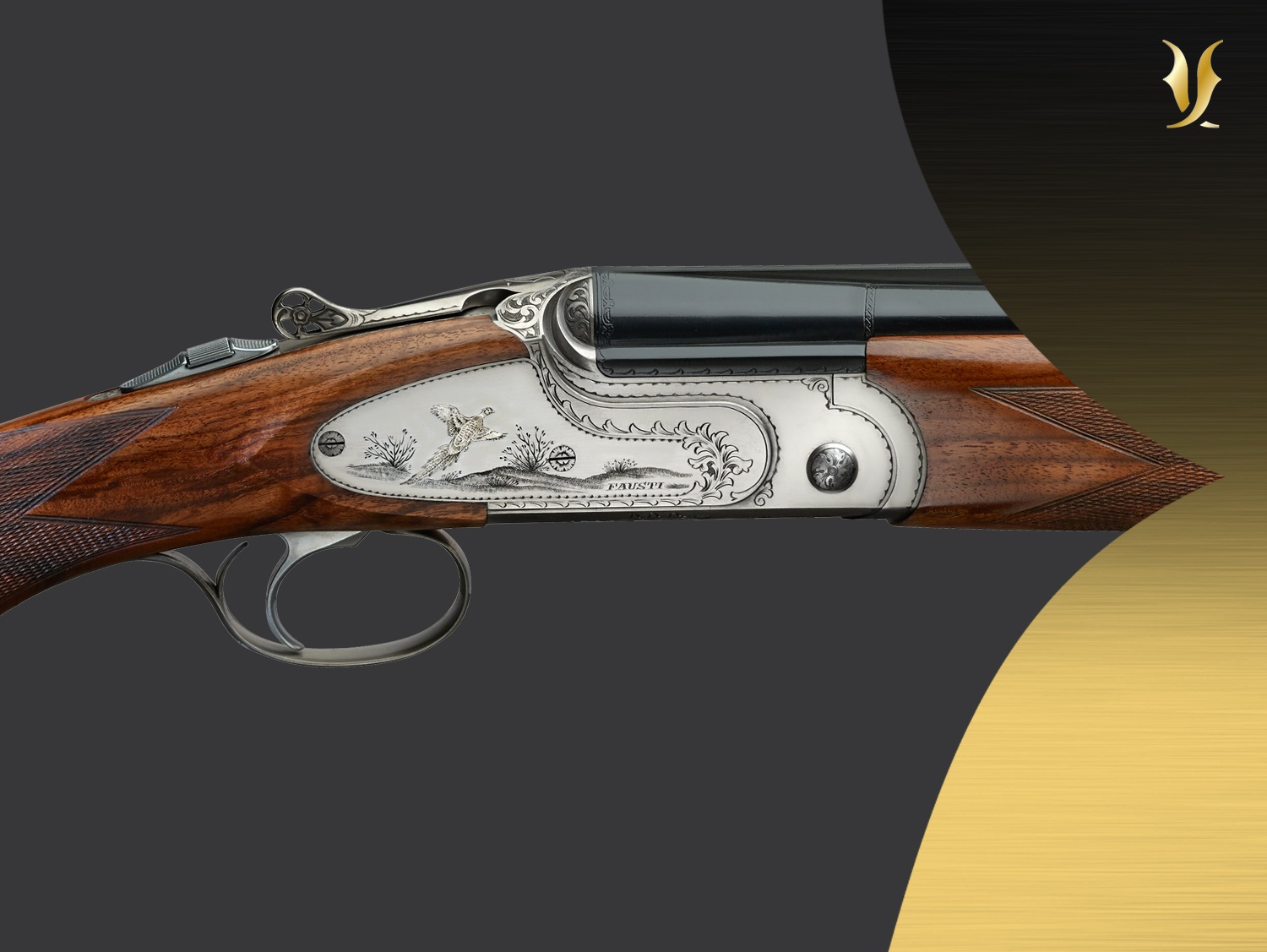
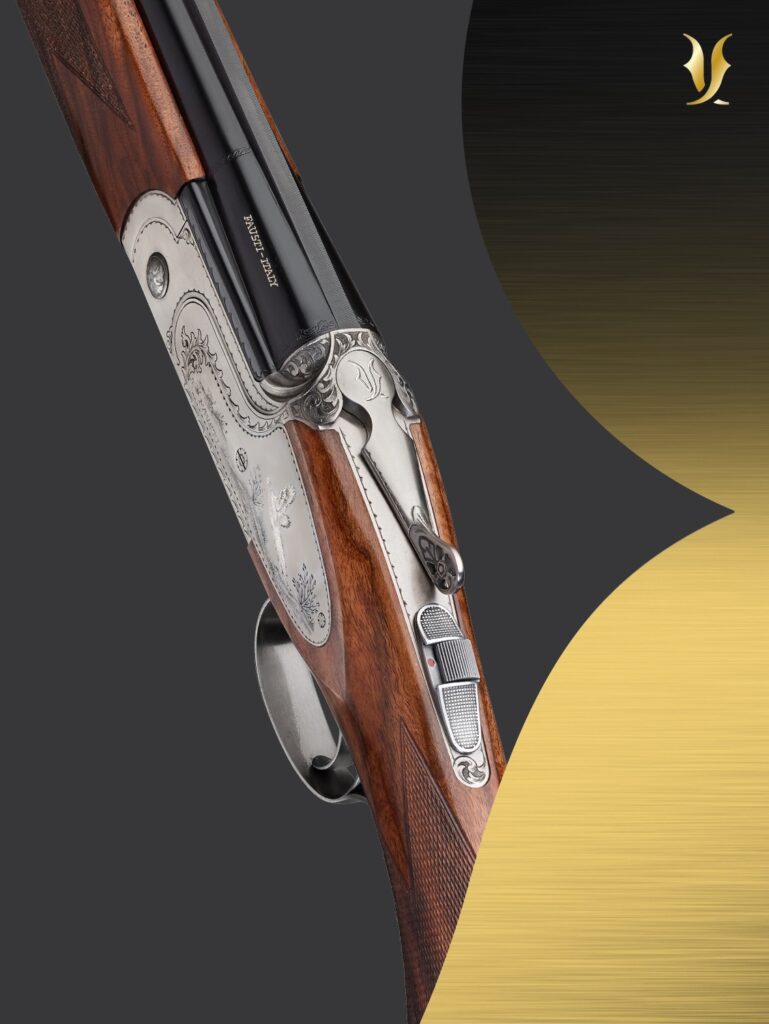
The SLX acronym identifies a configuration in which aesthetics play a key role. The Class Upland uses long side plates that visually widen the action and provide a larger surface area for engraving.
However, it's important to distinguish the appearance from the mechanics: the side plates don't transform the rifle into a traditional sidelock. The base remains a sturdy boxlock architecture , while the side surfaces allow for a much more elegant connection between metal and wood.
The result is an over-and-under that retains the solidity of a hunting gun but takes on a decidedly superior aesthetic presence compared to the more essential models in the range.
The 2026 range confirms the breadth of available calibers
The catalog FAUSTI 2026 confirms the Class Upland SLX in a particularly wide range of calibers. The family includes 12, 16, 20, 28 and .410, with different chamberings and barrel lengths. ([faustiarms.com](https://faustiarms.com/cataloghi-qr/FAUSTI_Catalogue_2026.pdf?token=1769456985.757))
This is one of the main strengths of the model because we are not faced with a project built exclusively around the 12 gauge and then simply adapted to the smaller diameters. FAUSTI in fact, it uses action frames proportionate to the caliber, a particularly important feature in the 20, 28 and .410.
Proportionate action frames: the small gauge must not look like a scaled down 12 gauge
The correct proportions of the action frame are probably one of the most significant technical aspects of the Class Upland SLX. When a 28 gauge or .410 is mounted on an oversized action frame, some of the theoretical advantage of the smaller caliber is inevitably lost.
FAUSTI Instead, it follows a different philosophy. The frame is sized consistently with the caliber, reducing weight, width, and bulk in the central part of the rifle.
In the .410 , for example, the action used is derived from that of the 28 gauge, while still maintaining extremely compact proportions. A test of the Class Upland SLX .410 revealed an overall weight of approximately 2,73 kg , a significant figure for an over-and-under with long sideplates and a steel action.
Four Locks: a lock developed to maintain strength over time
The Class Upland SLX uses the patented FAUSTI Four LocksThe architecture adds a second pair of lateral elements to the traditional lower locking points that contribute to the connection between the monobloc and the receiver.
In total, this results in four sealing points . The goal is to better distribute stress and maintain proper coupling of the parts over time.
On a lightweight hunting rifle, this solution offers, above all, a reserve of structural robustness. The Class Upland can, in fact, also be used on a training range without being conceived as a fragile or overly delicate weapon.
Long folders become the engraver's canvas
An important part of the Class Upland SLX’s identity is its engraving . The long side plates allow for greater freedom in developing hunting subjects than the narrower surfaces of a traditional action.
This type of setup clearly clarifies the philosophy of the model: it is not just a question of adding decorations to a functional rifle, but of building a version in which the hunting theme becomes an integral part of the weapon's identity.
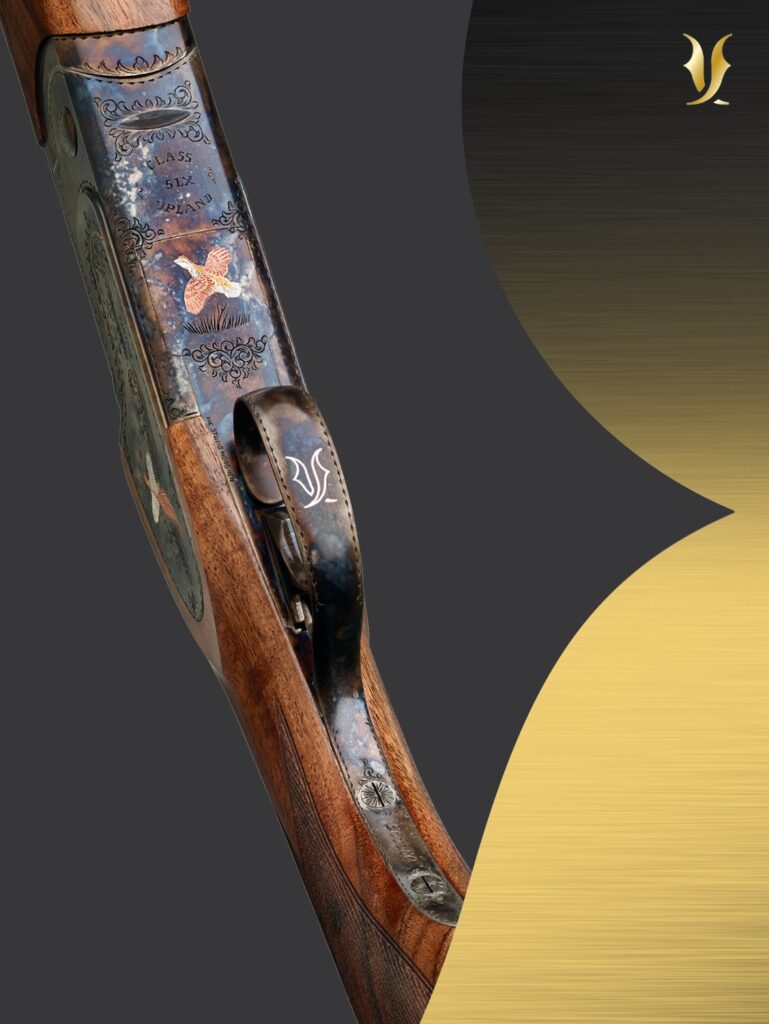
French Grayed or Color Case: two different personalities
The catalog FAUSTI 2026 distinguishes the Class Upland SLX French Grayed and Class Upland SLX Color Case.
The French Gray finish highlights the contrast between the metal surface and the engraving, creating a bright and refined look.

The Color Case instead uses more complex shades that recall the tradition of case hardened action frames.

It doesn't change the rifle's function, but it profoundly changes its aesthetic personality. On a Class Upland, where sideplates and engraving are significantly important, this choice can have a considerable impact on the final configuration.
Selected grade 3A walnut
The 2026 catalogue indicates 3A classified woods for the model , while previous tests speak of selected grade III walnut with oil finish.
The choice is consistent with the intended purpose of the rifle. It's a wood that's sufficiently refined to enhance the aesthetics of the action, yet still suitable for a gun that will be used in the woods and not simply stored in a case.
The oil finish enhances the grain and maintains a more natural look than a glossy finish.
Three different types of grip
FAUSTI allows you to configure the Class Upland SLX with different grip geometries, including English, Prince of Wales and pistol.
It's not just an aesthetic choice. The English grip offers great freedom of movement for the wrist and pairs very well with a lightweight, instinctive weapon; the Prince of Wales grip strikes a balance between linearity and support; the pistol grip, on the other hand, offers a more defined grip.
English forend or goose bill
The forend can also contribute to the rifle's personalization. The English configuration maintains a very slim line and allows the front hand to wrap more tightly around the barrels; the goose-bill configuration , on the other hand, offers a different grip and a greater presence of wood at the front.
The choice should be made primarily based on the desired feel during movement. On a small, lightweight caliber, a particularly slim forend helps maintain the weapon's rapid response.
Rods from 67,5 to 76 centimeters
The catalog FAUSTI 2026 documents for the Class Upland SLX various lengths, including 67,5, 71, 73,5 and 76 cm, with availability varying according to the caliber.
This is a wide enough range to really change the gun's behavior: shorter barrels favor speed and movement in the woods, while longer ones increase the progressiveness of the swing and may be more suitable for open environments.
The .410 dedicated to woodcock: an example of how customizable the model is
The .410 caliber represents the Upland philosophy well, with 67,5 cm barrels , with a 76 mm Magnum chamber, cylindrical choke in the first barrel and two stars in the second, a configuration therefore built specifically for woodcock: relatively short barrels for moving in the woods, the first barrel open for close-range shots and the second more closed for a possible second shot at greater distance.
This is a particularly useful example because it demonstrates that the Class Upland SLX is not a rigid platform. The model's value also lies in the ability to build it around real-world hunting patterns.
A rifle that wants to be used, not just admired
Long sideplates, hand engraving, select walnut, and fine finishes might suggest an over-and-under intended primarily for collection. In reality, the Class Upland SLX was designed for real hunting.
The proportions, the choice of barrel lengths, the possibility of configuring chokes and grips and the use of good quality but not excessively delicate woods show a project built to be taken into the woods.
It is precisely this balance that distinguishes the model: refined enough to be an important rifle, practical enough to not be afraid to use it.
12 gauge: the most universal choice
The Class Upland SLX 12-gauge is the ideal configuration for those who want to use the platform for different types of hunting. The wider availability of loads allows you to easily adapt the ammunition, shot count, and weight to the game you're hunting.
The 12 gauge also allows you to handle situations where distances can vary significantly with greater confidence. It doesn't have the same lightweight feel as smaller gauges, but it compensates with greater ballistic elasticity.
For the hunter who wants a single Class Upland SLX to use during most of the season, it remains the most rational choice.
16 Gauge: the solution for those looking for something different
The 16 gauge occupies a unique position. For many years it was squeezed between the dominance of the 12 gauge and the growing popularity of the 20 gauge, but it retains some very attractive features in an elegant and well-proportioned hunting over-under.
In the 2026 catalog FAUSTI offers the Class Upland SLX 16 gauge with a 70 mm chamber and various barrel lengths. The average declared weight for some configurations is approximately 2,90 kg. It is therefore a gun still sufficiently consistent to offer stability, without necessarily reaching the masses typical of many 12 gauges.
It is a choice for the hunter who appreciates a historic caliber and wants to combine it with a rifle built with the same attention to proportions.
20 gauge: probably the most interesting compromise for stalking hunts
In caliber 20 The Class Upland SLX achieves a particularly interesting balance between ballistic capability and ease of carry. The catalog FAUSTI 2026 indicates for some configurations an average weight in the order of 2,81 kg, a value that allows you to face long days of hunting without turning the rifle into an excessively nervous weapon.
It is probably the caliber that best represents the Upland philosophy for those who do not want to go as far as the .28 or .410. It maintains a good commercial availability of ammunition and allows you to choose loads suitable for numerous hunting situations.
For woodcock, pheasant and other forms of hunting with pointing dogs, the 20 can therefore represent a particularly balanced configuration.
Caliber 28: when lightness and precision become protagonists
The 28 gauge has a very different personality. The smaller barrel diameter allows for a slimmer, more manageable shotgun, making it particularly pleasant to carry during long days spent chasing the dog.
However, reducing the amount of pellets used compared to larger calibers requires greater attention to distance and shot pattern quality. Therefore, it's not simply a "smaller" caliber: it's a choice that rewards the hunter who knows how to time his shot correctly.
On an over-and-under like the Class Upland SLX this philosophy finds a natural place, especially for those who consider small caliber an integral part of the pleasure of hunting.
The .410: A specialist choice, not a caliber to compensate for errors
The .410 represents the most specialized configuration. The available pellet load is significantly lower than that of larger calibers, reducing the margin for error.
The satisfaction comes precisely from this increased difficulty. Used at the appropriate distances and with a well-tested combination of cartridge and choke, the .410 can offer surprising hunting performance. But it requires discipline: attempting excessively long shots means using the small caliber outside its philosophy.
The Class Upland SLX .410 therefore becomes a gun for the expert hunter who wants to add an additional technical component to his hunting activity.

Fixed or interchangeable chokes?
FAUSTI allows you to configure the Class Upland SLX with fixed chokes or interchangeable chokesThe choice depends mainly on how the rifle will be used.
Fixed chokes are particularly suitable for a gun built around a specific hunting style. An open/medium-closed combination, for example, can be specifically designed for woodland hunting.
Interchangeable chokes, on the other hand, increase versatility. They're ideal for those who use the same over-and-under on different game and terrain and want to quickly adjust the shot pattern.
Selective single trigger or double trigger: two different philosophies
The Class Upland SLX can be configured with a selective single trigger or a double trigger . Again, there is no universally superior solution.
The single trigger allows you to fire both shots without changing the position of your trigger finger, and the selector lets you decide which barrel to use first. This is the most familiar solution for those coming from modern over-and-unders.
The double trigger, on the other hand, offers immediate access to both barrels: by directly selecting one of the two triggers, the hunter can select the most suitable choke without having to first adjust a selector. It's a traditional solution that retains its logic, especially when the two barrels have very different chokes.
Automatic extractors or manual extraction
The option of choosing between automatic and manual ejectors allows for further customization. Automatic ejectors speed up reloading by ejecting spent cases when the gun is opened; manual ejection allows for retrieval of spent cases directly from the chamber.
On the .410 sample tested, the ejectors were automatic and functioned smoothly. For a traditional hunting rifle, however, the choice remains largely a matter of personal preference.
The weight of the .410: 2,73 kg without resorting to an alloy action
An interesting fact about the .410 model tested is its weight of approximately 2,730 kg . This value is significant because the action is made of steel: the lightness therefore derives mainly from the small proportions of the action and the sizing of the entire rifle.
This isn't an ultralight gun taken to the extreme. A certain amount of weight remains useful because it contributes to stability and prevents this small over-and-under from becoming excessively nervous when held.
FAUSTI Class Upland SLX: Where it fits in the range
Il FAUSTI Class Upland SLX It falls into a category where the over-and-under hunting gun ceases to be merely a functional tool and becomes a weapon capable of expressing personality, taste, and build quality. We're not yet in the territory of one-of-a-kind pieces or fine, completely custom-built guns, but we're clearly above the level of more standardized over-and-under hunting guns.
The ability to choose the caliber, barrel length, grip type, forend, trigger, ejection system, and finish also allows the rifle to be tailored to the individual hunter's needs. This is particularly important because the value of the Class Upland SLX lies not in a universal configuration, but rather in the ability to build a rifle that is consistent with the type of hunting practiced.
An over-and-under for those who also consider the pleasure of owning the gun important
There are rifles chosen almost exclusively on the basis of performance and others in which the pleasure of ownership also comes into play . The Class Upland SLX clearly belongs to the second category.
This doesn't mean sacrificing functionality for aesthetics. Rather, it means that the hunter willing to choose a model of this level also values the quality of the surfaces, the connection between wood and metal, the grain of the walnut, and the overall care with which the gun is crafted.
This is a significant difference compared to a purely utilitarian over-and-under. Hunting performance remains essential, but it's complemented by the emotional component that has always characterized Italian fine guns.
FAUSTI Class Upland SLX: technical data sheet
| Feature | FAUSTI Class Upland SLX |
|---|---|
| Producer | FAUSTI |
| Production | Marcheno, Brescia – Italy |
| Typology | Over and under hunting shotgun |
| Main destination | Upland hunting |
| Calibers available | 12, 16, 20, 28 and .410 |
| Chambering | Varies depending on the caliber; 70 and/or 76 mm depending on the configuration |
| Weighing machine | Steel, sized according to the gauge |
| Mechanics | Boxlock with long side folders |
| Closure | Patented system FAUSTI Four Locks |
| Rod lengths in the catalog | 67,5 / 71 / 73,5 / 76 cm depending on caliber and configuration |
| Special configurations documented | Different sizes possible; .410 sample tested with 64,5 cm barrels |
| Bottlenecks | Fixed or interchangeable according to configuration |
| Trigger | Selective single trigger or double trigger |
| Strippers | Automatic or manual according to configuration |
| Wood | Selected grade 3A walnut |
| Wood finishing | Oil |
| Grip | English, Prince of Wales or pistol depending on configuration |
| Dipstick | English or goose bill depending on configuration |
| Receiver | Long |
| Finishes available | French Grayed / Color Case |
| engravings | Hunting configurations; level and subjects may vary depending on the setup |
| Medium weight 16 gauge | Approximately 2,90 kg in some configurations |
| Medium weight 20 gauge | Approximately 2,81 kg in some configurations |
| Weight .410 tested specimen | About 2,73 kg |
| Production | Made in Italy |
Note: The Class Upland SLX offers numerous configuration options. Barrel lengths, chamberings, chokes, weight, trigger type, ejection, and aesthetic features must therefore be referred to the specific model. The data in the table summarizes the configurations documented in the catalog. FAUSTI 2026 and in the technical tests cited in the article.
Conclusions: Italian elegance built for hunting
Il FAUSTI Class Upland SLX It represents a concept of over-and-under in which technique and aesthetics must coexist without one prevailing over the other.
It's not intended to be a sporting gun adapted for hunting, nor a luxury shotgun too delicate to tackle the woods and countryside. It's an over-and-under designed from the outset with the stalking hunter in mind, adding a level of refinement superior to that of a standard work gun.
The 12 gauge enhances its versatility; the 16 gauge adds the allure of a great hunting tradition; the 20 gauge represents excellent balance; the 28 gauge introduces the pleasure of a small gauge, and the .410 takes the concept to a decidedly specialized dimension.
This is precisely why the Class Upland SLX shouldn't be chosen simply by consulting a spec sheet. It's a rifle that should be configured based on your hunting style, your preferred game, and even the type of terrain you frequent.
When these elements are combined correctly, the result is exactly what a good Upland rifle should be: light enough to forget about while walking, fast enough to find it naturally in your shoulder when needed, and beautiful enough to continue to be appreciated even after many years of hunting.