Surface hardness and resistance
Chrome plating is a galvanic treatment that deposits a layer of chromium on a metal surface. In the firearms industry, it is primarily used to improve resistance to wear, corrosion, and high temperatures , as well as to facilitate the cleaning of parts exposed to combustion residues.
It can be applied inside barrels, in cartridge chambers, on bolts, and on other mechanical components. However, there are different processes: decorative chrome plating emphasizes aesthetics, while hard chrome plating is primarily intended for functional protection.
How it works
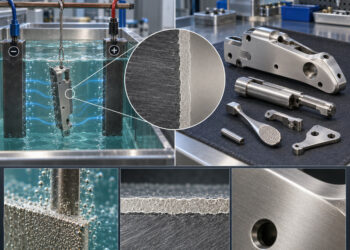
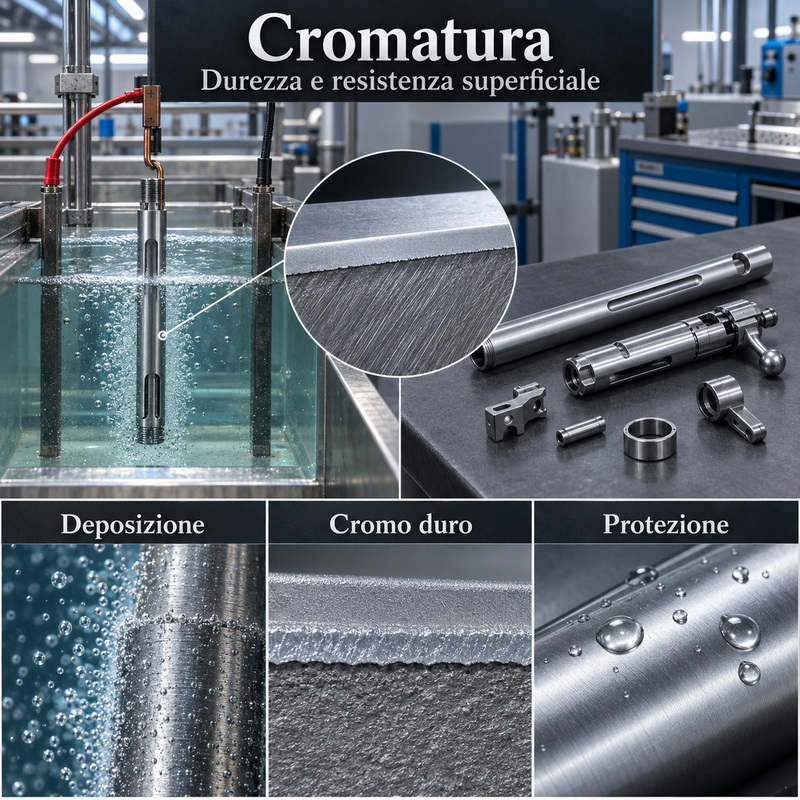
The component is immersed in an electrolytic solution containing chromium compounds and connected to an electrical circuit. The passage of current causes the metal to gradually depose on the surface.
The production cycle generally includes:
- cleaning and degreasing of the component;
- removal of oxides and contaminations;
- surface activation;
- electrolytic deposition of chromium;
- washing and neutralization;
- possible final polishing or grinding;
- thickness and adhesion control.
Decorative chrome plating
Decorative chrome plating produces a bright, clear, and reflective surface. The chromium layer is generally very thin and is often applied over intermediate copper or nickel deposits.
Nickel contributes to evenness, brilliance and corrosion protection, while chromium gives the characteristic cold metallic colour and increases surface resistance.
In the firearms sector, this finish can be used on external parts and components intended primarily for an aesthetic function.
Hard chrome plating
Hard chrome plating , also called technical or industrial chrome plating, forms a more consistent and functional deposit. It is characterized by high hardness, a low coefficient of friction, and good abrasion resistance.
It is used on surfaces subject to sliding, friction, pressure, and high temperatures. After treatment, grinding may be necessary to restore the component to its intended dimensions.
Deposit thickness
The thickness is chosen based on the intended use. Decorative chrome plating typically has a very thin layer, while hard chrome plating can reach much thicker thicknesses.
Because chromium is added to the surface, the treatment changes the component's dimensions. For precision mechanical parts, it is therefore necessary to consider:
- coupling tolerances;
- expected thickness of the deposit;
- any areas to be masked;
- final grinding or polishing;
- uniformity on complex geometries.
Metal preparation
The quality of chrome plating depends largely on surface preparation. Traces of oil, oxidation, porosity, or residue can compromise the coating's adhesion.
Chromium doesn't automatically eliminate scratches and manufacturing defects. On the contrary, a very shiny finish can make them even more visible. Therefore, the component must be sanded, polished, or ground before treatment.
Chrome plating of the barrels
Internal chrome plating can include the chamber, the forend, and the bore of the barrel . It is frequently used in smoothbore shotguns to improve corrosion protection and facilitate the removal of residue.
In rifled barrels, the treatment requires particularly careful control. The thickness must be uniform to avoid negatively affecting the internal diameter, the geometry of the rifling, and the accuracy of the weapon.
Erosion resistance
The hard chromium layer protects the internal surface from the combined effects of friction, pressure, debris, and high-temperature gases. For this reason, it is also used in weapons subjected to intense firing sequences.
Chrome plating can extend the life of the barrel, but it doesn't completely eliminate erosion. High temperatures, particularly intense ammunition, and repeated overheating continue to stress the throat and the initial areas of the rifling.
corrosion protection
Chromium forms a barrier between the steel and the outside environment. A continuous, well-adhered surface provides good protection against humidity, condensation, and combustion residues.
Hard chrome plating can exhibit a microscopic network of cracks, typical of the deposit. If the coating is porous, damaged, or applied without adequate interlayers, corrosive agents can penetrate the underlying metal.
Friction and sliding
Its hardness and low adhesion make chrome suitable for surfaces subject to movement. The treatment can improve sliding and limit wear on guides, shutters, and mechanical components.
Lubrication is still necessary when specified by the manufacturer. Chrome plating cannot compensate for incorrect fits, contamination, or excessive contact pressure.
Chrome plating and nickel plating
Chrome has a cooler, slightly bluish hue, while nickel generally has a warmer color. In decorative finishes, the two treatments are often used together: nickel forms the primary layer and chromium the outer layer.
Chemical nickel plating offers a particularly uniform coating, even on complex geometries. Hard chrome plating, on the other hand, is prized primarily for its high hardness and abrasion resistance.
Chrome plating and nitriding
Chrome plating creates a coating distinct from the underlying material. Nitriding , on the other hand, introduces nitrogen into the steel surface, altering its properties without forming a thick, separate deposit.
Chromium can offer effective protection and a very hard surface, but it presents a potential risk of detachment or flaking. The nitrided layer is an integral part of the material and generally has less of an impact on the component's dimensions.
Chrome plating and burnishing
Bluing produces a subtle black or dark blue surface color and requires oil protection. Chrome plating, on the other hand, deposits a harder, more wear-resistant metallic layer.
Bluing maintains the traditional appearance of the weapon, while chrome plating can be bright, satin or matte depending on the preparation and process used.
Main benefits
- high surface hardness;
- good wear and abrasion resistance;
- corrosion protection;
- reduction of friction in some couplings;
- greater ease of cleaning;
- resistance to combustion residues;
- possibility of obtaining decorative or technical finishes.
Limits of treatment
Chrome plating must be applied by specialized facilities. Uneven plating can alter tolerances, diameters, and fits, while insufficient preparation can cause poor adhesion, porosity, or detachment.
Chromium is very hard but can be relatively brittle. Impacts, deformations of the underlying material, or internal stresses can cause microcracks and flaking.
Hydrogen control
Electrolytic processes can promote hydrogen absorption by steel. In high-strength components, this phenomenon can cause hydrogen embrittlement.
To reduce the risk, a dehydrogenation heat treatment can be performed immediately after chrome plating. The times and temperatures must be appropriate for the material and the characteristics of the component.
Environmental aspects
Traditional chrome plating can use substances containing hexavalent chromium , which are hazardous to health and the environment. Plants must therefore adopt systems for containment, extraction, purification, and controlled waste management.
Trivalent chromium-based processes and alternative coatings have been developed, but their suitability depends on the required technical performance and the specific application.
Machine maintenance
Chrome surfaces should be cleaned with non-abrasive products. It's best to avoid aggressive metal tools and substances that could damage the underlying material through any unevenness.
Scratches, bulges, abnormal dull areas or detachments must be inspected by a qualified technician, especially when they affect the cartridge chamber, the bore of the barrel or surfaces subjected to high stress.
A technical coating
Chrome plating is an effective treatment when hardness, wear resistance, corrosion protection, and ease of cleaning are required . Its effectiveness depends on the metal preparation, the uniformity of the deposit, and the correct sizing of the layer.
The distinction between decorative chrome plating and hard chrome plating is fundamental: the former focuses on appearance, while the latter responds primarily to mechanical and functional needs.